Cross-Stitch vs Needlepoint vs Embroidery: What's the Difference (and Which to Learn First)

Quick Answer
Cross-stitch vs needlepoint vs embroidery — what each one actually is, how they differ in fabric, thread, stitching technique, and time commitment, and which one is the right starting point for a beginner.
Cross-Stitch, Needlepoint, and Embroidery — The Quick Definitions
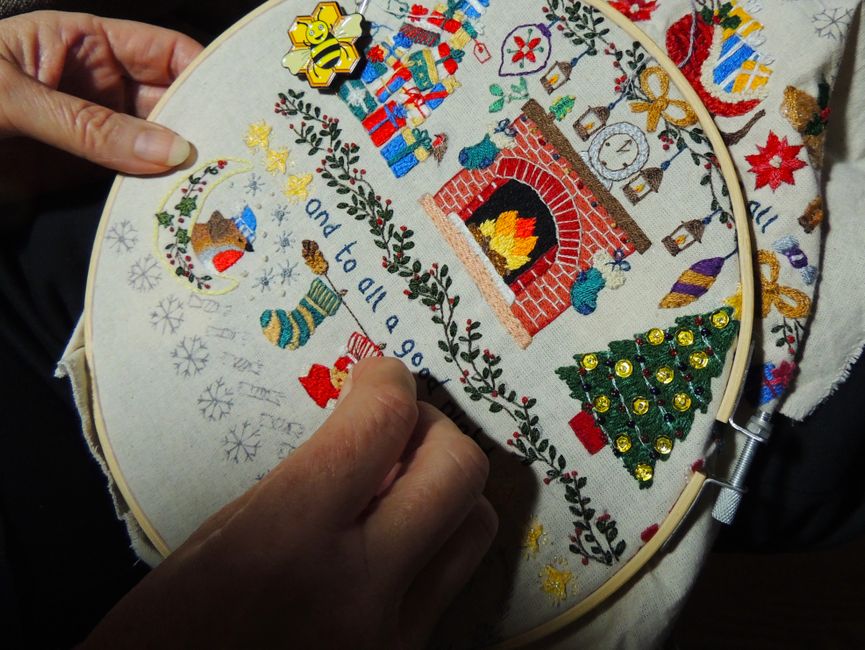
All three are needlework done with thread or yarn through fabric, but they differ on fabric, stitch type, and how the design is laid out. Cross-stitch: counted X-shaped stitches on evenly woven fabric (Aida, evenweave, or linen). You count squares on a chart and stitch one X per square. One stitch type, one direction. Most beginner-friendly. Needlepoint: stitches (usually tent stitch — a single diagonal across each canvas hole) worked on a stiff open-weave canvas, often covering the entire canvas surface. Slightly larger scale than cross-stitch and almost always uses wool or wool-blend yarn rather than cotton floss. Embroidery (specifically surface embroidery, a.k.a. freestyle or crewel embroidery): freeform stitches following a printed outline on plain woven fabric (cotton, linen). Uses dozens of stitch types — running stitch, satin stitch, French knot, chain stitch, lazy daisy, etc. Hardest of the three to learn but most artistically expressive.
The Fabric Difference
Cross-stitch fabric: Aida cloth — a stiff open-weave fabric with clearly visible squares (each square = one stitch). Counts: 11, 14, 16, 18, 20, 22 stitches per inch. 14-count is standard. Evenweave (Lugana, Murano) and linen (Belfast, Cashel) are also used for finer work. Needlepoint fabric: needlepoint canvas — a stiff open mesh, usually a 'mono' (single-thread) or 'penelope' (double-thread) construction. Counts: 10-mesh (common for tent stitch), 13-mesh, 18-mesh (petit point). Much stiffer than Aida; often pre-stamped with a printed design. Embroidery fabric: any plain woven fabric — cotton, linen, denim, even silk. No counted grid; the design is drawn or transferred onto the fabric. Embroidery hoops are essential to keep the fabric taut while stitching. Cross-stitch fabric is structured and forgiving; embroidery fabric is freeform and unforgiving.
Thread and Floss Differences
Cross-stitch: 6-strand cotton floss (DMC, Anchor, Madeira, Sullivans), separated and used 2 strands at a time on 14-count Aida. ~$0.65–1 per skein. 489 DMC colors widely available. Needlepoint: tapestry wool (Paternayan, Appleton, Anchor Tapestry) or pearl cotton (DMC #5 or #8). Wool gives traditional dimensional look; pearl cotton works for finer modern designs. Yarn-weight is typically thicker than cross-stitch floss because the canvas is coarser. ~$2–4 per skein. Embroidery: depends on the technique. Stranded cotton floss (same DMC as cross-stitch), pearl cotton, silk floss for fine work, wool for crewel embroidery. Often combines multiple types in one piece. The flexibility is a feature for experienced stitchers, a hurdle for beginners.
Stitch Type and Technique
Cross-stitch: one stitch type — the cross stitch (an X). Variations: full cross, half cross, quarter cross, three-quarter cross, plus backstitch for outlines. Five total. All are easy to learn in one session. Needlepoint: tent stitch is the workhorse (Continental, Basketweave, or Half-Cross variations). Decorative stitches add texture (Bargello, Scotch, Mosaic, Cashmere, Hungarian, dozens more). For first-time needlepoint, tent stitch covers everything. Embroidery: 30+ common stitches in a beginner's vocabulary. Running stitch, backstitch, stem stitch, satin stitch, long-and-short stitch, French knot, bullion knot, chain stitch, feather stitch, fly stitch, lazy daisy, fishbone, herringbone — and more advanced techniques like goldwork, stumpwork, and shadow work. The richness is what makes embroidery artistically powerful and what makes it harder to learn.
Time Commitment and Learning Curve
Cross-stitch: 30 minutes to learn the stitch motion. 5–10 hours to develop tension. 8–15 hours per finished beginner project (50×50 stitches). Coverage rate: ~10–15 stitches per minute once practiced. Needlepoint: 30 minutes to learn tent stitch. 5–10 hours to develop tension. 15–30 hours per finished beginner project (small canvas, ~5×5 inches at 10-mesh). Coverage rate: ~12–18 stitches per minute. Faster per stitch than cross-stitch but each project covers more area, so similar total time. Embroidery: 1–2 hours to learn the first 5 stitches; 10–15 hours to learn 15+ stitches well. 10–25 hours per finished beginner project (small framed piece). Coverage rate varies wildly by stitch type. Less predictable than cross-stitch or needlepoint but more visually varied per hour invested.
Which Should You Learn First?
Start with cross-stitch if: you want fast satisfaction, you like working from a clear chart, you prefer counted (rules-based) work to freeform, you want a craft you can pick up and put down without losing your place. 90% of beginners should start here. Start with needlepoint if: you specifically want a thicker, more tactile finish, you like wool over cotton, you want to make handbag panels or pillow covers (where needlepoint excels), you have access to pre-stamped canvases (most needlepoint kits come with the design printed on the canvas, removing the counting step). Start with embroidery if: you want to draw with thread, you like artistic freeform work, you have an existing background in drawing or fiber art, you are not in a hurry to finish your first piece. Or: skip the question and start with cross-stitch (easiest), then add embroidery techniques (decorative) as you progress, and add needlepoint as a third craft if a specific project pulls you toward it.
Can You Mix Cross-Stitch, Needlepoint, and Embroidery?
Yes — many advanced needlework pieces combine techniques. A cross-stitch sampler often includes embroidery accents (French knots for flower centers, satin stitch for filled letters). A needlepoint canvas can include cross-stitch sections for fine detail or pearl cotton accents for texture. Hand-embroidered crazy quilts combine multiple stitch types and threads on one piece. The crossover is most natural between cross-stitch and embroidery — the fabrics are similar (Aida and plain weave) and the threads (DMC stranded cotton) are interchangeable. Needlepoint is more distinct because the canvas is so different from cross-stitch fabric. For beginners: master one craft at a time. Mixing techniques before you have solid technique in any single one usually produces uneven results.
Cross-Stitch vs Needlepoint vs Embroidery FAQ
What is the difference between cross-stitch and embroidery? Cross-stitch uses one stitch type (the X) on counted fabric following a chart. Embroidery uses many stitch types on plain fabric following a drawn outline. Cross-stitch is counted and structured; embroidery is freeform and artistic. What is the difference between needlepoint and cross-stitch? Both are counted stitching. Needlepoint uses a stiffer canvas with larger holes, almost always uses wool yarn, and uses tent stitch (single diagonal) rather than a full X. Needlepoint coverage is denser per square inch and the finished piece is stiffer — often used for pillow covers and chair cushions. Is needlepoint the same as tapestry? Roughly yes in modern usage. 'Tapestry' historically referred to large woven wall hangings; 'needlepoint' is the small-scale stitched-canvas version. Tapestry-style needlepoint kits (often pre-printed designs) are sometimes labeled as 'tapestry kits' even though they are needlepoint. Which is the most beginner-friendly? Cross-stitch by a clear margin. One stitch, counted grid, easy mistakes to fix, low supply cost. Can I generate cross-stitch and embroidery patterns from photos? Yes — ArtPatt's photo-to-cross-stitch generator and photo-to-embroidery generator both convert any photo into a counted DMC chart. (Needlepoint pattern generators are rarer because the craft is more often worked from pre-printed canvas kits than from counted charts.)
FAQ
What is the difference between cross-stitch, needlepoint, and embroidery?
Cross-stitch uses repeated X-shaped stitches on an even grid. Needlepoint usually covers an open canvas with tent or related stitches, while embroidery uses many stitch types on fabric that may not have a counted grid. The tools, fabric, and way a design is transferred are different even when the final image looks similar.
Which of these crafts is easiest for a beginner?
Counted cross-stitch is often the most predictable first choice because the fabric grid and symbol chart tell you where each stitch goes. Embroidery offers more freedom but requires learning stitch direction and spacing. Needlepoint is approachable when the canvas and chart are clearly marked.
Can I use the same image for all three crafts?
Yes, but the image should be simplified differently for each technique. Cross-stitch needs a counted grid and limited color changes, needlepoint needs coverage and canvas planning, and embroidery benefits from clear outlines and stitchable shapes. A photo converter can be a starting point, not a substitute for craft-specific settings.
Related Articles