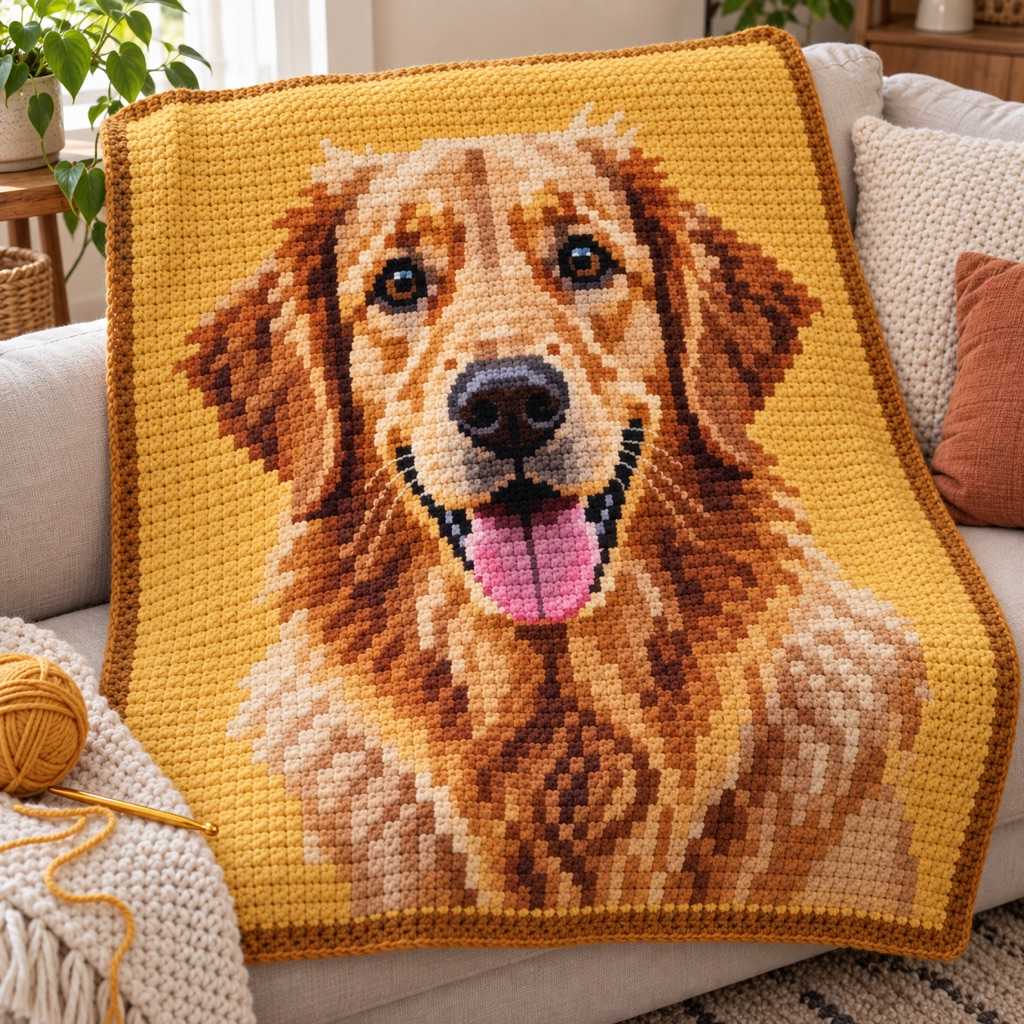
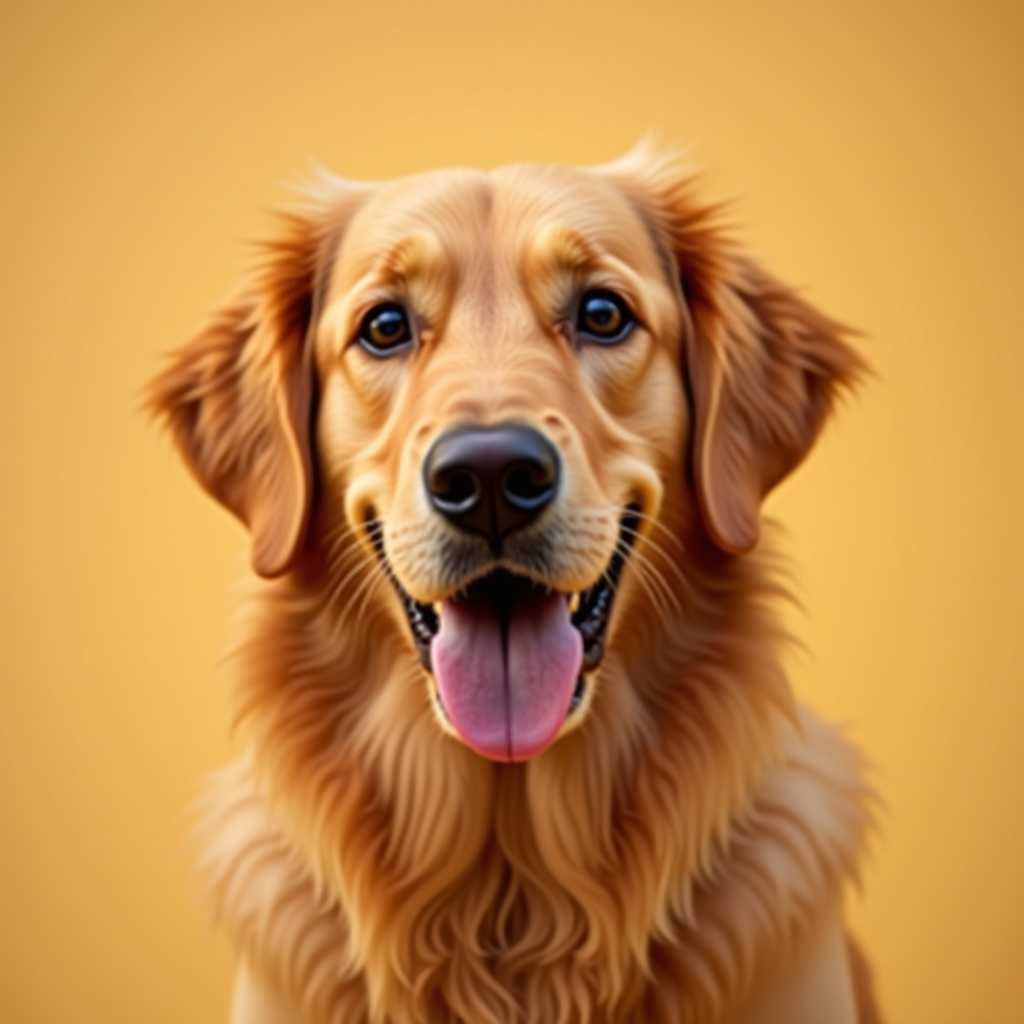
Your photo
Create Tapestry Crochet
Patterns from Photos
A tapestry crochet pattern maker for your own pictures: upload a photo, get a stitch-by-stitch chart. The confetti filter keeps color changes few, so the carried yarns stay hidden and the fabric even.
Free to use · No sign-up
Tapestry previews emphasize solid color blocks, SC sizing, and low-bulk color changes.
What You Get from One Photo
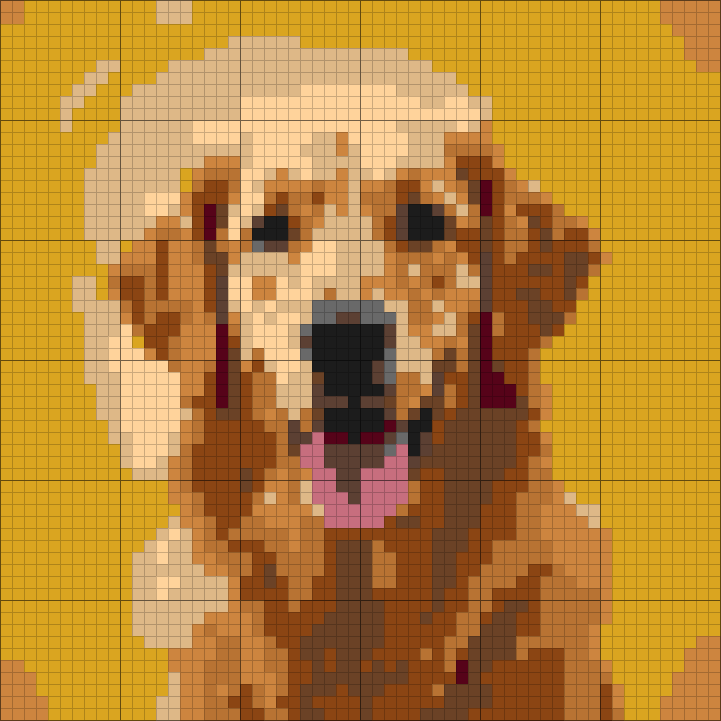
This is the chart ArtPatt made from the photo above: 60 × 60 tapestry crochet chart in 12 colors.
Yarn colors matched
Each color in the picture is matched to a yarn shade and listed in the legend.
Written rows, not just a grid
Every row is written out as color runs, so you can work from the list instead of counting squares.
Balls counted per color
Stitch counts are turned into how much yarn each color needs.
Color legend from this chart
- Goldenrod2 balls
- Tan1 ball
- Saddle Brown1 ball
- Copper1 ball
- Peru1 ball
- Walnut1 ball
+ 6 more colors in the full legend
From Tapestry Crochet Chart to Finished Piece
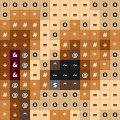
The same few squares, as they sit on the chart and as they look once worked.
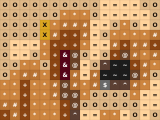
On the chart
- One square, one color, one symbol
- Rows and columns are numbered in the PDF
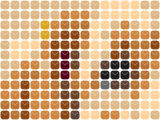
Worked in single crochet
- Each square of the chart is one stitch
- Stitches are wider than tall, and the chart is sized for that
- Carry or change colors where the chart does
Built for Tapestry Crochet
Tapestry crochet has unique constraints — our features address each one.
SC Aspect Ratio
A single crochet stitch is a little wider than it is tall — about 14 stitches and 16 rows to 10 cm in worsted. Chart it on a square grid and the picture comes out squashed. ArtPatt adds rows to make up the difference, so the crocheted piece keeps the picture's proportions.
Confetti = Bulk in Tapestry
In tapestry crochet, you carry unused colors inside stitches. An isolated color change means the carried yarn creates a bump. 50 confetti stitches = 50 bumps in your fabric. Heavy reduction eliminates these while preserving the overall design integrity.
Color Strategy: Less is More
Each color is carried across every row. At 8 colors, you're crocheting over 7 carried strands — that's already thick. At 12, the fabric becomes very dense. We recommend 8-10 colors for bags, 6-8 for wearables, 10-12 for blankets where thickness is welcome.
Yarn Calc with Carry Factor
Tapestry crochet uses more yarn than regular SC because carried strands consume cord too. Our estimate accounts for 12cm per worked stitch plus ~3cm per carried stitch. For a 50×50 grid with 8 colors, expect 250-350m total yarn — 3-4 standard worsted balls.
How to Make a Tapestry Crochet Pattern from a Picture
Pick a picture with a clear subject and few colors: a logo, an animal silhouette, lettering, a simple landscape. Upload it to the tapestry crochet pattern maker and choose the size — about 30–50 stitches wide for a flat bag panel, 50–80 for a cushion, 80–120 for a blanket, or pick Tote bag, Mochila bag or Beanie as the shape and the chart is cut to go around the piece.
Limit the colors next. Every color you are not using is carried inside the stitches, so 6–8 colors suit wearables and 8–10 suit bags. Keep confetti reduction on Heavy: it removes the lone stitches of one color that would make the carried strand poke through. Because a single crochet is a little wider than tall, the chart gets extra rows so the crocheted picture keeps its proportions.
Then check the chart and the yarn estimate per color, repaint any stitch the automatic pass got wrong, and export. The printable PDF has row numbers, a color legend and the yarn amount for each color; worked flat you read odd rows right to left and even rows left to right, worked in the round every round right to left.
Turn a picture into a tapestry patternA Tapestry Crochet Grid Maker
A tapestry crochet grid is a chart of squares: one square per single crochet, one color in each. The same tool is a crochet tapestry grid maker either way: make the grid from a picture, or start from an empty grid and draw your design square by square — lettering, a border, a motif for a bag.
The grid is counted in stitches and shows the finished size for your gauge, and the tapestry setting keeps the colors few, so you carry fewer strands. When it is done, work from the printed grid or from the rows written out as color runs.
Start from an empty gridTapestry Crochet: What Works and What Doesn't
Tapestry crochet works best with: geometric patterns (Aztec, southwestern, tribal), bold animal silhouettes, simple landscapes with 2-3 color zones, pixel art characters, and repeating tile patterns. These designs naturally have solid color blocks with minimal confetti.
What doesn't work: photographic portraits (too many subtle color transitions), images with many small details (become illegible at SC resolution), gradients (become harsh bands without dithering), and images requiring more than 12 colors (fabric becomes too thick from carried strands).
Grid size for tapestry: blankets 150-200 stitches wide, wall hangings 50-100, cushions 50-80. For a bag, basket or beanie, choose the shape in the generator instead of a width: the chart is sized to go around the piece, and the base and edges are written out to match. The dimensions display helps you plan before committing.
Most tapestry crochet websites hand you a finished pattern someone else designed. This one is a tapestry crochet pattern creator: you upload the image, the tool builds the grid, and the chart that comes out is a template you can still edit square by square before printing. It runs online in the browser — nothing to install, no account to open, and generating and previewing the chart is free.
Tapestry vs Other Crochet Colorwork
Tapestry crochet vs intarsia crochet: Tapestry carries all colors across every row (thick fabric, no holes). Intarsia uses separate bobbins per color block (thinner, but diagonal lines create gaps). For solid, sturdy items like bags — tapestry. For blankets where thickness matters less — intarsia can handle more colors.
Tapestry vs C2C: Corner-to-corner uses DC clusters and is faster per square inch, but the resolution is lower. For pixel-perfect designs, tapestry SC wins. For large blankets where speed matters, C2C is better. ArtPatt supports both — select SC for tapestry, DC for C2C.
Free Tapestry Crochet Patterns to Start From
Not ready to chart your own picture? The ArtPatt pattern library has free tapestry crochet patterns made with this generator: a pomegranate, a maple leaf, a snail, a violet, a retro camera, a watering can and more, most on a 64 × 64 grid with 8–12 colors. Each one opens as a full chart with its color list, so you can crochet it as it is or open it in the generator and change the size and colors.
For a first project, the free crochet heart pattern is a 25 × 25 tapestry chart in two colors: small enough for a coaster or an appliqué, and a quick way to practise carrying the second color before a bag or a blanket.
Browse free tapestry crochet patternsTapestry Crochet FAQ
8-10 is the sweet spot. Each color is carried across every row, increasing fabric thickness. At 8 colors with worsted weight, the fabric is dense and sturdy — perfect for bags. At 12+, it becomes very thick, which works for rugs or pot holders but is too heavy for wearables.
Pick Shape → Tote bag or Mochila bag in the generator and choose a size: the chart is cut to the bag's circumference for your gauge (a medium tote is 112 sc around at 16 sc per 10 cm), and the base, the chart rounds and the handles are written out so every count lines up. For a flat clutch panel, 40-50 stitches wide is about 25-30 cm.
When you carry 7 colors inside your SC stitches, an isolated color change means one of those carried strands pokes out as a visible bump. 50 confetti stitches = 50 bumps scattered across your fabric. Heavy confetti reduction replaces isolated stitches with surrounding colors — the visual difference is minimal but the fabric quality improvement is dramatic.
Usually no. Dithering creates scattered alternating color pixels — exactly what confetti reduction removes. The two features work against each other. Exception: if you specifically want a stippled/heathered effect in tapestry (some designs intentionally use this), enable dithering and set confetti to Light or Off.
This is one. ArtPatt is a free tapestry crochet pattern maker that runs online in the browser: upload a photo, set the grid, and the creator compiles it into a tapestry chart with SC ratio compensation and confetti reduction. Generating and previewing the pattern costs nothing and needs no account; the printable PDF and HD PNG are the paid unlock.
Yes. The generated chart is a working template, not a fixed image — the editor lets you repaint individual stitches, swap a yarn color across the whole chart, or restrict the pattern to colors you already own, then re-export. Most people use it to clean up a face, a horizon line, or a logo edge the automatic pass simplified.
In tapestry crochet, you change to the new color in the last yarn-over of the previous stitch. The old color becomes carried. ArtPatt's chart shows which color to use for each stitch — read right to left on odd rows, left to right on even rows (for flat work, right-handed). Worked in the round, as a bag or a beanie, every round is read right to left. The row/column numbers every 10 stitches help you track position.
The ArtPatt pattern library has free tapestry crochet charts made with this generator — fruit, flowers, animals and small objects, most 64 × 64 stitches with 8–12 colors — and the free crochet heart pattern is a 25 × 25 two-color chart for beginners. Any of them can be opened in the generator to resize or recolor. To crochet your own design instead, upload a picture or draw on an empty grid.
More Crochet Pattern Tools
Crochet Bag Pattern Generator
Tapestry tote and mochila patterns worked in the round, with a 3D preview.
Crochet Pattern Generator
Main crochet generator with SC, HDC, and DC ratio compensation.
Mosaic Crochet Generator
Generate a two-color overlay X chart with BLO sc and mdc row instructions.
C2C Crochet Generator
Corner-to-corner graphghan charts from any photo.
Graphghan Pattern Generator
SC-based graphghans with higher resolution than C2C.
Crochet Alpha Pattern Generator
Draw your own SC colorwork chart square by square on a blank grid.
Filet Crochet Generator
Blocks-and-spaces lace charts — tapestry's opposite: a picture made of holes.
Crochet Yarn Calculator
Estimate yarn yardage for any crochet project.
Free Crochet Heart Pattern
A 25 × 25 two-color tapestry chart for a first project.
Cross-Stitch Pattern Maker
Same photo-to-chart engine with 489 DMC thread colors and backstitch.
Free to Try — Finished Pattern from $2.99
Create and refine 1 tapestry crochet pattern free, with no account required. Upgrade for unlimited projects, PNG/PDF exports, and saved patterns.
Free
Make one pattern free every week.
- 1 free pattern project
- Single crochet proportions built in
- Heavy confetti reduction
- Carry-aware yarn estimate
- Full pattern preview in the browser
- No account required
Tax is added at checkout where it applies.