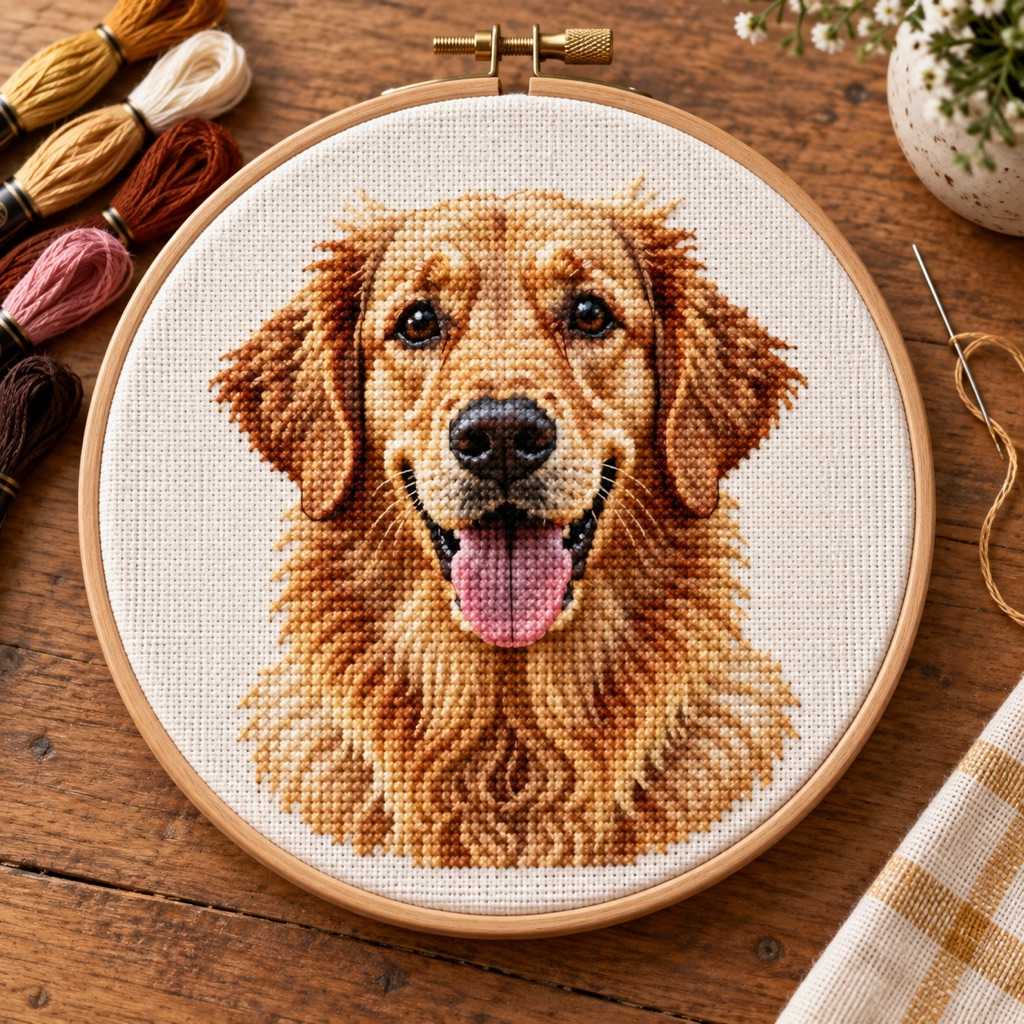
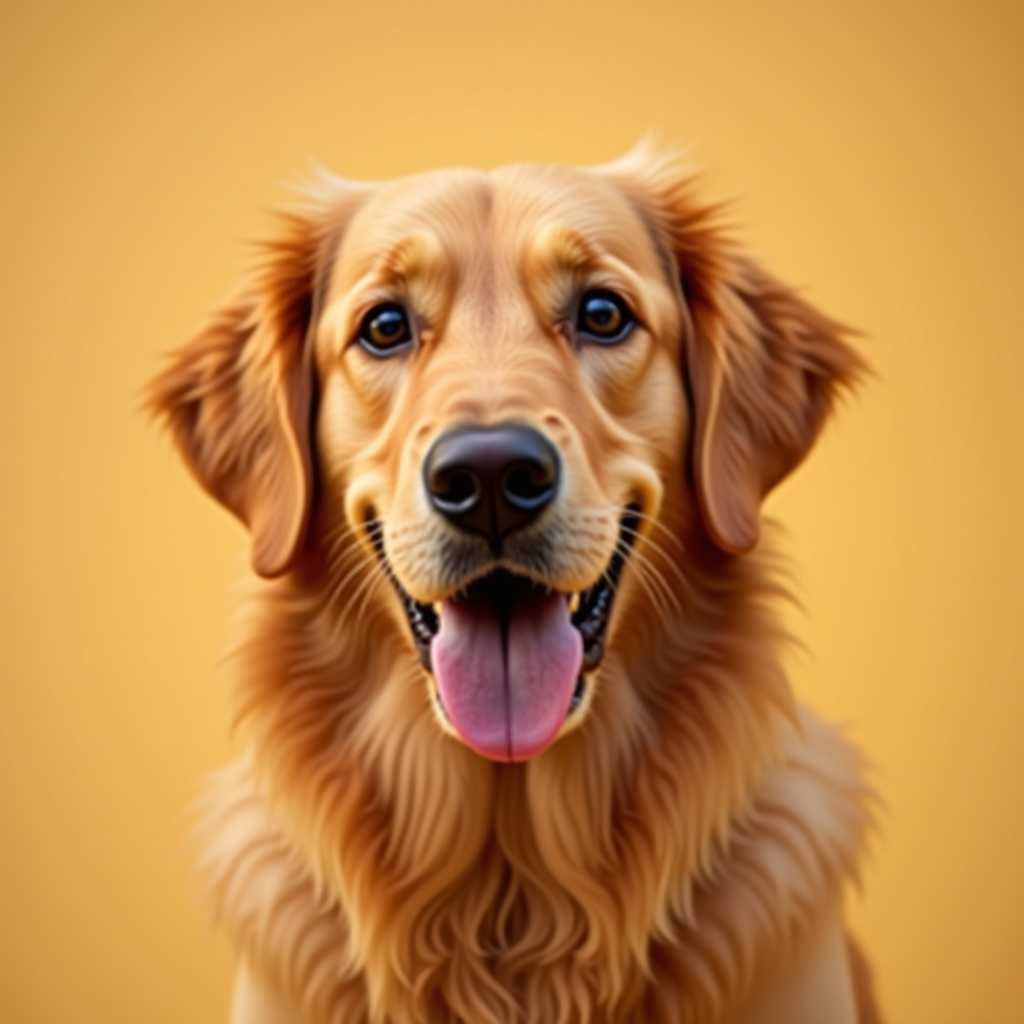
Your photo
Embroidery Pattern Generator
From Any Photo
Turn a picture into a stitchable chart with DMC floss, backstitch outlines and French knots — free to make.
Free to use · No sign-up
What You Get from One Photo
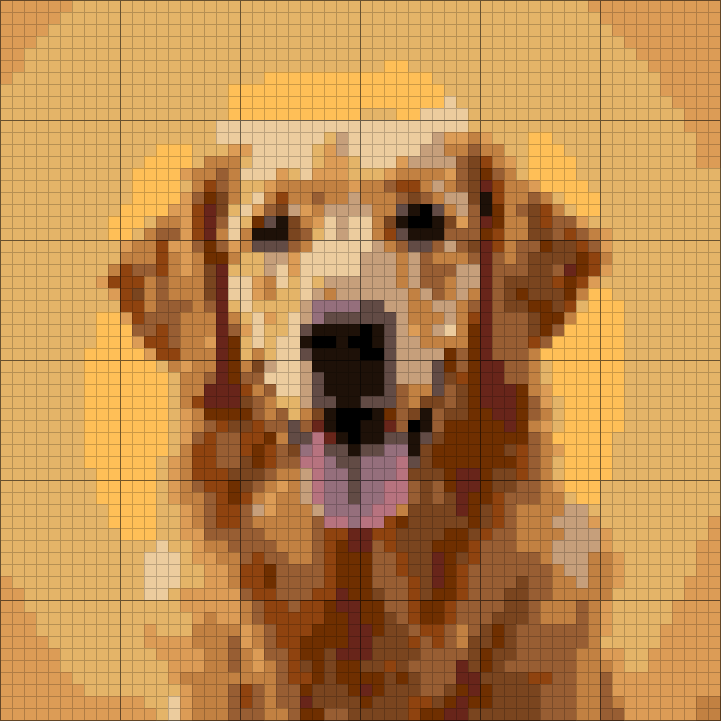
This is the chart ArtPatt made from the photo above: 60 × 60 embroidery chart in 16 colors.
A DMC number for every color
Colors are matched to 489 DMC threads, so the legend doubles as your shopping list.
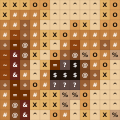
A symbol in every cell
The printed chart runs across pages with numbered rows and columns and overlapping edges, so you never lose your place.
Skeins counted for you
Each color's stitches are worked out into how much thread to buy.
Color legend from this chart
- DMC 72810 skeins
- DMC 9774 skeins
- DMC 4344 skeins
- DMC 9764 skeins
- DMC 7423 skeins
- DMC 4332 skeins
+ 10 more colors in the full legend
From Embroidery Chart to Finished Piece
The same few squares, as they sit on the chart and as they look once worked.
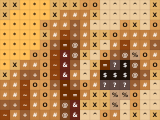
On the chart
- One square, one color, one symbol
- Rows and columns are numbered in the PDF
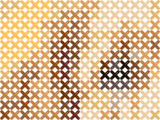
Stitched in floss
- Each square of the chart is one stitch in one DMC color
- Outlines can be added as backstitch
- Work on any evenweave fabric in a hoop
Three Stitches in One Pattern
The chart tells you which stitch goes where, so a photo reads as embroidery, not as pixels.
Cross stitch for color
Every square of the chart is one stitch in one DMC floss color. Colors are matched to the 489 solid DMC threads, so the legend doubles as your shopping list.
Backstitch for outlines
Thin lines drawn on top of the stitches define eyes, lettering, petals and edges that would otherwise blur into the colors next to them. The generator suggests them from the edges in your photo; you set how many.
French knots for highlights
Single stitches of a color standing alone — the catchlight in an eye, a speck of light — are marked as French knots, so they become raised dots instead of lonely flat crosses.
How it works
Upload a photo
A clear subject on a simple background works best. Crop tight around what matters.
Choose a fabric count
14-count is standard, 18-count packs more detail into less space. The finished size updates as you go.
Set colors and outlines
15–25 DMC colors suit most pictures. Turn on backstitch, and pick French knots as the stitch type for highlights.
Print and stitch
The PDF lists every DMC number with its symbol and skeins to buy, then the chart page by page.
Embroidery Pattern or Cross-Stitch Pattern?
Both start from the same thing: a counted chart where every square is one stitch in one DMC color. Cross-stitch is a kind of embroidery, and this generator makes that chart with the extras embroidery leans on — backstitch outlines on top, and French knots where a single dot of color stands alone.
If you stitch freehand — satin stitch, long-and-short shading, split-stitch outlines — use the pattern as a color map instead of a stitch-by-stitch chart. It tells you which DMC color fills which area and where the outlines run; you choose the stitch. For freehand fills, fewer colors work better: 8 to 16 is plenty, because every color is a separate area you fill by hand.
Which Photos Make Good Embroidery Patterns
Pets, faces, flowers and simple lettering convert best: one clear subject, good light, and real contrast between the shapes that matter. Dark photos and busy backgrounds turn into muddy charts with many near-identical colors — a tighter crop and a little more contrast help more than adding colors does.
Decide early what the picture depends on. If it depends on crisp edges, plan for backstitch from the start. If it depends on soft shading, allow more colors and a finer fabric count so the shading has room.
How Big Will It Be, and Which Hoop?
The finished size is the number of stitches divided by the fabric count: 100 stitches across on 14-count Aida is about 7.1 inches (18 cm); on 18-count it is about 5.6 inches (14 cm). The generator shows the finished size for the count you choose.
Pick a hoop a little larger than the design so the stitching sits inside the ring with fabric to spare. The embroidery hoop size calculator works it out from the stitch count and fabric count.
Embroidery Pattern Generator FAQ
Yes. 1 upload, generation, and full browser preview and all of its edits are free, with no account required. A $2.99 single-pattern unlock gives you the PNG and printable PDF. Pro ($6.99/month or $39.99/year) unlocks unlimited projects, every export, and every other craft generator.
Upload the photo, choose a fabric count, set the number of DMC colors, and turn on backstitch for outlines. The generator matches every area of the picture to a DMC floss color and gives you a chart with symbols, a legend and skein counts.
The chart is the same counted grid of DMC colors. Cross-stitch is one kind of embroidery; here the pattern also marks French knots for single highlight dots and adds backstitch outlines, which embroidered portraits and lettering rely on.
Yes, as a color map. The pattern shows which DMC color fills which area and where the outlines are; you fill those areas with satin, long-and-short or any stitch you like. Keep the color count lower for freehand fills — 8 to 16 colors.
The 489 solid colors of DMC six-strand floss (Mouliné). Specialty lines such as metallics and variegated floss are not included. Every color on the chart is a standard DMC number, so you can buy it anywhere that stocks DMC.
When you choose French Knot as the stitch type, single stitches that stand alone in their color — an eye catchlight, a speck of light — are marked with a filled circle. Stitch those as raised French knots instead of flat crosses; the PDF legend explains how.
15 to 25 for counted stitching of most pictures; 8 to 16 if you plan to fill areas freehand. More colors are not automatically better: near-identical shades raise the floss bill and make the chart harder to read.
The legend lists how many skeins each DMC color needs, worked out from its stitch count at about 3.8 cm of floss per stitch on 14-count with two strands, plus a buffer. One DMC skein holds 8 m.
Explore More Embroidery Pages
Cross-Stitch Pattern Maker
The same counted chart, focused on cross-stitch on Aida.
Image to Embroidery Machine File
Digitize a picture to PES, DST, JEF or EXP for an embroidery machine.
Embroidery Hoop Size Calculator
Find the hoop that fits your design and fabric count.
Blackwork Pattern Generator
One-color counted embroidery built from geometric fills.
DMC Color Chart
Browse all 489 DMC floss colors with names and numbers.
DMC Thread Calculator
Estimate floss by stitch count and fabric count.
DMC vs Anchor Floss
How the two big floss brands compare, and when to switch.