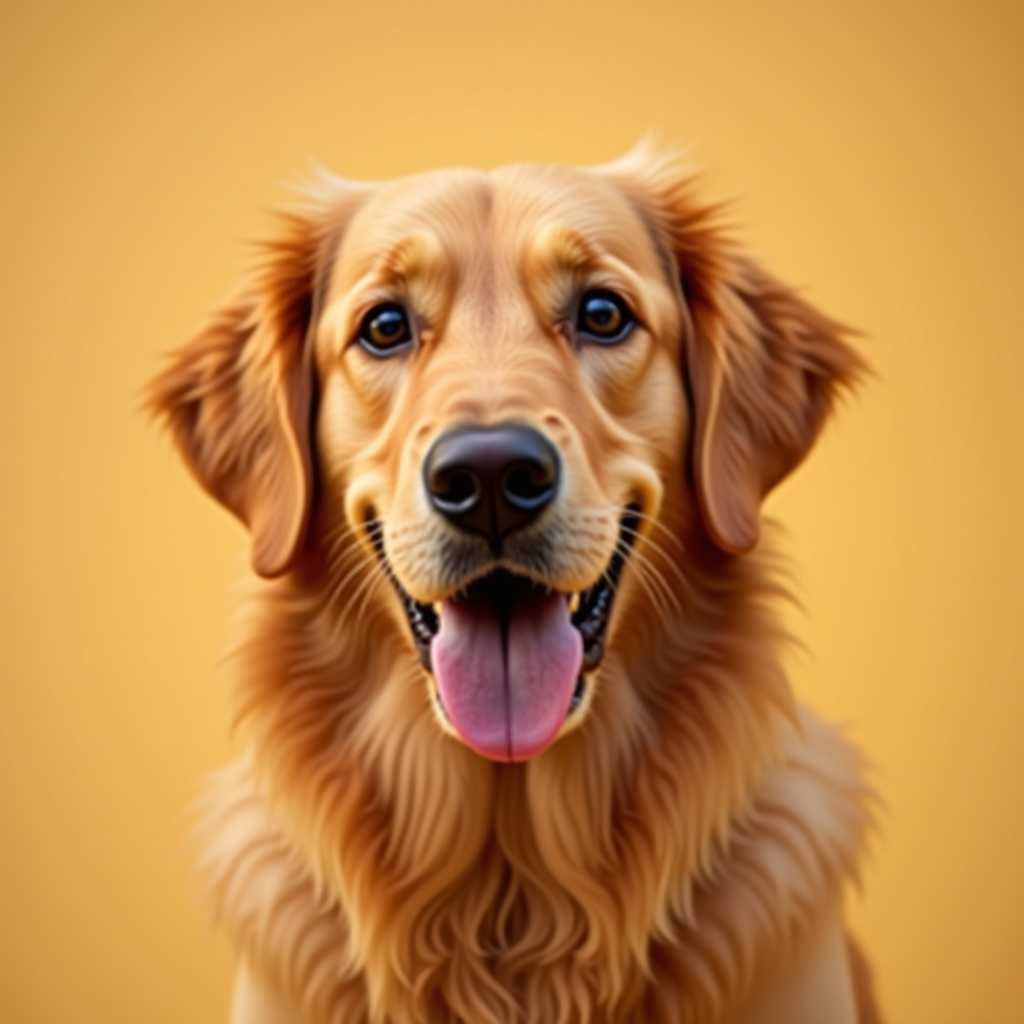
Your photo
Create Intarsia Patterns
from Any Image
One bobbin per color block: turn any image into an intarsia chart for motifs and portraits with 10–20 colors.
Free to use · No sign-up
What You Get from One Photo
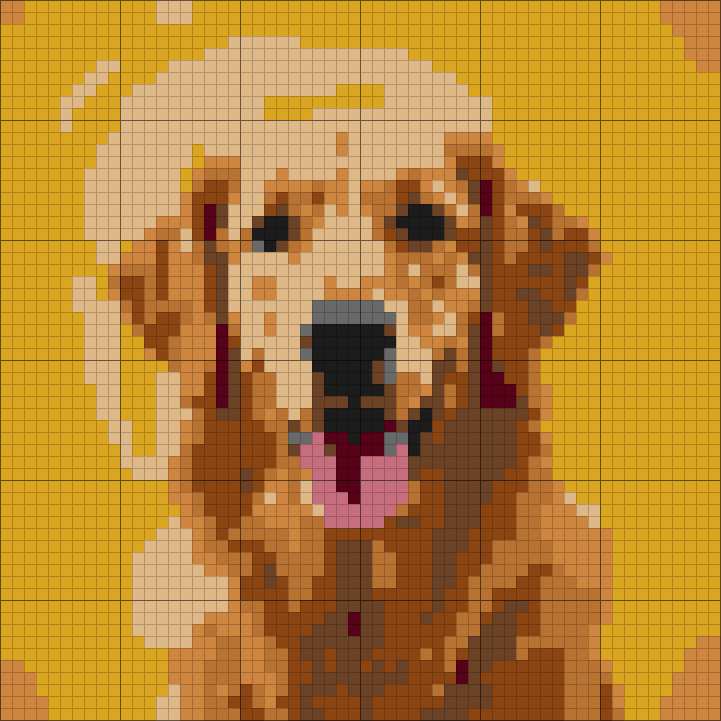
This is the chart ArtPatt made from the photo above: 60 × 60 intarsia chart in 10 colors.
Yarn colors matched
Each color in the picture is matched to a yarn shade and listed in the legend.
Written rows, not just a grid
Every row is written out as color runs, so you can work from the list instead of counting squares.
Balls counted per color
Stitch counts are turned into how much yarn each color needs.
Color legend from this chart
- Goldenrod1 ball
- Tan1 ball
- Saddle Brown1 ball
- Copper1 ball
- Peru1 ball
- Walnut1 ball
+ 4 more colors in the full legend
From Intarsia Chart to Finished Piece
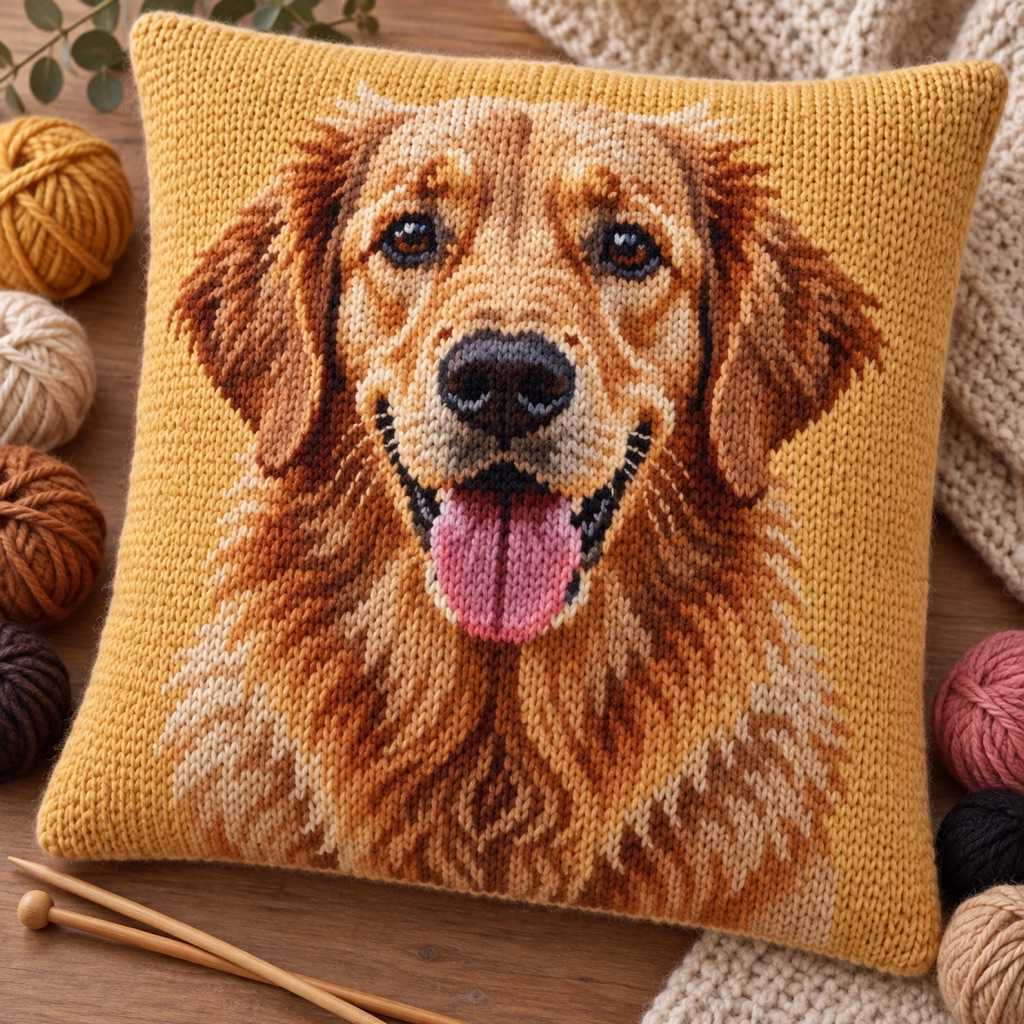
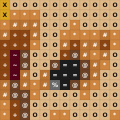
The same few squares, as they sit on the chart and as they look once worked.
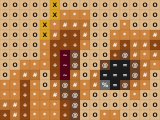
On the chart
- One square, one color, one symbol
- Rows and columns are numbered in the PDF
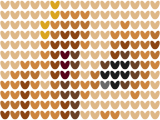
Knitted in stockinette
- Each square of the chart is one V-shaped stitch
- Knit stitches are wider than tall, and the chart accounts for it
- Read right-side rows right to left
Intarsia-Specific Features
Intarsia knitting has different requirements than Fair Isle — our tool understands this.
Stockinette Ratio
Stockinette stitches are wider than they are tall — about 1.3 rows for every stitch of width. A circle in a square-pixel chart becomes a flattened oval when knitted. We add roughly a third more rows so the finished piece matches the image. This matters especially for portraits and circular motifs.
10-20 Color Support
Fair Isle is limited to 2 colors per row. Intarsia has no such limit — each color area uses its own bobbin. ArtPatt supports up to 64 colors, but 10-20 is practical for intarsia (each = a bobbin to manage at color change points).
Medium Confetti
Unlike Fair Isle where confetti creates tiny floating loops, intarsia handles isolated stitches better because each color has its own bobbin. Set to Medium — it removes the worst confetti while preserving detail that intarsia can handle.
Per-Bobbin Yarn Estimate
Each color in intarsia = a separate bobbin. The yarn legend shows meters per color — wind that exact amount onto each bobbin. No more guessing. 3.5cm per stockinette stitch × stitch count × 1.15 buffer. Reduces waste compared to buying full skeins of rarely-used colors.
Intarsia vs Fair Isle: When to Use Each
Fair Isle (stranded): 2 colors per row carried across. Best for all-over patterns, small repeating motifs, and traditional colorwork. Limit: 5-8 total colors, patterns must fit the 2-per-row constraint. Creates double-thickness fabric from floats.
Intarsia: Separate bobbins per color area. Best for large single motifs (a portrait on a sweater front), large color blocks (abstract art), and any design where colors occupy distinct regions rather than alternating. 10-20 colors practical. Single-thickness fabric — drapes better than Fair Isle.
When to use intarsia: the image has large solid-color areas (portrait background, sky, large shapes). When to use Fair Isle: the image has small repeating elements or needs only 2 colors per row. Choose Intarsia color blocks in the generator to get disconnected-region bobbin counts and per-bobbin winding estimates.
Intarsia Construction Tips
Bobbin management: wind yarn onto clip bobbins or clothespins. Hang them below your work — they unwind as needed without tangling. At each color change, twist the old and new yarns around each other to prevent holes (the intarsia twist).
Reading the chart: bottom-up, right-to-left on RS rows, left-to-right on WS rows. Each cell = one stitch. ArtPatt's 10-stitch gridlines help you count. Print the chart and use a magnetic ruler to track the current row.
Yarn quantity tip: for colors that appear in small areas (eyes, small details), you don't need a full skein. The legend shows exact meters per color. Wind small bobbins from a skein and return the rest. This alone can save $10-20 on a complex intarsia project.
Intarsia Knitting FAQ
Fair Isle carries 2 colors across each row — the unused color floats behind the work. Intarsia uses separate yarn bobbins for each color area — no floats, single-layer fabric. Fair Isle: 5-8 colors, repeating patterns. Intarsia: 10-20 colors, large motifs and pictorial designs. Different techniques, same chart format.
A maker. There are no ready-made motifs to browse here — you supply the image and the tool builds the intarsia chart from it, block by block, with a bobbin-ready color legend. The chart is editable before you export it, so you can merge two near-identical colors or clean up an edge the automatic pass left ragged.
Images with large solid-color areas: portraits (large face with distinct background), bold graphics (company logo, large text), simple landscapes (sky/mountain/ground blocks), abstract color-block art. Avoid: very detailed images with many scattered small colors — these need too many tiny bobbins.
At every color change, twist the old yarn and new yarn around each other before knitting the next stitch with the new color. This 'intarsia twist' locks the yarns and closes the gap between color blocks. Practice on a swatch before starting your project — the twist should be snug but not pulling.
10-15 is comfortable — each = one bobbin hanging from your work. 16-20 is advanced — requires organized bobbin management. Over 20 gets very tangled. The chart supports up to 64 colors, but your patience is the real limit. For a first intarsia project, try 5-8 colors.
The legend shows meters per color. Wind that amount (plus 20% buffer) onto each bobbin. For small areas (under 50 stitches), you might need only 2-3m of yarn — no need to buy a full $5 skein. Buy one skein and wind multiple small bobbins from it. For large areas (background), buy a full skein and wind a bobbin from it as you go.
More Knitting Pattern Tools
Fair Isle Knitting Generator
Stranded colorwork charts — every stitch uses 2+ colors carried.
Knitting Pattern Generator
Main knitting generator with stockinette 1.3:1 row-to-stitch ratio correction.
Knitting Gauge Calculator
Stitches and rows per inch from your swatch.
Cast-On Calculator
Stitches to cast on for target width.
Yarn Weight Converter
Convert between DK, worsted, bulky, and metric systems.
Photo to Knitting Pattern
Turn any picture into a knitting chart with the stitch ratio corrected.