Free Knitting Gauge Calculator for Real Project Size
Enter stitch count, row count, stitch gauge, and row gauge to estimate finished size. It is especially useful when changing needle size or comparing yarn weights before you knit the final version.
Knitting Gauge Calculator
Convert stitch and row counts into finished dimensions using your actual stitch gauge and row gauge.
Formula: width = stitches ÷ stitch gauge; height = rows ÷ row gauge
Results
Finished Width
60 cm / 23.6"
- Finished Height
- 57.1 cm / 22.5"
- Total Stitches
- 19,200
This is more accurate than relying on stitch counts alone because knitting height depends on row gauge, not just stitch gauge.
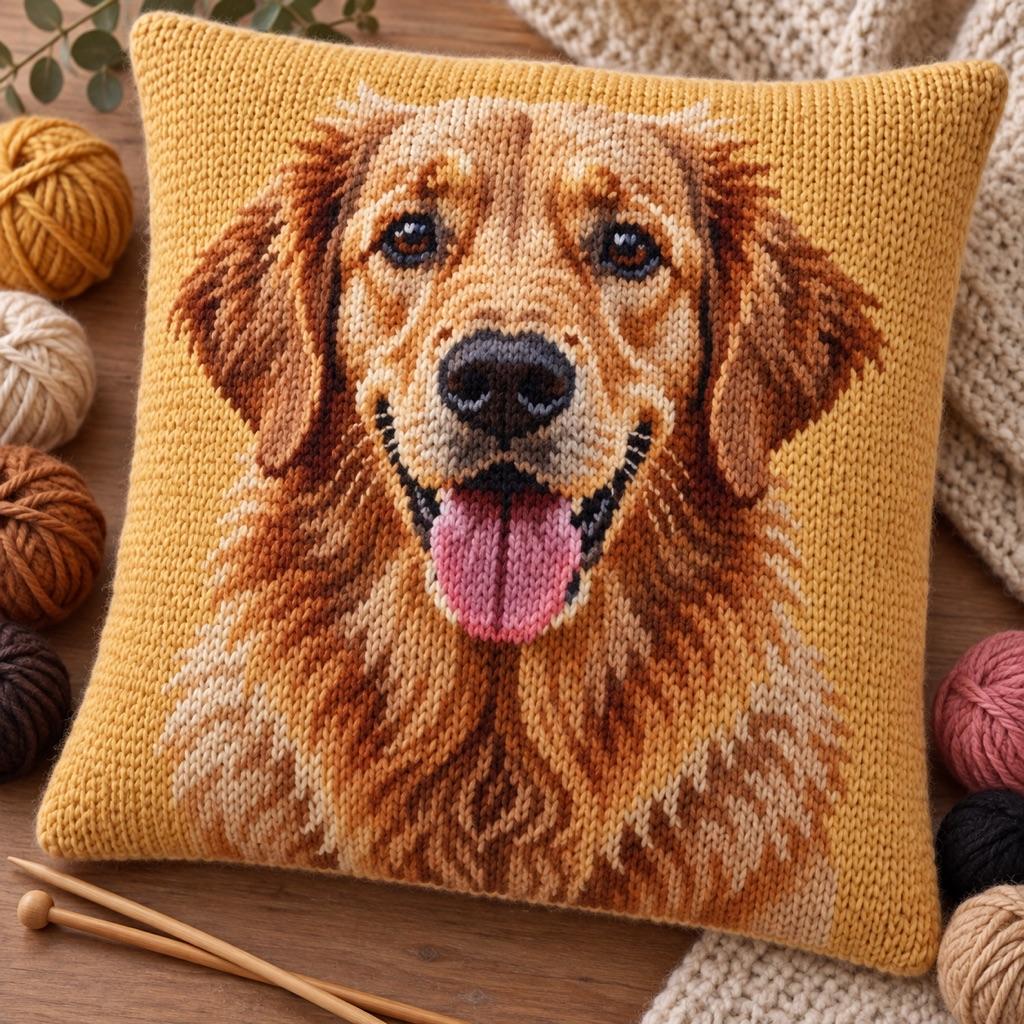
Turn a photo into a real pattern
Once the finished size and gauge direction look right, generate the actual chart for your knitting project.
Open Knitting GeneratorKnitting Gauge Conversion: When Your Gauge Doesn't Match
Your swatch came out at a different gauge than the pattern and you would rather keep your needles. Recalculate the stitch and row counts instead, and the piece still knits up to the pattern's size.
Gauge Converter
Enter the pattern's gauge, your swatch gauge and the pattern's stitch and row counts to get the counts that knit up to the pattern's size at your tension.
Formula: your stitches = pattern stitches × (your gauge ÷ pattern gauge)
Results
Cast On Instead
110 sts
- Rows Instead
- 150 rows
- Finished Size
- 20" × 20"
- Your Gauge vs Pattern
- 110%
Gauge per 4 inches and per 10 cm are the same number. Round the new cast-on to fit any stitch repeat in the pattern.
Worked example: the pattern says cast on 100 stitches at 20 stitches per 4 in, and your swatch gives 22. Multiply 100 × 22 ÷ 20 = 110, so cast on 110. Rows work the same way: 140 rows at the pattern's 28 rows per 4 in become 140 × 30 ÷ 28 = 150 rows at your 30.
Standard Knitting Gauge by Yarn Weight
Typical stockinette gauge and needle size for each yarn weight, from the Craft Yarn Council standard. A starting point for choosing needles; your own swatch is the number to calculate with.
| Yarn weight | Stitches per 4 in / 10 cm | Needle (mm) | Needle (US) |
|---|---|---|---|
| 0 Lace | 33–40 | 1.5–2.25 | 000–1 |
| 1 Super Fine (fingering, sock) | 27–32 | 2.25–3.25 | 1–3 |
| 2 Fine (sport) | 23–26 | 3.25–3.75 | 3–5 |
| 3 Light (DK) | 21–24 | 3.75–4.5 | 5–7 |
| 4 Medium (worsted, aran) | 16–20 | 4.5–5.5 | 7–9 |
| 5 Bulky (chunky) | 12–15 | 5.5–8 | 9–11 |
| 6 Super Bulky | 7–11 | 8–12.75 | 11–17 |
| 7 Jumbo | 6 or fewer | 12.75 and up | 17 and up |
Why a Free Knitting Gauge Calculator Saves Mistakes
Many knitters only think about stitch gauge, but height is controlled by row gauge. For charted motifs and photo-based knitting, that matters as much as width.
This calculator helps you convert a chart from abstract stitch counts into the real project dimensions you will hold in your hands. That is useful for sweaters, blanket panels, pillows, and framed knit art.
It is especially helpful when comparing different yarn weights or needle sizes. A chart that fits beautifully in DK weight on one needle size may become far too large, dense, or loose when knitted at another gauge.
Worked example: a swatch measuring 20 stitches and 28 rows per 10cm on a 150-stitch-wide, 180-row chart works out to 150 × (10/20) = 75cm wide and 180 × (10/28) ≈ 64.3cm tall. Change the needle down one size and a common shift to 22 stitches per 10cm drops the same chart to about 68cm wide — a 7cm difference that matters on a garment front panel.
How Needle Size Changes the Result
Enter the width in stitches and height in rows from the chart, then add the actual gauge from your swatch. That gives a more honest size estimate than relying on yarn labels, generic needle charts, or guesswork.
If you go up or down a needle size, your stitch gauge and row gauge often shift enough to change the finished dimensions noticeably. This calculator helps you see that before you commit to a yoke, front panel, scarf section, or blanket square.
Knitting Gauge Calculator FAQ
Knit a swatch at least 6 in / 15 cm square in the pattern's stitch with the project's yarn and needles, block it, then count the stitches across 4 in / 10 cm in the middle of the swatch. That count is your stitch gauge; the rows over 4 in / 10 cm are your row gauge.
Multiply the pattern's cast-on by your gauge and divide by the pattern's gauge. At 22 stitches per 4 in instead of the pattern's 20, a 100-stitch cast-on becomes 100 × 22 ÷ 20 = 110 stitches. Do the same with rows for length, and round to the pattern's stitch repeat.
Because knitting width and height are controlled by different measurements. A motif can be the right width but still come out taller or shorter than expected if row gauge is off.
Use your swatch gauge. Your personal tension and needle choice matter more than the label when calculating finished size.
Yes. Knit or estimate the gauge for each needle size you are considering, then run the calculator with those numbers. That shows how much the finished size changes when you switch needles.
Yes. It is especially useful for charted motifs and picture knitting where finished dimensions matter before you start the project.
It depends entirely on yarn weight and needle size, so there is no single 'normal' number — worsted weight on US 8/5mm needles commonly falls around 18-20 stitches per 10cm, while fingering weight on US 1-3/2.25-3.25mm needles runs closer to 28-32 stitches per 10cm. Always swatch with your actual yarn and needles rather than assuming a standard figure.
A lot — two knitters using the identical yarn and needle size can differ by 2-4 stitches per 10cm because of tension alone. This is why patterns list a target gauge and tell you to swatch: matching the pattern's needle size does not guarantee you match its gauge.
Change needle size and reswatch rather than changing your tension on purpose. Going up a needle size loosens gauge (fewer stitches per 10cm); going down tightens it. Re-measure after blocking, since blocking can shift gauge by a stitch or more depending on fiber.
Related Tools and Pages
Knitting Pattern Generator
Generate the full knitting chart with corrected ratios, smoothing, and yarn-aware planning.
Yarn Weight Converter
Compare yarn weight naming across systems before you decide on gauge, needle size, and substitutions.
Intarsia Knitting Pattern Generator
Use a more specific chart workflow for large color blocks and bobbin-based knitting.