Embroidery vs Cross-Stitch: What's the Difference?
Quick Answer
Clear breakdown of embroidery vs cross-stitch — how they differ in technique, supplies, difficulty, pattern style, and when to choose each. Includes needle painting, crewel, blackwork, and Brazilian embroidery for context.
The Core Difference in One Sentence
Cross-stitch is a type of embroidery — it's counted embroidery on an evenly gridded fabric where every stitch is a uniform X. Embroidery is the broader category that includes cross-stitch and dozens of other techniques: satin stitch, long and short stitch, French knots, stem stitch, backstitch, and many more. When people say "embroidery" in casual craft conversation, they usually mean freehand embroidery with mixed stitch types on plain fabric or clothing. When they say "cross-stitch," they mean specifically the counted X-stitch technique on Aida or evenweave fabric. Both use the same embroidery floss (DMC is the dominant brand for both) and the same type of needle. The differences are in the fabric, the counting approach, and the visual result.
Cross-Stitch: Counted Grid Embroidery
Cross-stitch works on Aida fabric — a stiff, evenly gridded cotton where the holes form a regular grid and each stitch sits in an identical square. You count stitches on a chart to place each X in the right position. The visual result is pixel-art-like: bold, graphic designs with clean color regions. Cross-stitch is highly reproducible — if you follow a chart correctly, your result looks like everyone else's result from the same chart. It's ideal for portraits, text, geometric designs, and any subject where precise shape and color placement matters. Difficulty: the basic X stitch is learned in 10 minutes. Difficulty comes from counting and keeping track of position in large patterns. No drawing or artistic skill is required — just accurate counting. Pattern generation: photo-to-cross-stitch generators (like ArtPatt) automatically create a counted chart from any photo.
Freehand Embroidery: Mixed Stitch Painting
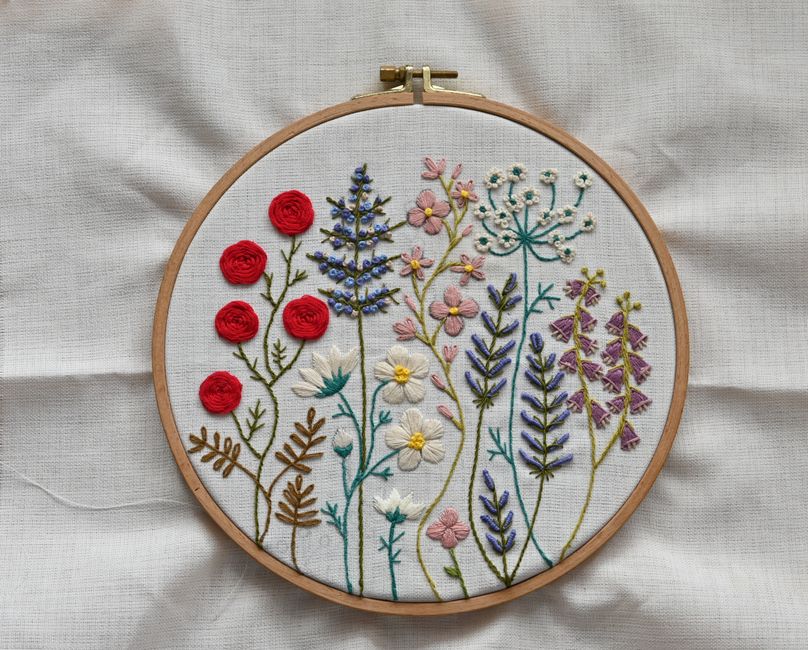
Freehand embroidery uses a plain fabric (linen, cotton, muslin) and a drawn or transferred design. Instead of counting holes, you follow an outline and fill areas with appropriate stitches: satin stitch for smooth filled shapes, stem stitch for curves and lines, French knots for texture and dots, long and short stitch for shading gradients. The visual result is painterly — embroidery can create realistic shading, organic texture, and fine detail that cross-stitch can't achieve. It requires more artistic judgment: where to put stitches, how to blend colors, how to handle transitions. Pattern generation: embroidery pattern generators (like ArtPatt's embroidery mode) produce backstitch edge outlines from photos — the backstitch lines define the main shapes and color regions, which are then filled with appropriate stitches by the stitcher. More interpretation is involved than counted cross-stitch.
How the Supplies Differ
Both use the same embroidery floss — DMC six-strand cotton is the standard for both. Both use an embroidery hoop to hold fabric taut during stitching. The needle differs slightly: cross-stitch uses a blunt tapestry needle (the blunt tip doesn't split fabric threads — it passes through holes). Freehand embroidery uses a sharp crewel needle (the sharp point pierces the fabric anywhere). Fabric is the biggest difference: cross-stitch requires Aida or evenweave with a uniform hole grid. Embroidery uses plain woven fabric, linen, cotton, clothing fabric — any fabric the needle can pierce. Transfer tools for freehand embroidery: water-soluble pen or iron-on transfer paper to mark the design onto fabric. Cross-stitch needs no transfer — you count directly from the chart. Cost comparison: both are low-cost crafts. A cross-stitch starter kit ($15-25) vs an embroidery starter kit ($15-25) — roughly equivalent. Cross-stitch requires more DMC colors for complex designs; embroidery often uses fewer threads but more artistically.
Which Should You Start With?
Start with cross-stitch if: you want precise, reproducible results from a pattern, you want to stitch photos or portraits, you like systematic grid-based work and counting, you prefer a craft where the pattern tells you exactly what to do. Start with freehand embroidery if: you want to embellish clothing or plain fabric, you prefer a more artistic, interpretive approach, you want to make flowers, botanical designs, or decorative motifs that look hand-painted, you enjoy exploring different stitch textures within one piece. Many crafters do both: cross-stitch for portrait and graphic work, freehand embroidery for clothing embellishment and organic designs. ArtPatt generates both: the cross-stitch generator creates a counted chart; the embroidery generator produces backstitch outlines from photos that you then fill with satin stitch and long-and-short stitch.
Specialty Embroidery Styles: Blackwork, Crewel, Needle Painting
Blackwork is a form of counted embroidery done in black thread on white fabric, using repeating geometric patterns. It looks like intricate black line drawings. ArtPatt has a dedicated blackwork generator that creates blackwork patterns from photos — the image edges and detail areas become the dense blackwork fill pattern. Crewel embroidery uses wool thread on linen fabric and is known for its rich, tactile texture — more dimensional than cotton floss work. Traditional crewel designs are organic: branches, leaves, flowers. Needle painting (or silk shading) is the most technically demanding embroidery style — using long and short stitch in multiple closely related colors to create photo-realistic gradients and shading. It's sometimes called "painting with thread" and requires good color judgment and stitch control. Brazilian embroidery uses rayon thread and specialty stitches (bullion knots, woven roses, cast-on stitch) to create highly dimensional, sculptural flowers. All of these are in the "embroidery" family but use very different techniques and materials from each other.
Photo Conversion: Cross-Stitch vs Embroidery Patterns
When you generate a pattern from a photo, the output type affects how you stitch it. A cross-stitch pattern from a photo is a complete, resolved chart: every area of the image is converted to an X in a specific DMC color. You follow the chart cell by cell — no decisions required beyond accurate counting. An embroidery pattern from a photo is a backstitch outline: the generator detects the main edges and color boundaries in the photo and converts them to lines. These lines define the shapes you'll fill with satin stitch, long and short stitch, or other fills. The stitcher interprets how to fill each region. For portraits and photos with complex detail: cross-stitch captures color complexity more faithfully. An embroidery treatment of a portrait produces a more stylized, illustrative result. Many stitchers combine the two: use a cross-stitch pattern as the base and add freehand embroidery details (French knots for eyes, satin stitch for lips, backstitch for fur texture) on top of the counted base.
Which Is Easier for Beginners: Cross-Stitch or Embroidery?
Both crafts are genuinely beginner-accessible, but they develop different skills and have different learning curves. Cross-stitch requires very little artistic skill — the pattern tells you exactly where to place each stitch, and the technique itself (forming an X) can be learned in about 15 minutes. The difficulty comes from patience, counting accuracy, and maintaining consistent tension over hundreds of stitches. Most people produce a recognizable, satisfying first project on the first try. Freehand embroidery requires more creative judgment — you choose where to place stitches, how to fill areas, and which stitch types to use in each region. A beginner embroidery project typically looks more handmade and less polished than a beginner cross-stitch project because the artistic decisions are harder to execute precisely. However, embroidery mistakes are often invisible in the finished piece due to the textured surface covering imprecision. Recommendation: if you want a predictable, reproducible result from the first project, start with cross-stitch. If you are comfortable with some artistic ambiguity and want to develop a more expressive craft practice, start with embroidery hoops and basic satin stitch on simple motifs.
Using Both Techniques Together
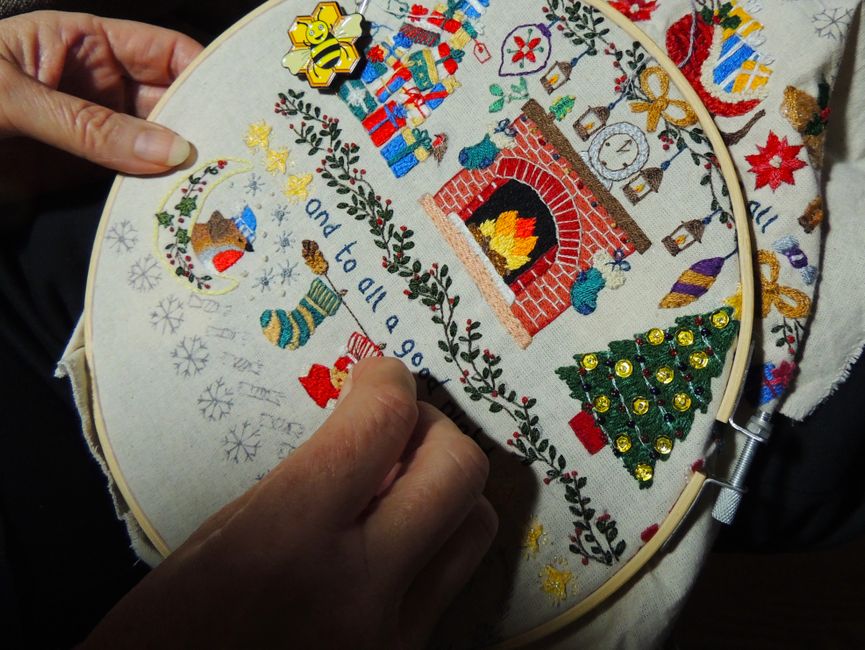
Many advanced fiber artists combine cross-stitch and freehand embroidery on the same piece. The most common approach: use counted cross-stitch for the main image from a photo-generated pattern, which provides the color structure and overall composition. Then add freehand embroidery details that the cross-stitch grid cannot capture — a French knot cluster for texture, satin stitch for a small solid-color element, a curved stem stitch for an organic line that does not follow the grid. This combination uses each technique for what it does best: cross-stitch for photographic accuracy and color gradation, freehand embroidery for fine detail and texture. Another approach starting with freehand embroidery: stitch the main botanical or illustrative outlines using stem stitch and backstitch from a transferred outline, then fill in the background areas with cross-stitch using a photo-generated color palette. The two textures in the same piece create a layered depth that neither technique alone achieves.
FAQ
What is the main difference between embroidery and cross-stitch?
Embroidery is a broad family of decorative stitches worked on fabric, while cross-stitch is a counted technique built from X-shaped stitches on an even grid. Embroidery patterns often describe stitch types and outlines; cross-stitch patterns usually map each grid cell to a symbol and thread color.
Is embroidery or cross-stitch easier to learn?
Cross-stitch is often easier for someone who prefers clear counting and repeatable steps. Embroidery is more flexible because you can draw or trace a design and choose stitches freely, but that freedom means you must make more decisions about direction, coverage, and spacing.
Can I turn one photo into both an embroidery and cross-stitch pattern?
Yes, if you prepare the photo around the chosen technique. Use a limited color grid for cross-stitch, and emphasize contours and stitchable shapes for embroidery. The same subject may need different crops, color counts, and levels of detail to look clear in each finished craft.
Related Articles