Free Easter Cross-Stitch Patterns: Eggs, Bunnies, and Spring Designs
Quick Answer
Where to find free Easter cross-stitch patterns, the pastel DMC palette every spring chart uses, and how to make your own custom Easter egg, bunny, or spring landscape pattern from a photo for free.
Where to Find Free Easter Cross-Stitch Patterns
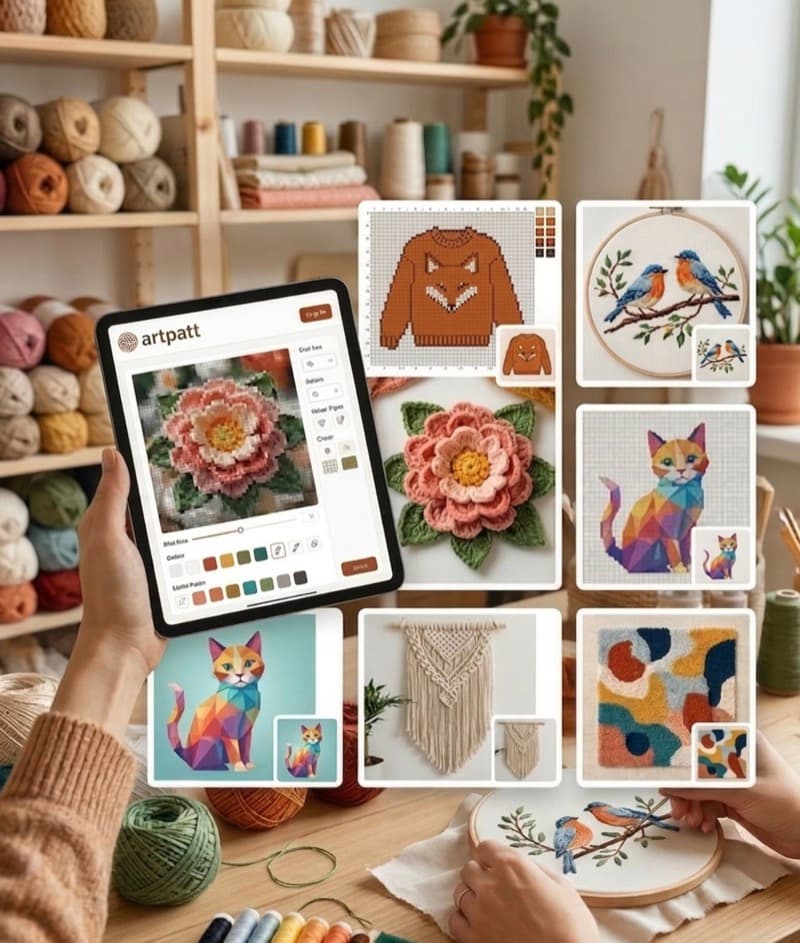
Free Easter cross-stitch patterns surface in three places. (1) Designer giveaways on Instagram and Ravelry — independent designers release free egg, bunny, or spring lamb patterns in early March as marketing for their paid ranges. (2) DMC's free pattern library and craft magazine archives — small Easter motifs are commonly free. (3) Photo-to-pattern generators — convert any Easter photo (decorated eggs, your kids hunting eggs, a vintage Easter card, spring flowers, religious art) into a counted DMC chart for free. ArtPatt's cross-stitch pattern generator does this in seconds with confetti reduction.
The Easter Pastel DMC Palette
Easter cross-stitch leans heavily on pastels — softer than Christmas reds or Halloween oranges. Pinks: 3326 (Rose Light), 818 (Baby Pink), 894 (Carnation Very Light). Yellows: 745 (Yellow Light Pale), 744 (Yellow Pale), 727 (Topaz Very Light). Greens: 564 (Jade Very Light — fresh spring green), 504 (Blue Green Very Light — sage), 369 (Pistachio Green Very Light). Blues: 3325 (Baby Blue Light), 800 (Delft Blue Pale), 747 (Sky Blue Very Light). Purples and lavenders: 211 (Lavender Light), 3743 (Antique Violet Very Light), 554 (Violet Light). Whites and creams: Blanc (egg white, lamb wool), 712 (Cream — Easter card vintage). Browns for chocolate eggs and bunny fur: 437 (Tan Light), 422 (Hazelnut Brown Light), 3863 (Mocha Beige Medium). For grass and stems: 471 (Avocado Green Very Light), 472 (Avocado Green Ultra Light). Outline backstitch: 3799 (Pewter Gray Very Dark — softer than 310 black, more in keeping with pastel palette).
Popular Easter Cross-Stitch Themes That Finish in Time
Easter falls in late March or April depending on the year, so check the date before planning project size. Easy themes: Easter egg ornaments (50×60 stitches per egg, 6–10 hours each, batch 6–12 for a basket display), bunny silhouettes (50×60 stitches, 5–8 hours, framed as small wall pieces), spring lamb on grass (80×80 stitches, 10–15 hours), 'He is Risen' lettering (60×60 stitches, 6–10 hours, religious-themed), Easter chick in cracked egg (60×80 stitches, 8–12 hours), spring tulip or daffodil bouquet (80×100 stitches, 12–20 hours). Egg cozies: stitch a tiny motif (30×50 stitches) onto Aida band, sew into a tube to slip over a boiled egg — quirky brunch table piece, 4–6 hours each. Avoid: full Easter samplers (200×200+ stitches) starting after February — will not finish in time.
Easter Egg and Ornament Finishing
Cross-stitch egg ornaments are the standout Easter project. Stitch the egg motif on Aida, trim with 1 inch margin around the egg shape (use the chart outline as your trim guide), fold the margin to the back, glue to a felt egg-shaped backing, optionally stuff lightly with wadding for 3D dimension, add a thin ribbon loop at the top. 15–20 minutes finishing per egg. Display in a basket on the dining table or hang from twigs in a vase as an 'Easter tree' (popular in German and Eastern European traditions). For spring bouquet displays, batch 6–12 different egg designs in coordinating pastel colors. For religious themes, an 'Alleluia' or cross motif on Aida with white linen mat and a simple wooden frame creates a meaningful spring decoration that brings out from year to year.
Easter Cross-Stitch Fabric: White, Pastel, or Hand-Dyed?
White 14-count Aida is the safe default — pastels read brilliantly on white. Pastel Aida (sage green, baby blue, soft pink) works for monochromatic designs (white motif on pastel background, or one accent color on pastel). Avoid bright primary-colored Aida for Easter — it clashes with the pastel motif palette. Hand-dyed mottled Aida in spring colors (sold by Fox & Rabbit, Picture This Plus, Silkweaver — search 'spring' or 'easter' in their catalog) creates atmospheric backgrounds for spring landscapes without requiring background stitching. For perforated paper egg ornaments, white perforated paper or pastel-tinted paper (sold in scrapbooking aisles) is faster than fabric and easier for the cut-to-shape egg outline. Threads: standard DMC 6-strand cotton, 2 strands for stitching on 14-count, 1 strand for fine backstitch detail.
Easy Easter Cross-Stitch for Beginners
First Easter project ideas under 50×50 stitches and 4 colors: a single decorated egg (3–4 colors, ~40×50, 4–6 hours), a tulip flower (3 colors, ~30×40, 3–5 hours), a bunny silhouette (1 color in pastel pink or grey, ~40×50, 4–6 hours), a small chick (3 colors: yellow body, orange beak, black eye dot, ~30×30, 3–5 hours), 'Spring' lettering in a simple font (2 colors, ~60×30, 4–6 hours). Each finishes in 4–6 hours. Use 14-count white or pastel Aida. Perfect spring afternoon project for a beginner — Easter motifs are visually rewarding, simple in shape, and forgiving of imperfect tension.
Easter Cross-Stitch FAQ
When should I start an Easter cross-stitch project? Mid-February for full-size pieces. Early March for medium pieces (100×100 stitches). Mid-March for small pieces (under 60×60). Easter date varies by year — check before planning. What is the easiest Easter cross-stitch pattern? A single decorated egg on white Aida — 3 colors (pastel pink, pastel yellow, pastel blue), 40×50 stitches, 4–6 hours. Can I preview a custom Easter pattern for free? Yes — ArtPatt includes one fully editable pattern project with no account required and a full browser preview. A PNG/PDF export is $2.99 for one pattern or $6.99/month unlimited with Pro. Can I make custom Easter egg patterns from real photos of decorated eggs? Yes — photograph your decorated egg against a plain background, upload to ArtPatt's cross-stitch pattern generator, pick small dimensions (40×60 stitches per egg) and 4–8 colors. Each unique decorated egg becomes a unique stitched ornament.
Related Articles