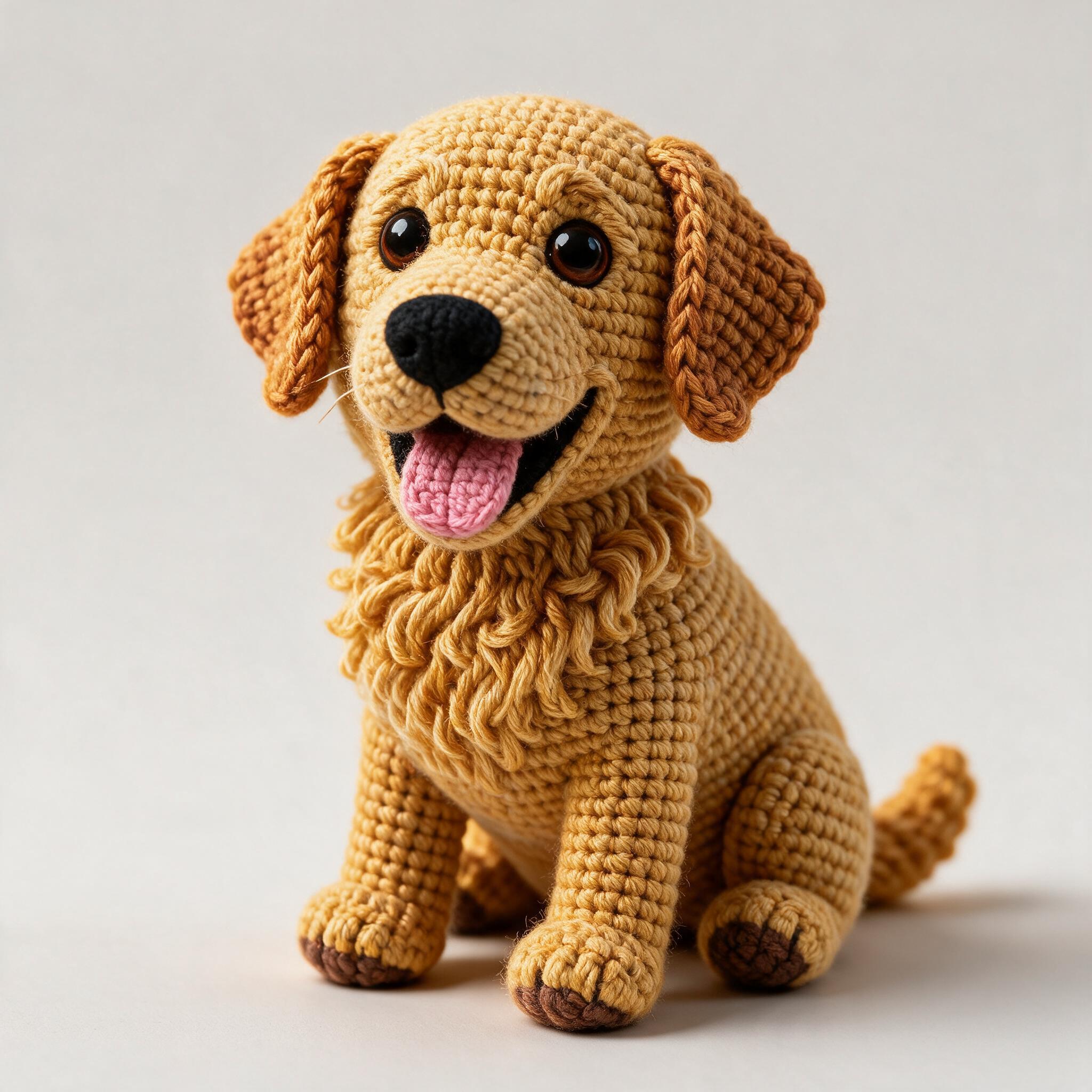
How to Make a Crochet Pet Portrait from a Photo (Tapestry, C2C, or Graphghan)
Quick Answer
Step-by-step guide to converting a pet photo into a crochet pattern — choosing tapestry crochet vs C2C vs graphghan, picking the right yarn count, managing color changes, and what to do about confetti.
Why Crochet Pet Portraits Have Exploded in Popularity
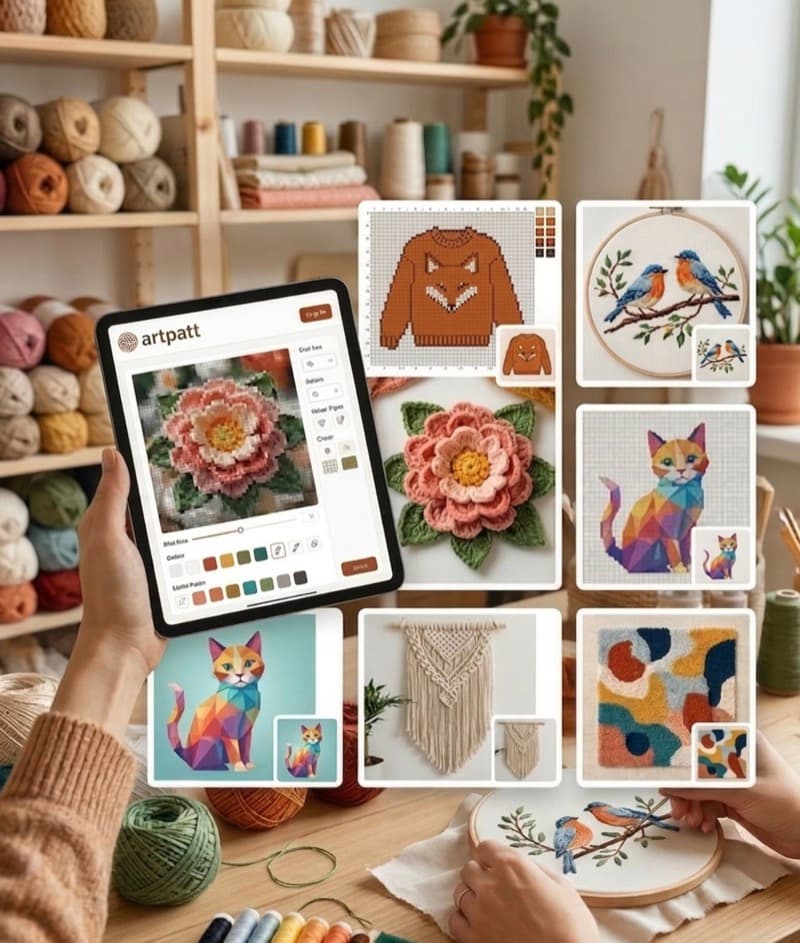
Crochet pet portraits — graphghan blankets, tapestry crochet wall hangings, and C2C throws of beloved dogs and cats — have become one of the fastest-growing crochet niches. The reasons: graphghan blankets make extraordinary memorial and gift pieces (a 100×130 cm pet blanket commissions for $300–600); tapestry crochet wall hangings hang as gallery pieces; C2C throws scale up to king-size for dramatic statement pieces. The barrier was always the chart — converting a complex pet photo into a crochet color chart used to require hand-charting (hours of work) or hiring a chart designer ($30–80). Photo-to-pattern generators removed that barrier. Upload a pet photo to ArtPatt's crochet pattern generator and get a chart in seconds, with the chart sized for your stitch automatically (single crochet is a little wider than tall; a C2C tile is close to square).
Tapestry Crochet vs C2C vs Graphghan — Which Technique?
Three crochet techniques produce charted color portraits, each with different trade-offs. Tapestry crochet (single crochet, working back and forth, carrying unused colors hidden inside the stitches): very crisp pixel-by-pixel detail, dense and sturdy fabric, limited to 2–3 active colors at any moment. Best for small-to-medium portraits with limited color palettes (4–6 total colors). C2C (corner-to-corner, double crochet clusters worked diagonally): creates a slightly diagonal pixel grid, uses 25–40% less yarn than single crochet, finishes faster than tapestry. Best for medium-to-large portraits and full blanket-scale pieces. Color changes are easier to manage because each cluster is a self-contained block. Graphghan (single crochet worked in rows following a graph chart): one-stitch-per-color cell, similar to cross-stitch in workflow but in crochet. Slowest but most precise. Best for extremely detailed portraits where confetti reduction has been carefully managed. For first crochet pet portrait: pick C2C — easiest to manage, finishes fastest, scales naturally to blanket size.
Choose the Right Pet Photo for Crochet (Lower Resolution Than Cross-Stitch)
Crochet works at lower effective resolution than cross-stitch — typical pet portrait charts are 80×120 to 150×200 cells, vs 150×200 to 250×350 for cross-stitch. The lower resolution means crochet pet photos need to be even bolder than cross-stitch pet photos. Best photos: face filling 70–90% of the frame, eye-level angle, even soft lighting (overcast or indoor window light, no flash), plain or removable background, pet looking at the camera with both eyes visible. Bad photos: full-body shots (face too small at crochet resolution), backlit photos (face shadowed), busy backgrounds (cause confetti chaos at low resolution), low-resolution photos (under 1000px wide produce pixelated charts). Edit the photo before converting: crop tightly to the head, increase contrast 15–25% (more aggressive than cross-stitch — crochet needs sharp boundaries), remove or simplify the background, sharpen the eye area. 5 minutes of editing saves dozens of hours of stitching.
Yarn Weight and Color Count for Crochet Pet Portraits
Yarn weight determines size and stitch resolution. Worsted-weight (CYC 4) is the safe default — works with a 5.0mm hook at single crochet ~16 stitches per 10cm. A 100×140 stitch chart at this gauge = 62×88 cm finished blanket. DK (CYC 3) at 4.0mm hook produces a smaller, finer-detail piece. Bulky (CYC 5) at 6.5mm hook produces a quick large blanket but loses detail. For tapestry crochet portraits hung as wall art, worsted at the standard gauge gives the right balance of detail and size. Color count: short-haired solid-color dogs (Labrador, Boxer) — 4–6 yarn colors for tapestry, 8–12 for C2C, 12–18 for graphghan. Long-haired multi-color dogs (Husky, Aussie) — 6–8 yarn colors for tapestry, 12–18 for C2C, 16–24 for graphghan. Cats (most coat types) — 6–10 colors for tapestry, 14–20 for C2C, 16–24 for graphghan. ArtPatt's crochet pattern generator picks the best matching yarn colors automatically using its built-in yarn color library.
Managing Confetti — The Crochet Pet Portrait Killer
Confetti — single-stitch isolated color blocks — is even more destructive in crochet than in cross-stitch. Each color change in tapestry crochet requires picking up a new yarn (or carrying it inside the stitches); in C2C, each cluster color change is a stop-and-start. A pet portrait without confetti reduction can have hundreds of single-cluster color spikes, which means hundreds of yarn cuts and weave-ins, which means dozens of hours of finishing. ArtPatt's confetti reduction setting collapses isolated single-stitch color runs into the surrounding dominant color. Use heavy confetti reduction for crochet pet portraits — almost always correct. Combine heavy reduction with a moderate color count (6–10 for tapestry, 12–18 for C2C). The visual difference between heavy and no confetti reduction is small at crochet resolution; the stitching time difference is enormous. The single highest-leverage decision in a crochet pet portrait is using confetti reduction aggressively from the first chart generation.
Yarn Color Matching for Pet Fur
Real pet fur has dozens of color variations. Translating those into 6–18 available yarn colors requires sensible color quantization. Common dog and cat fur translates well to standard worsted-weight yarn ranges (Red Heart Super Saver, Lion Brand Vanna's Choice, Caron Simply Soft, Stylecraft Special DK, Drops Karisma — all have 50–80+ color options). Specifically: black dogs and cats — 4–6 shades from pure black to medium charcoal grey (DMC equivalents 310, 3799, 535, 318, 414, 415); shades give dimension that pure black flattens. Brown dogs (chocolate Lab, German Shepherd) — 4–6 shades from dark chocolate through medium brown to tan (eg. Caron Chocolate, Heather, Taupe). Tabby cats — multiple grey-brown shades plus accent stripes (combine 5–8 shades from charcoal to cream). Orange cats (ginger tabby) — 4 shades from deep orange to cream (Persimmon, Pumpkin, Buff, Off-White). White pets — 3–4 shades to add dimension (Off-White, Cream, Light Grey, Antique White) — pure-white-only flattens the fur. ArtPatt suggests yarn brand-matching automatically based on the chart's color profile.
Scaling a Pet Portrait into a Throw Blanket
Crochet pet portrait blankets are most often 100–140 cm wide and 130–180 cm long (lap blanket to throw size). At single crochet 16 stitches per 10cm, that is 160–225 stitches wide × 210–290 stitches tall. Pet portrait at this scale is impressive but requires careful chart planning: the pet should fill 60–80% of the chart width with a complementary background filling the rest (sky, simple grass, gradient, solid color). Single subject portraits work best — multiple pets in the same frame become noisy at blanket scale. Border options: a 5–10 round single crochet border in a single accent color (matches one of the pet's fur tones), a name banner stitched into the lower border ('PERCY' in 12-stitch-high lettering), or a simple frame of contrasting color. Total stitching time for a 160×220 stitch tapestry crochet pet portrait blanket: 100–180 hours. C2C version of the same blanket: 60–120 hours. Plan the project budget accordingly.
Crochet Pet Portrait FAQ
How long does a crochet pet portrait take? Tapestry crochet wall hanging (60×80 stitches, 6 colors): 30–50 hours. C2C lap blanket portrait (120×160 stitches, 14 colors): 60–100 hours. Full throw blanket pet portrait (160×220 stitches, 18 colors): 100–180 hours. Which crochet technique is best for pet portraits? C2C for first-time pet portraits — easiest to manage, scales naturally to blanket size, uses less yarn. Tapestry crochet for crisp small-to-medium wall pieces. Graphghan for highly detailed gallery-scale work. Can I make a memorial blanket of a deceased pet? Yes — many people commission or DIY pet portrait blankets as memorial pieces. Use the best photo you have, edit it for clarity, generate a chart at appropriate resolution for the technique. The act of crocheting becomes part of the memorial process. How much does a custom crochet pet pattern cost? ArtPatt offers a full browser preview for free. A PNG/PDF export is $2.99 for one pattern or included with Pro at $6.99/month. Commissioning a hand-charted custom crochet pet pattern from a designer typically costs $40–100. Generated patterns are equivalent quality for most pet subjects with appropriate confetti reduction. What yarn brand should I use? Worsted-weight acrylic (Red Heart Super Saver, Caron Simply Soft, Lion Brand Vanna's Choice) for budget-friendly large blankets. Worsted-weight cotton (Lily Sugar 'n Cream, Bernat Handicrafter) for smaller wall pieces with more drape. DK-weight wool for high-end gift pieces.
Related Articles