Punch Needle Embroidery: Beginner's Guide to Tools, Technique, and Patterns
Quick Answer
Complete beginner's guide to punch needle embroidery. Covers punch needle tools (Lavor, Oxford, UltraPunch), monk's cloth vs weavers cloth, the basic punching technique, backing the finished piece, and how to create a custom pattern.
What Is Punch Needle Embroidery?
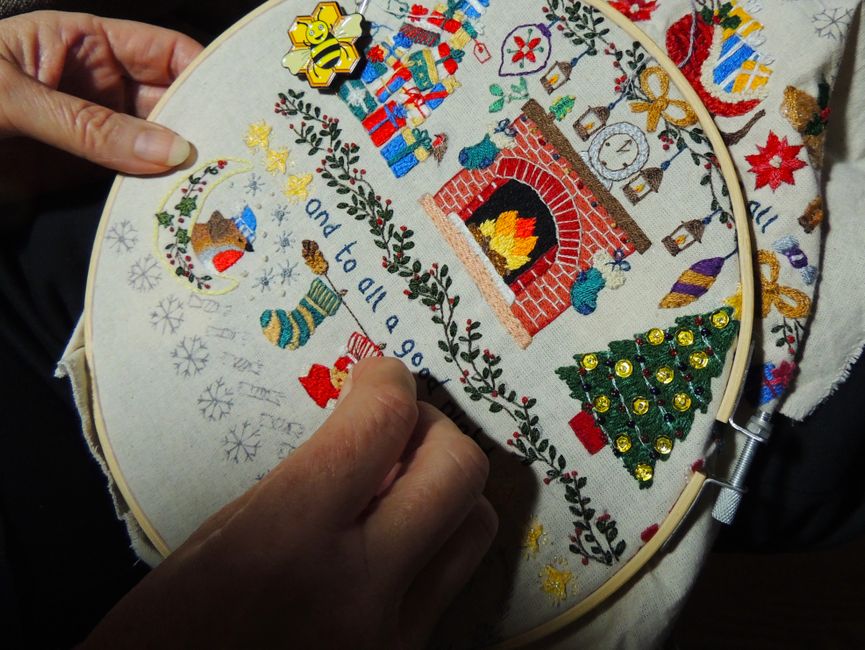
Punch needle embroidery is a textile art technique where you push a hollow needle through a loosely woven fabric repeatedly to create loops of yarn or thread on the surface. The loops pile up to form a texture similar to a rug or velvet. Unlike regular embroidery (which pulls thread through fabric from the front), punch needle is worked from the back — the pattern is drawn or transferred to the back of the fabric, you punch through following the lines, and the loops form on the front. The result is a dense, tactile surface with a slight raised pile. Punch needle can be done with embroidery floss (fine detail work, similar results to regular embroidery) or with bulky yarn (large-scale rugs and wall hangings with a plush, textural surface). The technique is faster than regular embroidery — covering large areas with loops is much quicker than laying individual stitches.
Punch Needle Tools: Pens, Needles, and Sizes
The punch needle tool is a hollow needle attached to a handle. You thread yarn or floss through the hollow needle from the handle end, grip the handle like a pen, and repeatedly push the needle tip into the fabric with short, even punching motions. Needle sizes: fine needles (size 1–3) are for embroidery floss — 2–3 strands of DMC floss give detailed, smooth results similar to embroidery. Medium needles (size 7–9) are for sport or DK weight yarn. Large needles (size 10–14) are for worsted or bulky yarn — these create plush, rug-like pile. Popular tools: the Lavor punch needle (affordable entry tool, adjustable loop height, good for beginners), Oxford punch needle (professional-grade, durable, preferred by serious rug hookers), UltraPunch (adjustable needle size, good for floss work). For beginners: start with a medium Lavor needle and worsted weight yarn — the loops are visible and the technique is easy to see and control.
Fabric: Monk's Cloth, Weavers Cloth, and Alternatives
Punch needle requires a loosely woven fabric with an open grid that the needle passes through easily. The most important property is that the fabric holds loops without pulling them out when you move the needle to the next position. Monk's cloth is the standard fabric for yarn punch needle — a 100% cotton fabric with a consistent open weave. It's forgiving for beginners and holds loops firmly. Available in natural and bleached (white) versions. Weavers cloth (also called burlap or hessian in coarser grades) is used for fine punch needle with floss — the open weave is finer and more uniform. Linen: high-quality punch needle linen gives the cleanest results but costs more. Avoid: stretchy fabrics, tightly woven fabrics (cotton quilting fabric, denim), or any fabric without enough space between the woven threads for the needle to pass through. Tightly woven fabric will block the needle and damage both needle and fabric. Mount fabric on a hoop or frame before punching — it must be taut to hold loops.
The Basic Punching Technique
Work from the back of the fabric (the pattern is drawn on the back, the loops form on the front). Hold the needle like a pen, pointing downward. The open-notch or groove on the needle shaft must face the direction you're moving. Push the needle all the way through the fabric until the handle touches the fabric surface — this sets the loop height (most tools have a depth guide). Pull back up just to the surface (do not pull above the fabric). Move the needle along the line 3–4mm and punch again. The loops form automatically on the other side. Common mistakes: not going all the way down (too-short loops fall out), pulling up too high (loops pull out), moving the needle in the wrong direction (loops tear). The rhythm — down, up-to-surface, move, down — becomes automatic within the first 30 minutes. Fill areas by working in parallel rows close together. Work outlines first, then fill the interior.
Transferring a Pattern to Fabric
Since punch needle is worked from the back, the pattern on the fabric is a mirror image of the finished front. Important: any text or asymmetric design must be transferred reversed (mirrored). Transfer methods: light tracing (place fabric over the printed pattern on a light box or bright window, trace with a permanent marker), iron-on transfer (print on transfer paper, iron onto the back of the fabric — the image transfers reversed automatically, which is correct for punch needle), or carbon transfer paper. Use a permanent marker for monk's cloth — water-soluble markers can bleed through to the front. For photo-converted patterns: ArtPatt generates the pattern with grid lines. Print the chart, transfer the outline of each color zone to the fabric back, and fill each zone with the corresponding yarn color. The PDF section pages with row/column numbers help align the transfer accurately.
Finishing a Punch Needle Piece
Trim loops if desired (cutting the loops creates a cut pile like velvet; leaving them creates a loop pile like a hooked rug — both are valid aesthetics). Apply liquid latex or rug backing adhesive to the back of the finished piece — this locks the loops in place so they don't pull out during handling or framing. Apply in a thin, even coat, let dry completely (1–2 hours). Without backing, loops will pull out if the piece is handled or washed. For wall hangings: mount on a canvas stretcher frame or staple to a wood frame. Trim excess fabric leaving 3–5cm border, fold over, and staple or pin to the back. For framing under glass: the raised pile compresses against glass and looks flat — use a deep frame with standoff spacers to keep glass away from the pile surface. For functional items (pouches, pillows): use a sewing machine to join punch needle front to a backing fabric, right sides together, leaving an opening for turning.
Creating a Custom Punch Needle Pattern from a Photo
Upload any photo to ArtPatt and select the appropriate craft mode (the output is a color grid pattern that works for punch needle just as it does for cross-stitch or crochet). For punch needle: set color count to 8–15 colors. Use medium confetti reduction — punch needle handles some detail variation well due to the soft, textural surface. The grid squares translate directly: each grid square = an area of punched loops in that color. For fine floss punch needle: higher color count (15–20) gives more photographic detail. For yarn punch needle: 8–12 colors is practical (more yarn bobbins is manageable but complex). Download the PDF chart. Use the section pages to transfer the color zones onto the fabric back. Work one color zone at a time, completing all instances of each color before switching. The ArtPatt punch needle pattern generator applies the correct grid density for either fine or bulky punch needle work.
Frames and Hoops for Punch Needle
Punch needle requires the fabric to be held taut — more taut than embroidery hoops typically achieve with a simple tightening. The most reliable options are a lip-lock hoop (specifically designed for punch needle and rug hooking), a gripper strip frame (professional-grade stretcher frames with teeth that grip the fabric edge), or a traditional embroidery hoop with the fabric pulled very tight and the screw fully tightened. For lip-lock hoops: the inner ring has a textured grip that pinches the fabric between the two rings without slipping. Unlike a standard hoop, the fabric stays at working tension throughout the session without needing to be re-tightened. For monk's cloth: the open weave tends to loosen in standard hoops after a few minutes of punching. A lip-lock hoop or gripper frame keeps it stable. For wall-mounted work: a Q-snap frame (PVC pipe frame with push-on clamps) allows large pieces to be worked in sections without re-hooping. The fabric can slide through the frame to access different sections, clamped in place for each section as you work.
Loop Height and How It Affects the Finished Surface
Most adjustable punch needle tools allow you to set the loop height — the length of loop that forms on the surface of the work. Standard loop height for wall art and pillows: 6–8mm (often the default setting). Shorter loops (4–5mm) create a denser, firmer pile with more detail definition — good for fine facial features, text, or small graphic elements. Taller loops (10–12mm) create a plush, lush surface that catches light differently and feels more textured. Varying loop height intentionally within one piece creates a sculptural, three-dimensional effect — work fine details in short loops and background fill in tall loops to create visual depth. To change loop height on an adjustable tool: rotate the barrel or slide the depth guide to the new setting. Always punch a small test area and check the loop height on the front before committing to the full project — the tool setting and the actual loop height may vary slightly depending on fabric tightness and punching pressure.
Related Articles