Blackwork Embroidery for Beginners — Start Here

Quick Answer
Blackwork embroidery uses black thread on white fabric to create geometric and pictorial patterns using simple running and backstitch. This beginner guide covers tools, stitches, pattern reading, and how to convert photos to blackwork charts.
What Is Blackwork Embroidery?
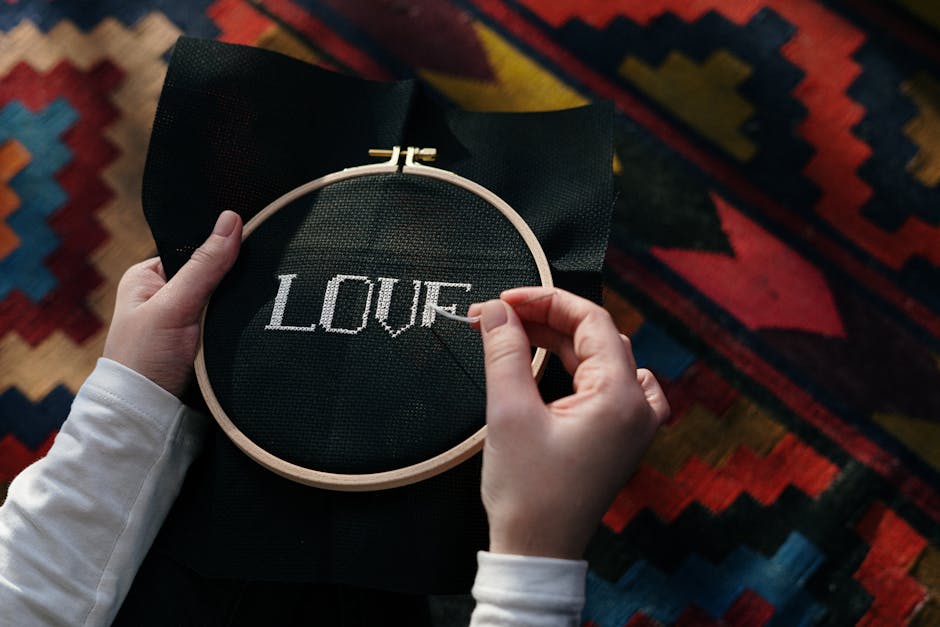
Blackwork is a form of counted embroidery that uses black (or very dark) thread on white or cream evenweave fabric to create geometric and pictorial patterns. The technique dates to 16th-century England — it was a Tudor-era fashion embellishment seen on collars, cuffs, and sleeves in portraits of the period. Modern blackwork ranges from the traditional repeating geometric fill patterns of Holbein stitch to contemporary pictorial pieces that use outline backstitch and fill stitches to create shaded images. Unlike cross-stitch, blackwork rarely uses full cross stitches — the dominant stitches are running stitch, backstitch (Holbein stitch), and various geometric fill patterns. The result is a graphic, high-contrast look that resembles pen-and-ink illustration more than the solid-color block style of cross-stitch.
Blackwork vs Cross-Stitch: Key Differences
Cross-stitch fills areas with solid color using X stitches counted on a grid. Blackwork outlines and fills using running stitch and backstitch to create patterns that are reversible — the back should look nearly identical to the front. This reversibility is why the main backstitch used in blackwork is called Holbein stitch (double running stitch): you work running stitches in one direction, then return to fill the gaps, so every stitch is visible from both sides. The other major difference is thread density — blackwork uses thread sparingly, and the pattern emerges from the geometry of the line placement, not from filling every square. The same fabric count (28-count evenweave is most common for blackwork) will produce very different results depending on which stitches you use. For photo-based blackwork generation, ArtPatt applies an edge detection algorithm to extract outlines and convert them to a backstitch chart — effectively simulating the way hand-designed blackwork uses line instead of fill.
What You Need to Get Started
Fabric: 28-count evenweave (Jobelan or similar) in white or antique white is the most common choice. You can also use 14-count Aida if you prefer the larger holes — the pattern scale will be larger. Avoid lower counts (11-count) as the fill patterns lose their geometric detail. Thread: DMC 310 (black) is the standard. For a softer look, try DMC 3799 (very dark pewter gray) or DMC 939 (very dark navy). Some modern blackwork uses colored threads (red, indigo) — authentic Tudor blackwork used silk thread, often in red on black fabric in addition to the classic black on white. Needle: tapestry needle size 24 or 26 for 28-count evenweave. Tapestry needles have blunt tips that pass through fabric holes without splitting threads. For 14-count Aida, use a size 24 tapestry needle. Hoop or frame: 6-inch or 8-inch embroidery hoop for smaller pieces. Scroll frame or stretcher bars for larger pieces — they keep even tension, which matters more for blackwork than cross-stitch because any puckering distorts the geometric patterns.
The Core Stitches: Running Stitch, Holbein, and Backstitch
Running stitch is the foundation of blackwork: needle up through one hole, down through the hole two or more threads away, up again two threads further. You get an even dashed line. Holbein stitch (double running stitch) completes the running stitch by returning in the opposite direction to fill in the gaps — the result is a solid line that looks identical from both sides. This is the stitch used for all the geometric fill patterns in counted blackwork. Backstitch is used for outlines and curved lines where Holbein isn't practical: needle up, go back one stitch length to the right and down, come up one stitch length ahead of where you came up. This creates a solid continuous line but is only visible on one side. In photo-based blackwork conversion, backstitch appears as outline elements around major shapes. The combination of Holbein fill patterns (repeating geometric motifs in the interior of design areas) and backstitch outlines is how modern blackwork pictorial pieces achieve shading and depth without using full color.
How to Read a Blackwork Pattern
A blackwork pattern is a grid chart where each square represents one thread intersection on your fabric (or one hole in Aida). Black lines drawn along grid edges indicate stitches. A line between two adjacent holes means you make a stitch there. Unlike cross-stitch where you fill squares, in blackwork you stitch along the lines between squares. Count the pattern squares carefully before starting — placement errors in blackwork geometric fills are harder to frog (undo) than individual cross stitches because the geometric patterns depend on exact positioning. Start from the center of the design or from an anchor point like a corner, mark it on your fabric with a water-soluble pen or running stitch basting thread, and count outward. When working fill patterns, stitch one repeat at a time and check symmetry before continuing — geometric patterns reveal counting errors immediately.
Converting a Photo to a Blackwork Pattern with ArtPatt
ArtPatt's blackwork generator uses edge detection to extract outlines from photos and convert them to a backstitch chart. Best subjects: portraits and faces (strong edge contrast between subject and background), animals, botanical illustrations, and architectural line work. Settings for blackwork: upload your photo, select Blackwork or Embroidery as the craft, set the grid size to 40–60 stitches wide for a medium-complexity piece. Increase the contrast slider before generating — blackwork edge detection works better with high-contrast source images where edges are sharp and distinct. Set color count to 1 (black only) or 2 if you want to separate outline from fill. The output is a backstitch chart with symbol markings for each stitch. For traditional geometric fill patterns within the outlined shapes, the generator provides a basic fill — for more complex traditional fill patterns, hand-replace the automated fill with a chosen geometric motif from a blackwork pattern library.
Traditional Blackwork Fill Patterns and How to Use Them
One of the distinctive features of traditional blackwork is the use of repeating geometric fill patterns — tiny geometric motifs worked in running or Holbein stitch that fill the interior of outlined shapes. These fills create the characteristic light-to-dark shading effect in historical blackwork: dense fills read as dark areas, open fills read as light areas, and the variation between them creates the illusion of shadow and form without using color. Classic fill patterns range from simple cross-hatching (horizontal and vertical running stitches forming a regular grid) to complex interlocking star and diamond motifs that require careful counting. The density of the fill is determined by how many stitches are in each repeat: a 2×2 fill (one cross-hash per 4 threads) is very open and light; a fill covering 3 out of every 4 threads reads as dark. When working with a photo-based blackwork outline, choose fill densities that match the shading zones in the original image — use dense fills where the photo has shadows, open fills where it has highlights.
Thread, Fabric, and Needle Choices for Blackwork
Thread weight in blackwork matters more than in most embroidery because the line weight is the entire visual language of the piece. DMC six-strand cotton floss in varying strand counts creates different line weights: 1 strand on 28-count evenweave gives a fine, crisp line ideal for detailed fill patterns; 2 strands gives a bolder line better suited for main outlines; 3 strands is used for primary borders and the heaviest outline elements. Many traditional blackwork designs use all three strand counts deliberately to create visual hierarchy. Pearl cotton (a single-ply thread with higher sheen than floss) gives a different quality of line — shinier and slightly thicker than the equivalent strand count in floss. For a contemporary blackwork piece with a modern look, pearl cotton #8 or #12 gives a beautifully consistent line weight that is faster to use than separating floss strands. Fabric: 28-count evenweave is preferred over Aida for blackwork because Aida's woven texture slightly blurs the line quality. Linen 28-count gives the most historically accurate result.
Finishing and Displaying a Blackwork Piece
Blackwork is typically worked on white or cream fabric without a hoop mark being left permanently, provided you remove the hoop regularly and never leave the piece hooped between sessions for extended periods. After completing, hand wash in cool water with a small amount of gentle soap to remove any transfer pen marks and the natural oils from handling. Rinse thoroughly, press face down on a towel, and allow to dry flat. For framing, mount on acid-free board without touching glass — contact with glass creates moisture condensation that can damage the thread. A simple narrow frame in dark wood or matte black complements the graphic quality of the black thread on white fabric. The visual contrast of blackwork photographs very well, making it a popular project choice for crafters who enjoy sharing their work online. For a professional gallery look, frame with a wide white or cream mat that echoes the fabric ground and leaves breathing room around the design.
FAQ
How is blackwork different from just doing backstitch-only cross-stitch?
They look similar at a glance — both are single-color outline work — but the stitch mechanics differ in a way that affects the finished piece. Standard backstitch cross-stitch is worked with plain backstitch, which looks clean on the front but leaves a broken, less tidy line on the back. Traditional blackwork uses Holbein (double running) stitch specifically because it produces an identical, solid line on both sides — historically important because blackwork collars and cuffs were sometimes seen from both sides, and it's still preferred today for pieces displayed unframed or in a hoop where the back might show. The other real difference is that blackwork traditionally fills interior areas with repeating geometric motifs to create shading, rather than leaving interiors blank the way a pure outline cross-stitch piece typically does — that fill-pattern layer is what gives finished blackwork its depth and texture rather than reading as a flat line drawing.
What fabric and thread should a beginner use for blackwork?
14-count Aida is the simplest fabric for a first project because the holes make counting clear. Use stranded cotton in one or two strands depending on the coverage you want, and keep the thread tension even so geometric fills do not distort the fabric.
Should I start blackwork in the center of the design?
Yes. Mark the fabric center and begin with a small outline or repeated motif near it. Counting outward from a known point makes symmetrical borders easier to place and lets you catch a one-square counting error before it spreads across the design.
Related Articles