Crochet vs Knitting: Which Should You Learn First? (Honest Comparison)
Quick Answer
Crochet vs knitting — which is easier to learn, which is faster, which produces stretchier fabric, which uses more yarn, and which one is the right starting point based on what you want to make.
Crochet vs Knitting — The Fundamental Difference
Crochet uses one hook to manipulate one loop at a time, building fabric stitch by stitch. Knitting uses two needles to hold an entire row of loops at once while you transfer them from one needle to the other, building fabric row by row. This single mechanical difference cascades into everything else: how the fabric drapes, how stretchy it is, how much yarn it consumes, how fast it works up, and how easy it is to learn. Crochet fabric is denser, stiffer, and uses about 30% more yarn for the same finished area. Knitting fabric is stretchier, drapier, and uses less yarn but takes longer per stitch. Neither is 'better' — they suit different projects. Pick one based on what you want to make first, not based on which is theoretically easier.
Which Is Easier to Learn?
Crochet is generally easier to learn for absolute beginners. Reasons: (1) one tool (hook) instead of two (needles); (2) one loop on the hook at a time, instead of an entire row of loops on the needle; (3) mistakes pull out cleanly without dropping stitches that run down the work; (4) the basic stitch (single crochet) is a single motion, simpler than the knit stitch which requires coordinating two needles and the yarn through three motions. Crochet beginners typically finish their first project in 4–10 hours; knitting beginners typically take 8–15 hours for an equivalent project. By the third project, the time difference disappears — both crafts become muscle memory. Many people learn crochet first as a confidence-builder, then add knitting once they have a fiber-craft baseline. This is reasonable but not required — start with whichever craft makes the items you want.
Which Is Faster to Make Things?
Crochet is faster per stitch — single crochet covers about 30% more area per minute than stockinette knitting. Crochet single crochet stitches are taller and wider than knit stitches. Net result: a 100×100 cm crochet blanket finishes in about 25–40 hours of single crochet; the same blanket in stockinette knitting takes 40–60 hours. The exception: if you compare crochet single crochet to knit garter stitch (every row knit, no purling), the time is closer. Knitting catches up at fine gauge — finer yarns make knitting relatively faster than fine-gauge crochet. For chunky bulky-weight projects, crochet is significantly faster. For fingering-weight garments, the gap narrows. Not a clean win for either craft — depends on yarn weight and stitch choice.
Which Uses More Yarn?
Crochet uses about 25–35% more yarn than knitting for the same finished area. The reason: crochet stitches loop around each other multiple times per stitch, while knit stitches each consume one length of yarn pulled through one previous loop. A 100×100 cm single crochet blanket needs roughly 1500–1800 m of worsted-weight yarn; the same blanket in stockinette knitting needs roughly 1200–1400 m. Cost difference: at $4–6 per skein of worsted yarn, that is $20–40 more for the crochet version. For large projects (blankets, garments) the cost difference adds up. For small projects (hats, scarves) the difference is $5–10 — negligible. Plan yarn purchases accordingly using ArtPatt's Crochet Yarn Calculator and Knitting Gauge Calculator before starting.
Which Produces Stretchier Fabric?
Knitting produces significantly stretchier fabric than crochet. Stockinette knit fabric stretches both width-wise and length-wise; ribbing (alternating knit and purl columns) is even stretchier. Crochet fabric is mostly inelastic in the width direction and only slightly stretchy in the length direction. This difference matters for: garments (knitting is the default for sweaters, socks, fitted hats — the stretch handles body movement; crochet garments are stiffer and harder to fit), socks specifically (knitted socks fit better and last longer; crocheted socks are bulky and tend to slide down), close-fitting hats (knit fits the head smoothly; crochet sits on the head). Crochet is better for: stiff structural items (baskets, bags, amigurumi), accessories that benefit from rigidity (coasters, placemats, wall hangings), blankets (where stretch is unwanted and structure is preferred). Pick the craft that matches the desired drape and stretch, not the other way around.
Which Is Better for Colorwork?
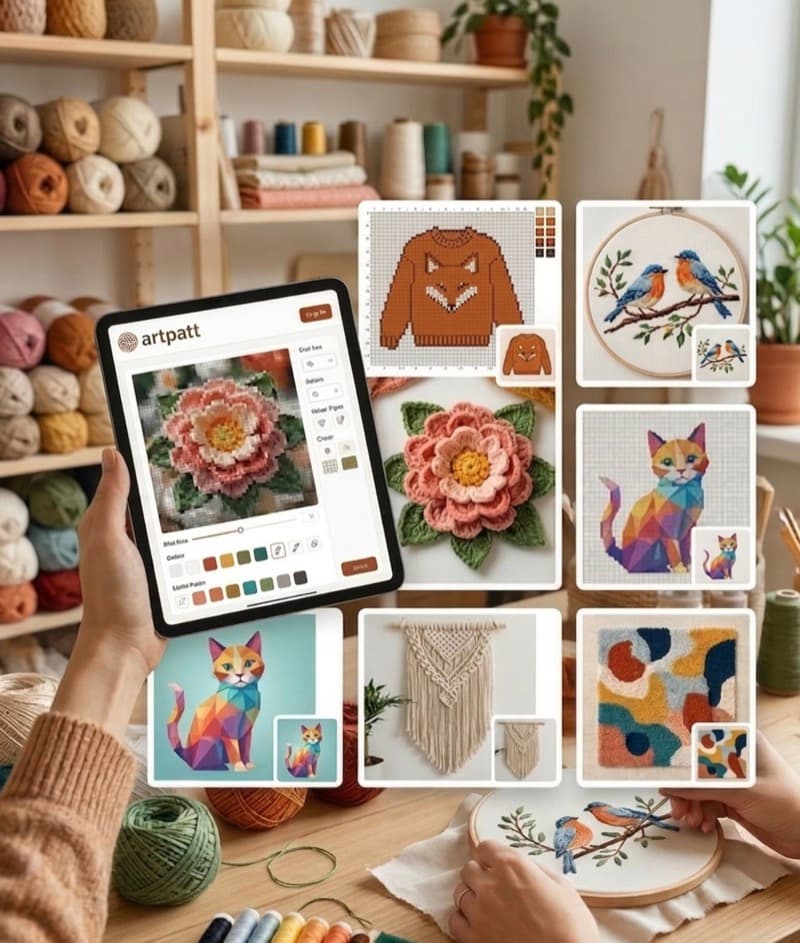
Both handle colorwork well but in different ways. Crochet colorwork: tapestry crochet (carry unused colors hidden inside the stitches), C2C crochet (corner-to-corner with color changes per cluster — graphghan blankets), single-color graphs converted to crochet charts using a generator like ArtPatt's crochet pattern generator. Crochet colorwork is structurally cleaner because each stitch is independent and color changes are crisp. Knitting colorwork: stranded colorwork / Fair Isle (two colors carried across the row, knit at intervals — produces light, airy colorwork), intarsia (separate yarn bobbins for each color block — produces flat, drapy colorwork without floats), duplicate stitch (single-color knitting embellished with colored stitches embroidered after — easiest beginner colorwork). Knitting colorwork is more delicate and produces drapier garments; crochet colorwork is more structural and produces blankets, bags, and decorative pieces. Pick based on the project type. For converting photos into colorwork charts, ArtPatt handles both — generate charts for tapestry crochet, C2C, Fair Isle knitting, intarsia knitting, or stockinette stripes from any photo with the correct stitch ratio applied automatically.
Which Is Better for Amigurumi (Stuffed Toys)?
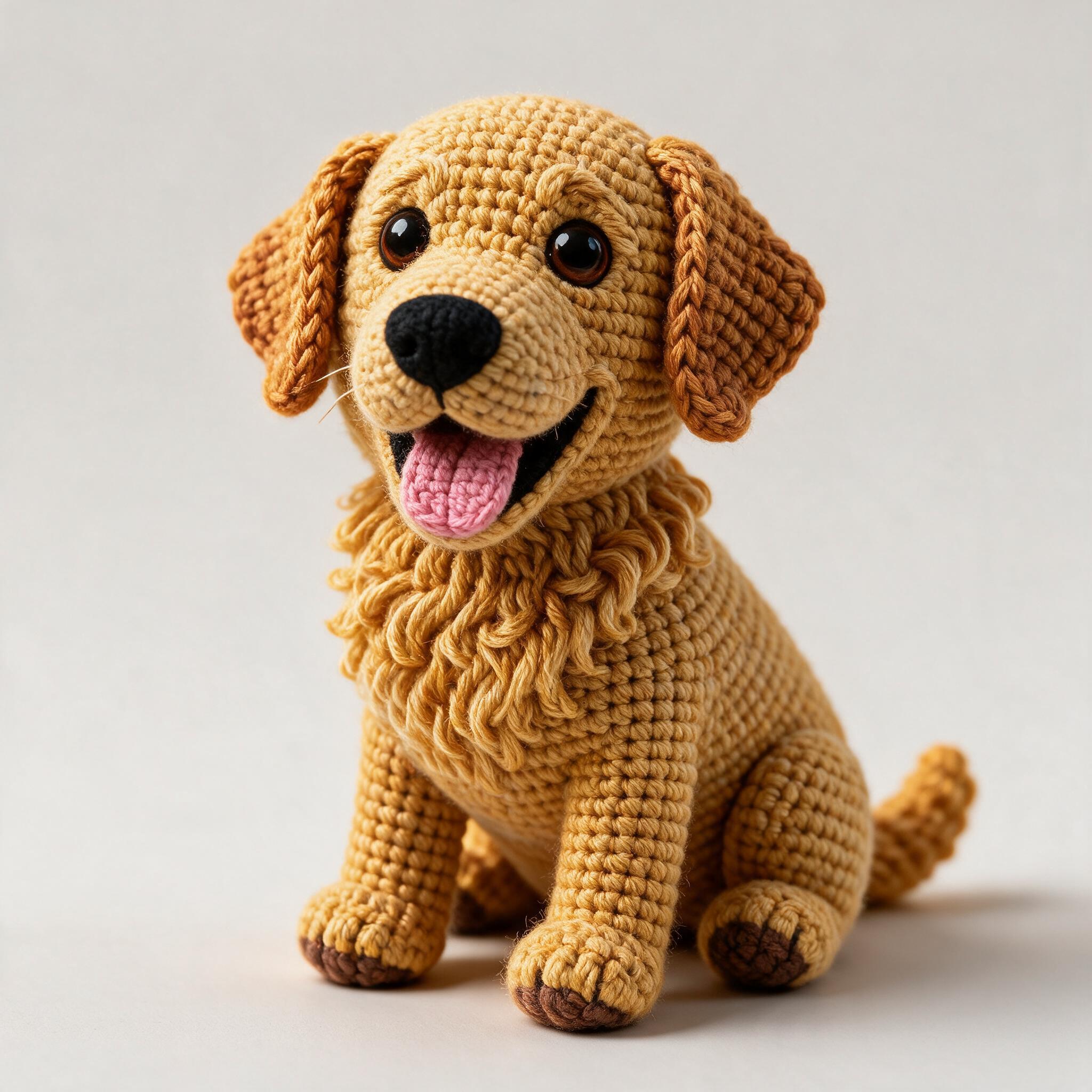
Crochet wins decisively for amigurumi. The dense single-crochet fabric holds stuffing without showing through; knitting produces stretchier fabric that distorts under stuffing pressure. Almost all published amigurumi patterns are crochet, and the technique vocabulary (magic ring, working in the round, single crochet decreases) is purpose-built for the craft. If you want to make stuffed toys, learn crochet. Knitted toys exist but are a niche craft with a much smaller pattern library and steeper technique learning curve. The same logic applies to decorative crochet (granny squares, doilies, lace edgings, mandalas) — crochet has the more developed pattern tradition.
Which Is Better for Garments (Sweaters, Socks, Cardigans)?
Knitting wins for garments. Reasons: knitted fabric stretches and recovers, fitting the body across daily movement; knit fabric drapes naturally on the shoulder line and at the cuffs; sock construction in knitting is highly developed (toe-up, top-down, magic loop, double-pointed needles, dozens of heel constructions); knitted garments are warmer per gram of yarn because the fabric traps more air. Crochet garments are stiffer, less flexible, and use 25–35% more yarn for the same garment. Crochet sweaters work as cardigans and oversized loose-fit pullovers; crochet fitted garments fight the wearer's body. If your goal is making clothes — especially sweaters, socks, fitted hats, fitted gloves — learn knitting. If your goal is everything except clothes (blankets, bags, amigurumi, decor, accessories), learn crochet.
Can You Learn Both?
Yes, and many fiber crafters do. Most people learn one craft fully before adding the second — typically crochet first (easier, faster early wins), then knitting (more sophisticated for garments). The skills do not directly transfer (the hand motions are completely different) but the broader fiber-craft knowledge does — yarn weight, gauge, pattern reading, color theory, finishing techniques. Once you know one craft, learning the second takes 1–2 weeks of dedicated practice rather than the months it took to learn the first. The order does not matter; many people learn knitting first and crochet second. The wrong move is trying to learn both simultaneously as a beginner — you confuse the techniques and master neither.
Crochet vs Knitting FAQ
Which uses more yarn, crochet or knitting? Crochet uses 25–35% more yarn for the same finished area. Which is faster, crochet or knitting? Crochet is faster per stitch by about 30% for worsted-weight projects. Difference narrows at fingering weight. Which is easier to learn? Crochet is easier for absolute beginners — one tool, one loop at a time, mistakes pull out cleanly. Which is better for sweaters? Knitting — the stretch handles body movement and produces drapier fabric. Which is better for blankets? Either works. Crochet is faster (fewer hours), knitting is drapier (better feel). Pick based on aesthetic preference. Which is better for amigurumi? Crochet — the dense fabric holds stuffing and the technique vocabulary is purpose-built. Can I generate patterns for both crochet and knitting from photos? Yes — ArtPatt has separate generators for each craft, each sizing the chart for its stitch (single crochet and stockinette are wider than tall, a C2C tile is close to square) so the finished piece matches the original photo proportions.
FAQ
Is crochet easier than knitting?
Crochet often feels simpler at first because one hook holds one active loop and a mistake can be unraveled one stitch at a time. Knitting has more live stitches to manage but produces a different drape and excels at garments. Ease depends on the project and the learner.
Which craft is faster, crochet or knitting?
Crochet is often faster for blankets, motifs, baskets, and three-dimensional shapes, while knitting can use less yarn and create a smoother fabric for garments. Speed also depends on stitch, yarn, tension, and experience, so compare a small swatch rather than relying on a universal claim.
Should I learn crochet or knitting first?
Choose the craft that matches the object you want to finish soon. Pick crochet for granny squares, amigurumi, and dense color charts; pick knitting for socks, sweaters, ribbing, and soft drape. A clear first project is more important than choosing the supposedly easier craft.
Related Articles