How to Start Crochet: A Complete Beginner Guide (Hook, Yarn, First Project, Common Mistakes)
Quick Answer
Complete beginner guide to starting crochet — what supplies you actually need, the 4 stitches that cover 95% of patterns, your first finishable project, and the 6 mistakes every new crocheter makes.
What Is Crochet and Why Is It Beginner-Friendly
Crochet uses one hook to pull loops of yarn through other loops, building fabric one stitch at a time. There is one tool, one piece of yarn at a time, and (mostly) one stitch on the hook at any moment — which is why crochet is generally considered easier to learn than knitting. Mistakes are easy to fix: pull the yarn back, the loops undo cleanly, no dropped stitches to chase. Four basic stitches (chain, slip, single crochet, double crochet) cover 95% of beginner patterns. The hardest part for beginners is yarn tension — getting the loops the same size, project after project. That comes with practice (~10 hours of stitching), not from technique change. The second-hardest part is finishing a project — pick small to start. A scarf is too long for a true beginner; a coaster or dishcloth is right.
Crochet Starter Supplies — What You Actually Need
Five essentials, total cost about $12–20. (1) One crochet hook, size 5.0mm (US H/8) — the most versatile beginner size. Aluminum is cheapest; ergonomic handles (Clover Amour, Furls) are worth the upgrade if you have hand strain. (2) One ball of worsted-weight yarn (CYC weight 4) in a light solid color. Light colors let you see your stitches clearly while learning. Avoid: black, navy, dark brown (hard to see stitches), variegated yarn (hard to count rows), fuzzy or chenille yarn (hides stitches entirely), cotton thread or fingering-weight (too thin for a 5mm hook). One 200g/360m skein is enough for several first projects. (3) Tapestry needle for weaving in tails. (4) Sharp scissors. (5) A printed pattern or video tutorial. SKIP for now: yarn winder (skeins wind by hand fine), stitch markers (use bobby pins or paperclips), full hook set (one hook is enough), pattern books (free patterns online cover everything you need).
The 4 Basic Crochet Stitches That Cover 95% of Patterns
(1) Chain stitch (ch) — yarn over the hook, pull through the loop on the hook. Used to start every project and to make turning chains at the end of rows. (2) Slip stitch (sl st) — insert hook into a stitch, yarn over, pull through both loops on hook in one motion. Used to join rounds and travel without adding height. (3) Single crochet (sc) — insert hook into a stitch, yarn over, pull up a loop (2 loops on hook), yarn over, pull through both loops. Short, dense, beginner-friendly. (4) Double crochet (dc) — yarn over, insert hook into a stitch, yarn over, pull up a loop (3 loops on hook), yarn over, pull through 2 loops (2 loops left), yarn over, pull through remaining 2 loops. Twice the height of single crochet, faster to cover area. Three other stitches (half double crochet, treble crochet, slip-stitch crochet) are useful but not essential for the first 3-5 projects. Master the four basics first.
Your First Crochet Project (Pick Something That Finishes)
Pick a project that takes 4–10 hours to make. Beginners who pick a 50-hour blanket as their first project usually quit. Recommended first projects: a square dishcloth (single crochet, 4×4 inches, 100% cotton yarn, 4–6 hours), a coaster (single crochet, 4-inch diameter, 2–3 hours), a granny square (double crochet rounds, 5×5 inches, 3–5 hours), a phone case (single crochet rectangle folded and seamed, 6–8 hours), a flat headband (half double crochet strip, 6–10 hours). Avoid for first projects: scarves (10–25 hours, demoralizing repetition), hats (require working in the round + decreases — second-project skill), amigurumi (require magic ring and increases/decreases — third-project skill), blankets (50+ hours, never finish), garments (require sizing, gauge swatching, shaping — much later skill).
How to Hold the Hook and Yarn
Two common hook grips. (1) Pencil grip — hold the hook like a pencil, between thumb and index finger, with the throat of the hook (the flat part) resting on the index finger. Most controlled for fine work. (2) Knife grip — hold the hook like a steak knife, palm down, fingers wrapping the handle. More relaxed for long projects, less hand strain. Pick whichever feels natural; you can switch later. Yarn tension grip: drape the yarn over the index finger of your non-hook hand, wrap once around the pinky for tension control, hold the work with thumb and middle finger. The index finger feeds yarn at a controlled rate; tightening or loosening the pinky wrap controls tension. This grip feels awkward for the first 1–2 hours of practice, then becomes automatic. Most tension problems trace back to skipping this step and just pinching the yarn between fingers.
6 Common Beginner Crochet Mistakes
(1) Inconsistent tension — too tight, then too loose, then back. Cause: gripping the yarn instead of letting it feed through the tension finger setup. Fix: practice the tension grip until it is automatic. (2) Adding or losing stitches across rows. The work develops a slant or trapezoid shape. Cause: missing the turning chain or stitching into the wrong stitch at the row end. Fix: count stitches at the end of every row for the first 10 projects. (3) Using yarn the wrong weight for the hook. Worsted yarn with a 3.5mm hook = stiff fabric; lace yarn with a 6mm hook = open holes. Match yarn weight to hook label range. (4) Picking dark or fuzzy yarn for first project. Cannot see stitches. Pick a light, smooth, solid color until you can stitch confidently. (5) Pulling out the work the wrong way. Crochet undoes by pulling the working yarn — the entire row pulls out cleanly. Pulling the bottom or yanking sideways tangles the work. (6) Watching tutorials at full speed. Beginner tutorials should play at 0.5x or 0.75x speed for the first watch. Re-watch the same 30-second segment 3-4 times before stitching it yourself.
What to Crochet After Your First Project
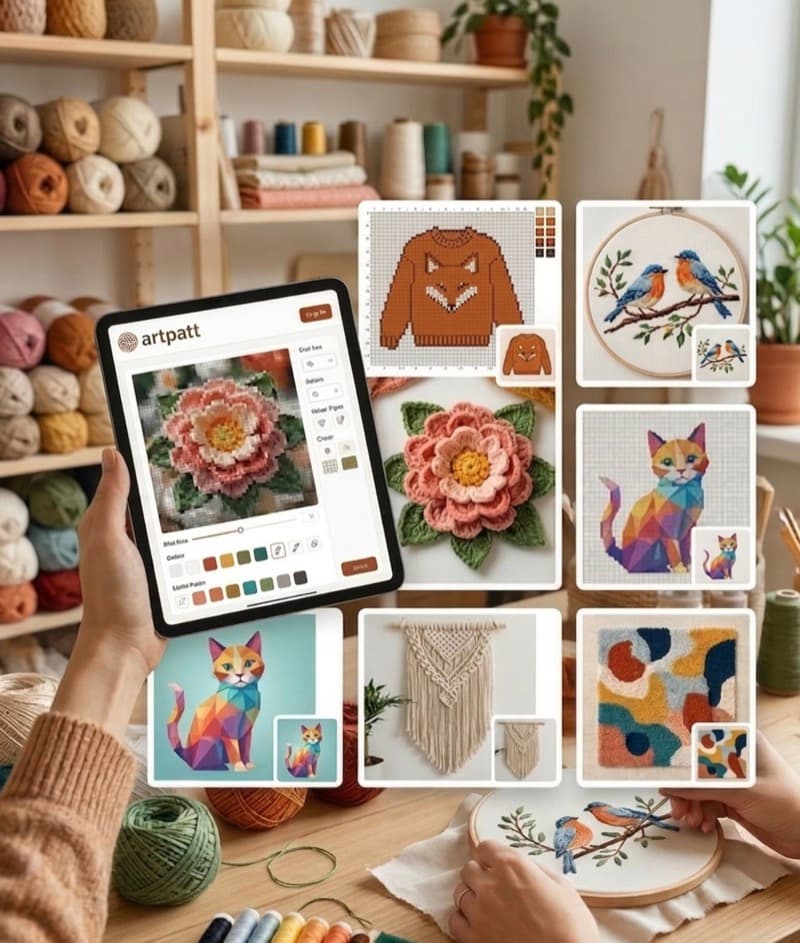
Once you finish your first dishcloth or coaster, ramp up gradually. Second project: add color changes — make a granny square in 3 colors, or a striped dishcloth (rows alternate two colors). Learn to weave in tails properly. Third project: work in the round — make a hat (single crochet beanies are forgiving), an amigurumi mini animal, or a circular coaster. Magic ring is intimidating but watch one good tutorial and try it 3-4 times. Fourth project: introduce shaping — increases and decreases. A baby beanie or a small amigurumi covers both. Fifth project: try following a written pattern (with abbreviations like 'sc, ch1, *dc, sk1, sc; rep from * to end'). Reading patterns is a separate skill from stitching. Sixth project: a small wearable — fingerless mitts, a chunky cowl, or a baby sweater (smallest sizing reduces commitment). Or jump into a custom photo-to-crochet pattern using ArtPatt's crochet pattern generator — convert any photo into a tapestry crochet or graphghan chart.
Crochet Beginner FAQ
How long does crochet take to learn? About 1 hour to learn the chain and single crochet motion. About 5–10 hours of stitching to develop consistent tension. About 2–3 finished projects to understand pattern reading. Is crochet easier than knitting? Generally yes — one hook, one stitch on the hook at a time, mistakes are easy to fix. Knitting has dozens of stitches on the needle and dropped stitches can run down the work. Many people learn crochet first then knitting. What size hook for a beginner? 5.0mm (US H/8) with worsted-weight yarn (CYC 4). The most beginner-friendly combination — visible stitches, comfortable yarn weight, hook size that suits most learning patterns. Can I crochet from a photo? Yes — use a photo-to-crochet pattern generator like ArtPatt's. Upload any image, pick the stitch type (single crochet, half double, double, or C2C), and preview a counted color chart with per-color yarn estimates. Unlock the printable PNG/PDF export for $2.99 for one pattern or use Pro for unlimited exports. Should I learn left-handed or right-handed crochet? Use whichever hand feels natural. There are tutorials for both. The 'standard' is right-handed but left-handed crocheters are common and patterns work for both — just hold the chart mirrored.
FAQ
What does a beginner need to start crocheting?
You need one smooth yarn, a hook that matches the yarn label, scissors, and a yarn needle for weaving in ends. Add a stitch marker and a simple printed pattern once you are comfortable with chain, single crochet, and turning rows.
Which yarn and hook are easiest for a first crochet project?
A light-colored worsted-weight or aran yarn and a 5 mm hook are forgiving choices because the stitches are large enough to see and the yarn is easy to handle. Avoid very dark, fuzzy, or novelty yarn until you can recognize the top loops of each stitch.
Which crochet stitches should a beginner learn first?
Learn the slip knot, chain, single crochet, turning chain, and slip stitch first. Add half double crochet and double crochet after you can keep a steady stitch count. Small swatches are more useful than starting with a large blanket because mistakes are easier to see and correct.
Related Articles