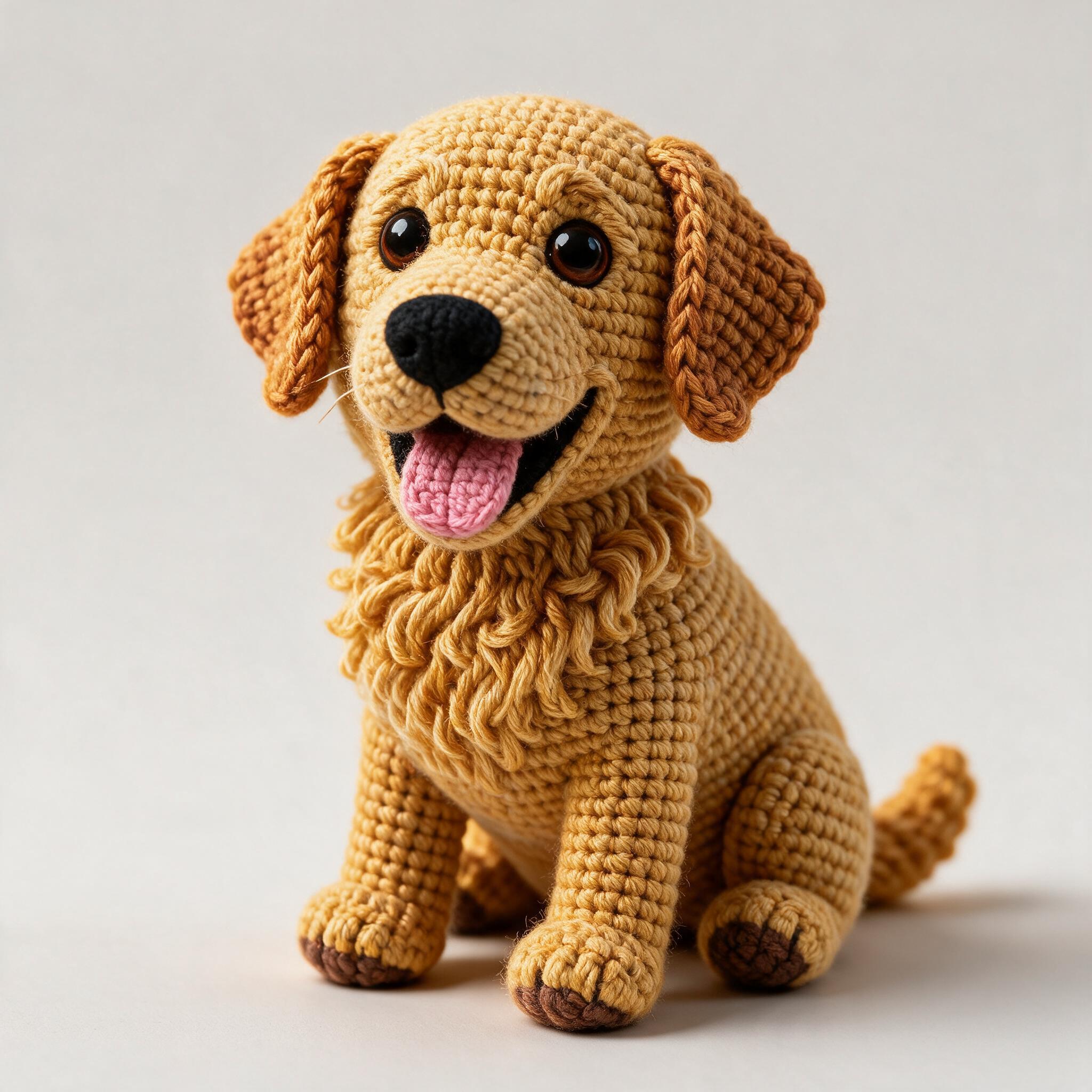
Why Is My Amigurumi Not Round? Common Fixes
Quick Answer
Fix amigurumi that is pointy, flat, lumpy, inside out, full of holes, or curling. Plain explanations of why each problem happens and exactly what to change to get a smooth, round result.
Why Is My Amigurumi Not Round?
A sphere that comes out egg-shaped, oblong, or faceted is almost always a tension or stitch-count problem. The most common cause is an inconsistent magic ring: if the starting ring is too loose, the first round of stitches spreads unevenly and every subsequent round inherits that distortion. Pull the magic ring closed firmly before placing your first stitch marker, and check that the initial 6 (or 8) stitches are evenly spaced around the ring rather than bunched to one side. The second cause is missed increases. In a standard amigurumi sphere, each increase round adds exactly 6 stitches distributed evenly — one increase per section. Skipping a single increase in one section creates a flat spot that compounds over subsequent rounds. Count after every increase round: if you started with 6, round 2 should be 12, round 3 should be 18, and so on. A third cause is using a spiral construction without a stitch marker. Without a marker at the first stitch of each round, it is easy to work 5 stitches in one section and 7 in another without noticing. Place a locking stitch marker at the first stitch of every round and move it up as you go.
Why Is My Amigurumi Pointy?
A pointy top or bottom on a sphere happens when the decreases at the crown are worked too tightly or too few stitches remain before the final cinch. In a standard decrease sequence, the goal is to reduce the stitch count back down by 6 per round until you reach 6 stitches, then fasten off and pull the tail through to close. If you decrease faster than 6 per round — for example, working 2 decreases per section instead of 1 — the crown contracts sharply and forms a point instead of a smooth curve. Stick to the pattern's exact decrease count per round. The second cause is pulling the closing tail too tight before the final 6 stitches are fully drawn in — work the last 6 stitches down to about a 1-centimeter opening before threading the tail, then pull gently and evenly in a circular motion rather than yanking straight through. A third, less obvious cause: invisible decreases (invdec) worked incorrectly can bunch stitches, creating a puckered point. When working invdec, insert the hook under the front loop only of the first stitch, then under the front loop only of the second stitch, then yarn over and pull through both — do not pick up the back loops.
Why Is My Amigurumi Flat?
Flat amigurumi has two root causes: insufficient stuffing or a decreasing sequence that started too early. Stuffing: amigurumi needs to be packed firmly — much more firmly than most beginners expect. Push stuffing into the base first, then work upward. The piece should feel solid when pressed gently. If it dents and stays dented, it needs more stuffing. Add stuffing in small amounts as you go rather than trying to pack it all at the end when the opening is too small. Timing of decreases: if you start decreasing too early in the pattern — before the straight 'even' rounds are complete — the sides of the sphere never have a chance to fill out, and the result looks like a disc. Check the pattern for the instruction 'work even for X rounds' between the increase section and the decrease section; do not skip these rounds. If you are writing your own pattern or adjusting one, the number of even rounds between the last increase round and the first decrease round controls how elongated or spherical the shape is — more even rounds = taller and more elongated; fewer = rounder and flatter.
Why Does My Amigurumi Have Holes?
Holes in amigurumi fabric are a gauge problem: the hook is too large for the yarn. Every hook size has a range of yarn weights it produces a tight fabric with. Amigurumi requires working at the tight end of that range — typically 0.5mm to 1mm smaller than the yarn label recommends. If the label says 5mm hook, use 3.5–4mm for amigurumi. The test: lay the crocheted fabric flat and hold it up to light. If you can see daylight through the stitch holes, go down a hook size. Holes also appear at join points — between the magic ring and the first round, or at color changes. At the magic ring: after pulling closed, weave the tail through the base of the stitches to tighten the center before continuing. At color changes: leave a 6-inch tail on both the old and new yarn, and weave both tails in opposite directions through at least 4–5 stitches in a zigzag path. A common beginner mistake is tying the yarn tails together before weaving; this creates a knot bump rather than closing the hole. Do not knot — just weave.
Why Is My Amigurumi Inside Out?
Working amigurumi in the round in single crochet naturally curls the right side inward — especially in the first several rounds — so the smooth 'V' faces of the stitches end up on the inside of the sphere rather than the outside. This is the most common surprise for beginners: you finish a sphere, stuff it, and realize the bumpy side is facing out. The fix is simple: after completing a few rounds, reach inside the piece and push the work through the opening so the smooth side faces out. Many patterns instruct this explicitly with 'turn the work right-side out.' If you are past the point where turning is possible because the piece is closed and stuffed, it cannot be reversed without reopening the seam. For future pieces, check after round 3 or 4 whether the smooth side is facing outward, and correct before continuing. Some crocheters intentionally work amigurumi inside out because the 'wrong' side can look cleaner with certain yarn types — but for standard amigurumi, work with the smooth side facing you throughout.
Why Is My Amigurumi Head Not Round?
The head specifically (rather than the body) tends to go wrong in two ways: it becomes oblong when the neck attachment deforms the base, or it becomes lumpy when the safety eyes pull the fabric. For a round head: attach the head to the body only at the last possible step, after stuffing and closing. Attaching before stuffing can compress the shape. When sewing head to body, use a straight tapestry needle and sew through the base stitches of the head and the top stitches of the body in a circle — do not pull the sewing yarn tight enough to cinch the head downward. Safety eyes deform the head when the backing washer is pushed through without spreading the fabric properly. When inserting a safety eye, push the post through the stitch center — not through the yarn strand — and seat the backing washer from inside the piece before stuffing. If the washer is not fully seated (sitting crooked rather than flat against the fabric), the post will pull the surrounding stitches inward, creating a dimple. Press the washer fully flat against the inside fabric before continuing.
Why Is My Amigurumi Curling?
Flat amigurumi pieces — ears, fins, leaves, and other appendages worked flat rather than in the round — curl because crochet fabric has natural directional tension from the turning chains and the way stitches are seated. Single crochet curls more than half double or double crochet. To prevent curling in flat pieces: block the finished piece while damp by pinning it to a foam mat in the target shape and leaving it to dry. For pieces that must lie flat and cannot be blocked (because they will be sewn on without blocking access), work the piece in a stitch that curls less — half double crochet in rows curls significantly less than single crochet in rows. Alternatively, work a single crochet border around the entire flat piece after completing it — the border stitches pull the edges in the opposite direction from the curl and flatten the piece. Curling in the main body or head of a sphere is different: this is caused by working too loosely in the early rounds so the base flares outward. Tighten your tension or go down a hook size.
Can I Wash My Amigurumi?
Yes, but the method depends on the yarn fiber and the type of eyes and safety components used. Acrylic yarn: machine washable on a gentle or delicate cycle in a mesh laundry bag, cold water, low spin. Air dry flat or in a low-heat dryer with dryer balls to prevent clumping of the stuffing. Cotton yarn: machine washable, cold water, gentle cycle. Cotton does not stretch in the wash the way acrylic can. Wool or wool-blend yarn: hand wash only in cool water with wool-specific detergent. Machine washing wool causes felting — the fibers lock together permanently, shrinking and hardening the piece irreversibly. Safety eyes (plastic with backing washers) are waterproof and survive machine washing. Embroidered features (nose, mouth) in standard embroidery floss are also washable. Wire armatures inside the amigurumi will rust if the piece is soaked — remove armature or hand wash only if the piece has an internal wire structure. Polyester fiberfill stuffing (the standard white stuffing) is washable and will dry fully with sufficient air time. Never use hot water on any amigurumi as heat can cause acrylic fibers to melt or harden and can loosen safety eye washers.
FAQ
Why does my amigurumi sphere have flat spots?
Flat spots usually come from uneven increase placement, missed or extra stitches, inconsistent tension, or stuffing that is packed unevenly. Count every round, use a stitch marker at the start, and add stuffing gradually so you can shape the piece before the opening becomes too small.
How many increases should an amigurumi round have?
A standard single-crochet sphere often starts with six evenly spaced increases per round, but the exact sequence depends on the pattern shape and yarn gauge. Follow the round count rather than adding increases whenever the piece looks small; extra increases can create a ruffle instead of a smooth curve.
How tightly should I stuff amigurumi?
Stuff firmly enough to support the shape, but add small amounts and rotate the piece as you work. Overstuffing can stretch the stitches and create gaps, while understuffing leaves dents and a floppy silhouette. The final rounds should close without forcing the hook through stretched fabric.
Related Articles