What Can I Knit With This Yarn?
Enter your yarn weight and how much you have — in yards, meters or grams — and see every project that fits within your stash. Yardage ranges scale automatically when you change weight class.
What Can I Knit With This?
Pick the yarn weight and enter how much you have in yards, meters or grams.
Your yarn
- Worsted
- 200 yds
- 183 m · ≈ 100 g
- Projects in range
- 12
- 6 comfortable · 6 tight
Crocheting instead? It takes more yarn for the same size: in Interweave's swatch test, double crochet used about 27% more than stockinette and single crochet about 60% more.
| Project | Category | Needed | Fit |
|---|---|---|---|
| Baby booties | Baby | 40–75 yds37–69 m | Comfortable |
| Headband / ear warmer | Accessories | 60–100 yds55–91 m | Comfortable |
| Dishcloth / washclothCotton works best | Home | 60–100 yds55–91 m | Comfortable |
| Baby hat | Baby | 70–120 yds64–110 m | Comfortable |
| Child hat | Accessories | 100–150 yds91–137 m | Comfortable |
| Fingerless mitts / wrist warmers | Accessories | 100–160 yds91–146 m | Comfortable |
| Adult beanie / hat | Accessories | 150–220 yds137–201 m | Tight |
| Mittens (pair) | Accessories | 150–250 yds137–229 m | Tight |
| Simple cowl | Accessories | 150–280 yds137–256 m | Tight |
| Slouchy hat | Accessories | 200–280 yds183–256 m | Tight |
| Short scarf | Accessories | 200–320 yds183–293 m | Tight |
| Market bag / toteCotton or linen recommended | Home | 200–380 yds183–347 m | Tight |
Ranges are typical and vary with pattern, gauge, needle size, stitch pattern and tension. “Tight” means you have the minimum but not the maximum, so a plain or compact version should work. Swatch before you start.
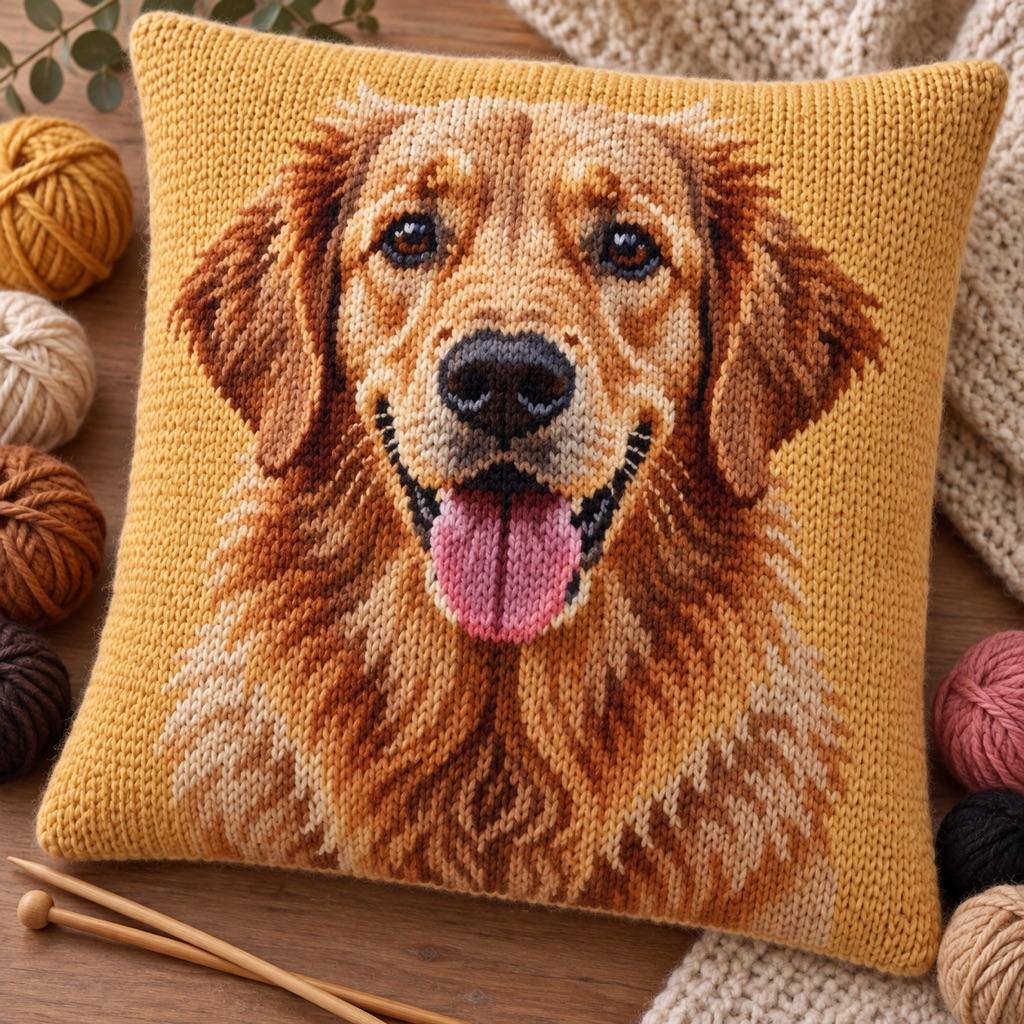
Turn a photo into a real pattern
Know what you want to make? ArtPatt generates knitting charts from any photo — Fair Isle, intarsia, and more.
Open Knitting GeneratorWhat You Can Knit by Yardage (Worsted, 50 to 2,000+ Yards)
Each row adds the projects whose minimum first fits at that amount; everything in the rows above still fits. Worsted weight, the same ranges as the calculator.
| Yarn you have | Projects that fit | New at this amount (yards needed) |
|---|---|---|
| 50 yds46 m | 1 | Baby booties (40–75) |
| 100 yds91 m | 6 | Headband / ear warmer (60–100), Dishcloth / washcloth (60–100), Baby hat (70–120), Child hat (100–150), Fingerless mitts / wrist warmers (100–160) |
| 150 yds137 m | 9 | Adult beanie / hat (150–220), Mittens (pair) (150–250), Simple cowl (150–280) |
| 200 yds183 m | 12 | Slouchy hat (200–280), Short scarf (200–320), Market bag / tote (200–380) |
| 300 yds274 m | 15 | Infinity scarf / large cowl (280–450), Hat + mitts set (300–450), Full-length scarf (300–500) |
| 400 yds366 m | 17 | Baby cardigan (newborn–3m) (350–550), Baby blanket (pram / small) (350–600) |
| 600 yds549 m | 20 | Baby cardigan (6–12m) (500–750), Child sweater (ages 4–8) (600–950), Baby blanket (standard) (600–1,000) |
| 800 yds732 m | 21 | Vest / sleeveless top (650–1,000) |
| 1,000 yds914 m | 22 | Adult sweater (XS–S) (900–1,400) |
| 1,500 yds1,372 m | 24 | Adult sweater (M–L) (1,400–2,000), Throw blanket (lap size) (1,400–2,200) |
| 2,000 yds1,829 m | 25 | Adult sweater (XL–2XL) (1,800–2,600) |
| 3,000 yds2,743 m | 26 | Throw blanket (full size) (2,200–3,500) |
Typical Yards & Meters per 100 g Skein by CYC Yarn Weight (0–7)
The figures the calculator uses to turn grams into yards, each inside the Craft Yarn Council range for its weight. Real yarns vary, so the label wins.
| Weight | CYC range per 100 g | Typical per 100 g | Typical per 50 g |
|---|---|---|---|
| Lace (0) | 600+ yds | 800 yds (732 m) | 400 yds |
| Fingering / Sock (1) | 350–500 yds | 420 yds (384 m) | 210 yds |
| Sport (2) | 300–350 yds | 325 yds (297 m) | 163 yds |
| DK (3) | 220–300 yds | 260 yds (238 m) | 130 yds |
| Worsted (4) | 170–220 yds | 200 yds (183 m) | 100 yds |
| Aran (4) | 170–220 yds | 170 yds (155 m) | 85 yds |
| Bulky (5) | 100–170 yds | 130 yds (119 m) | 65 yds |
| Super Bulky (6) | 50–100 yds | 80 yds (73 m) | 40 yds |
| Jumbo (7) | Under 50 yds | 40 yds (37 m) | 20 yds |
How to find a knitting project for the yarn you already have
- 1
Find the yarn weight
Read the CYC number (0–7) or the weight name on the label: lace, fingering, sport, DK, worsted, aran, bulky, super bulky or jumbo. No label? Count wraps per inch.
- 2
Measure what you have
Use the yardage or meterage on the label. If you only know the weight, weigh the yarn and enter grams; the tool converts with a typical yards-per-100 g figure for that weight.
- 3
Add up partial skeins
Leftovers count: weigh each partial ball of the same yarn and enter the total grams.
- 4
Read the list
Every project knit in that weight whose minimum yardage fits is listed. Comfortable means you have enough for the top of the range; tight means only a plain or small version.
- 5
Narrow it down
Filter by category (accessories, baby, home, garments) or show comfortable fits only, then copy the list to keep with the yarn.
- 6
Check against the pattern
Pick a pattern and compare its stated yardage with yours. Swatch first: a looser gauge or a textured stitch uses more yarn than the typical range.
What You Can Knit by Yardage
75–100 yards: baby booties, a dishcloth or washcloth, a headband or ear warmer, or a baby hat in worsted weight. These are the smallest practical knitting projects — small accessories and baby items that finish quickly. In fingering weight the same items need about 45% more yardage, so 75 yards covers little more than a pair of baby booties.
100–200 yards: child hat, adult beanie, fingerless mitts, or simple cowl in worsted or aran. One skein of worsted typically falls in this range (a 100 g worsted skein is about 200 yards). At 200 yards of bulky, you can make a full adult hat with yarn to spare — bulky needs about 35% fewer yards than worsted for the same project (100–145 yards for an adult hat).
200–400 yards: short scarf, tote bag, full cowl, mittens, shawlette, or baby blanket in a small size. 300 yards of DK covers a short scarf (230–370 yards). 400 yards of worsted is enough for a small baby blanket (350–600 yards) or a full adult hat and mitts set.
Yarn Type and What It Changes
Chunky and super-bulky yarn: same projects as worsted but needing far fewer yards. A hat in super-bulky needs 70–100 yards where worsted would need 150–220 yards. The trade-off: chunky projects are faster to knit but have fewer stitch definition options. Super-bulky is excellent for quick-gift items — cowls, hats, and lap blankets. Jumbo yarn has no firm standard thickness, so go by the label; a lap throw in jumbo is typically 420–660 yards.
Cotton and linen yarn: same yardage as the equivalent weight in wool or acrylic. Cotton is typically sport to DK weight and works for dishcloths, market bags, summer tops, and baby items where machine washability matters. Cotton has no stretch — it knits differently from wool — but the yardage math is identical. Mohair and mohair-blend yarns are usually fingering or laceweight; the halo makes the fabric appear much fuller than plain fingering so the project scale doesn't always follow the yardage rules for plain fingering. Thin/laceweight yarn needs the most yards of any weight — a simple shawl in lace can easily use 600–1,000 yards.
What Can I Knit With FAQ
200 yards of worsted covers an adult beanie (150–220 yards), a simple cowl, fingerless mitts, a pair of mittens, or a short scarf at the low end of its range. It's the sweet spot for single-skein accessories. A full-length scarf needs more — 300–500 yards depending on width and stitch pattern.
Depends on the skein. A standard 100 g worsted skein is about 200 yards — enough for a hat, cowl, fingerless mitts, or short scarf. A 100 g sock skein (fingering, about 420 yards) makes a pair of socks (350–450 yards) or a shawlette. A mini skein (20–50 yards) is only enough for very small accessories or embellishments. Check the yardage on your label, not just the weight in grams.
Chunky (bulky) yarn is ideal for hats (100–145 yards), cowls (100–180 yards), full-length scarves (195–325 yards), and quick lap blankets (910–1,430 yards). It knits fast, which makes it popular for beginner projects and quick gifts. It's too bulky for fine detail work — socks, lace, and colorwork are not practical in chunky.
Any flat project: scarves, dishcloths, blankets (worked flat), shawls, and garments knitted flat and seamed. Straight needles cannot work in the round without joining — so hats, socks, and seamless sweaters require circular needles or double-pointed needles. Most modern patterns use circulars even for flat work because the long cable holds heavy fabric weight better than straights.
100 g of yarn varies widely in yardage depending on weight. 100 g of fingering ≈ 420 yards (enough for a pair of socks). 100 g of worsted ≈ 200 yards (enough for a hat). 100 g of bulky ≈ 130 yards (enough for an adult hat or a small cowl). Always use the yardage on the label, not the gram weight, for project planning.
800 yards covers a full-size shawl in lace (600–1,000 yards) or fingering (495–830 yards), a vest or a standard baby blanket in worsted, the smaller sizes of a child's sweater in worsted (600–950 yards), or a hat, mitts and scarf set with yarn to spare. In bulky, 800 yards reaches the smaller adult sweater sizes (585–910 yards).
Either. US labels list yards, most European, UK and Australian labels list meters, and many list both. One yard is 0.9144 m and one meter is 1.094 yards, so a 200-yard skein is 183 m. Switch the calculator to meters and it converts for you; every range is shown in both units.
Usually yes. In Interweave's swatch test covering the same area, double crochet used about 27% more yarn than stockinette and single crochet about 60% more. Stitch pattern, hook size and gauge narrow or widen the gap, so for a crochet project add at least a quarter to the knitting ranges here, or use a crochet yarn calculator.
Yes — holding yarn double makes a thicker yarn and is a common way to use up thin yarn. Two strands of fingering held together knit roughly like DK, two of DK like aran or worsted, and two of worsted like bulky. Look up the project in the weight the doubled yarn acts like, then remember you need that yardage from each strand: twice the total yarn.
Related Tools and Pages
Knitting Gauge Calculator
Convert stitch and row counts to finished size using your actual gauge.
Yarn Substitution Calculator
Calculate how many skeins of substitute yarn to buy for any pattern.
Yarn Weight Converter
Convert yarn weight names across US, UK, and Australian naming.
Knitting Price Calculator
Calculate a fair selling price for knitted items including labor and platform fees.
Knitting Pattern Generator
Convert any photo into a knitting chart with yarn color matching.