Free Knitting Pattern Generator: Convert Any Image to a Knitting Chart
Quick Answer
How to turn photos into knitting charts with correct stitch ratios, yarn estimates, and colorwork techniques. Guide for Fair Isle, intarsia, and duplicate stitch from any image.
Why Knitting Stitches Aren't Square
This is the most important thing to understand about knitting charts from images. A stockinette stitch is roughly 1.3 times wider than it is tall. If you use a cross-stitch pattern directly for knitting, the image will be compressed vertically — circles become flattened ovals, faces look short and broad. ArtPatt compensates automatically: when you select 'Knitting' with 'Stockinette' stitch type, the grid is adjusted so the finished knitted piece matches the original image proportions. Garter stitch is closer to 1:1 (nearly square), so if you're doing garter-based colorwork, select that option for accurate proportions.
Fair Isle vs Intarsia vs Duplicate Stitch
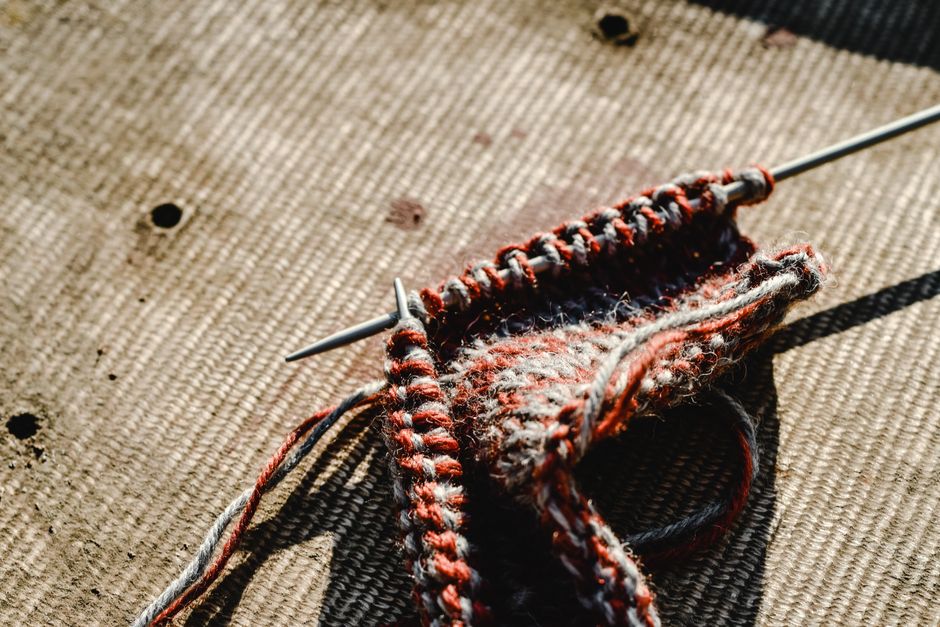
Your technique determines how many colors you can practically use. Fair Isle (stranded colorwork) carries two colors across each row — ideal for patterns with no more than 2 colors per row and repeating motifs. Limit to 5–8 total colors. Intarsia uses separate yarn bobbins for each color block — good for large solid-color areas like portraits. Can handle 10–20 colors but requires careful bobbin management. Duplicate stitch embroiders color on top of finished stockinette — perfect for small details and can use unlimited colors but is slow. ArtPatt generates the same grid for all techniques; you choose which technique based on the pattern complexity.
Yarn Weight, Gauge, and Project Sizing
Your yarn weight determines the gauge, which determines the finished size. DK weight yarn typically gives 22 stitches per 10cm in stockinette. Worsted gives about 20. Bulky gives 14–16. Always knit a gauge swatch with your chosen yarn and needles before starting — your personal tension matters more than the yarn label's suggestion. Enter your gauge in ArtPatt and the dimension display shows your exact finished size. For a scarf, you might want 30 stitches wide (about 15cm in DK). For a blanket panel, 200 stitches (about 90cm). For a sweater front, 100–120 stitches depending on size.
How Many Colors for Knitting Colorwork?
Fewer colors is almost always better in knitting. For Fair Isle, maximum 2 colors per row is traditional (5–8 total colors across the design). For intarsia, you can use more but each additional color means another bobbin to manage. Start with 6–8 colors for your first colorwork project. ArtPatt's confetti reduction is critical here — a single stitch of a random color in knitting means an extra bobbin or an extra yarn to carry, which creates bulk and tangles. Set confetti to 'Heavy' for knitting patterns. After generating, look at the pattern: if you see lots of single-stitch color changes, reduce the color count or increase confetti reduction.
Reading the Chart: Bottom-Up, Right-to-Left
Knitting charts are read differently than they look. Start at the bottom-right corner. Right-side (RS) rows are read right to left. Wrong-side (WS) rows are read left to right. This mirrors how flat knitting works — you turn the work after each row. For circular knitting (in the round), every row is read right to left. ArtPatt's row numbers help you track where you are. The 10-stitch grid lines are useful for counting and placing markers. Many knitters find it helpful to print the B&W symbol version, put it on a magnetic board, and use a ruler to mark the current row.
Yarn Estimation for Knitting
ArtPatt estimates yarn per color based on stitch count and stitch type. Stockinette uses about 3.5cm of yarn per stitch. Fair Isle uses more (4.5cm per stitch) because of the floating strands on the back. The estimates include a 15% waste buffer for tails, swatching, and mistakes. When buying yarn, round up to the next full ball and buy an extra ball of your most-used color. For Fair Isle, also consider that carried floats add 20–30% more yarn usage than simple stockinette — ArtPatt accounts for this when you select 'Fair Isle' as your stitch type.
When to Use Dithering
Dithering creates a stippled effect that simulates gradients using fewer colors — it works beautifully in knitting! The dithered pattern produces a 'heathered' look similar to marl or tweed yarn effects. Enable dithering when converting photographs or any image with smooth color gradients. Don't use dithering for geometric patterns, logos, or pixel art — these need clean, sharp boundaries. In knitting, a dithered pattern is actually easier to execute than a non-dithered one because the alternating pixels create a natural Fair Isle rhythm of two colors per row.
Start Small: Your First Knitting Colorwork Project
Don't jump into a 200-stitch blanket for your first colorwork project. Start with: a mug cozy (30×15 stitches, 2–3 colors), a headband (80×15 stitches, 3–4 colors), or a small pouch (40×40 stitches, 4–6 colors). These let you practice tension, color changes, and chart reading without committing months of work. Use ArtPatt to generate the pattern at these small sizes, download the PDF, and knit a test piece. Once you're comfortable with the technique, scale up to larger projects. The same pattern can be regenerated at any grid size without re-uploading the image.
Blocking: The Step That Makes Colorwork Look Finished
Colorwork knitting almost always looks uneven and slightly puckered before blocking. The floats on the back create horizontal tension that draws stitches closer together, making the fabric narrower than the schematic dimensions suggest. Wet blocking resolves this: soak the finished piece in cool water for 20–30 minutes, squeeze gently without wringing, press between towels to remove excess water, then pin out to the schematic dimensions on blocking foam. The pins should stretch the piece slightly beyond its natural state. As it dries, the wool fibers relax and the stitches even out — floats release their tension, color boundaries sharpen, and the pattern reads more clearly. Allow 24 hours minimum before unpinning. For non-wool fibers (acrylic, cotton), blocking is less dramatic but still worth doing. Steam blocking acrylic with an iron held a few centimeters above the surface can relax the stitches without the extended soak, though avoid touching the iron directly to acrylic.
Which Images Convert Best to Knitting Charts
The most successful knitting chart conversions come from images with inherent geometric structure. Snowflakes, stars, and diamond patterns are designed as grids and convert perfectly. Animal silhouettes — especially birds, deer, foxes, and bears — have strong outlines that read clearly in the 6–10 color range typical of colorwork. Simple botanical shapes (leaves, tulips, sprigs) work at small stitch counts. Nordic and folk art motifs are specifically designed for the constraints of two-color stranded knitting and are the most predictable source material. Photographs of people and pets can produce interesting knitting charts but require more post-generation cleanup: reduce color count more aggressively (8 max for Fair Isle), apply heavy confetti reduction, and accept that the result will be more stylized than the original. The test before generating: can you describe the subject in five bold shapes? If yes, it will work. If the description requires dozens of subtle details, the knitting chart will look like noise.
Buying Yarn for Colorwork: Practical Tips
After generating your chart, the ArtPatt PDF's color legend shows the yarn quantity in meters per color. Use these numbers directly when buying yarn. Key rules: buy all skeins of each color in the same dye lot in one trip — dye lots vary subtly and the difference becomes visible in a finished colorwork piece especially in large background sections. For your main background color, add 20% to the estimate (rounding up to the nearest full skein) because tension inconsistencies and swatch waste can push consumption higher than calculated. For accent colors used in small repeating motifs, one skein is usually enough for even large projects. Wool is the best fiber for colorwork: it grips itself during stranded work, making floats easier to manage, and it blocks beautifully afterward. Superwash wool is easier to care for but tends to be more slippery — less ideal for Fair Isle but fine for intarsia. Avoid highly textured yarn for your first colorwork project as the halo or texture hides the stitch definition and makes chart reading very difficult.
Managing Tension in Knitting Colorwork
Uneven tension is the most common quality problem in knitting colorwork and the single biggest difference between a beginner-looking piece and a polished one. In Fair Isle stranded work, the floats on the back of the fabric create horizontal tension that draws the knitting inward, making the work narrower than plain stockinette at the same gauge. To compensate, spread the stitches on the right needle fully before picking up the carried color — this ensures the float spans the full stitch width rather than pulling across a compressed section. A useful technique for beginners is to knit Fair Isle from two circular needles simultaneously, working a few stitches, spreading them on the needle before each float, and maintaining the rhythm. For intarsia, the tension at color join points is the critical area — the stitch immediately after a join tends to be looser than the surrounding fabric. After each join, snug the first new stitch gently before continuing. Blocking corrects minor tension variations across the entire piece, which is why blocking is not optional in colorwork — it is the final step that makes machine-like evenness achievable by hand.
Related Articles