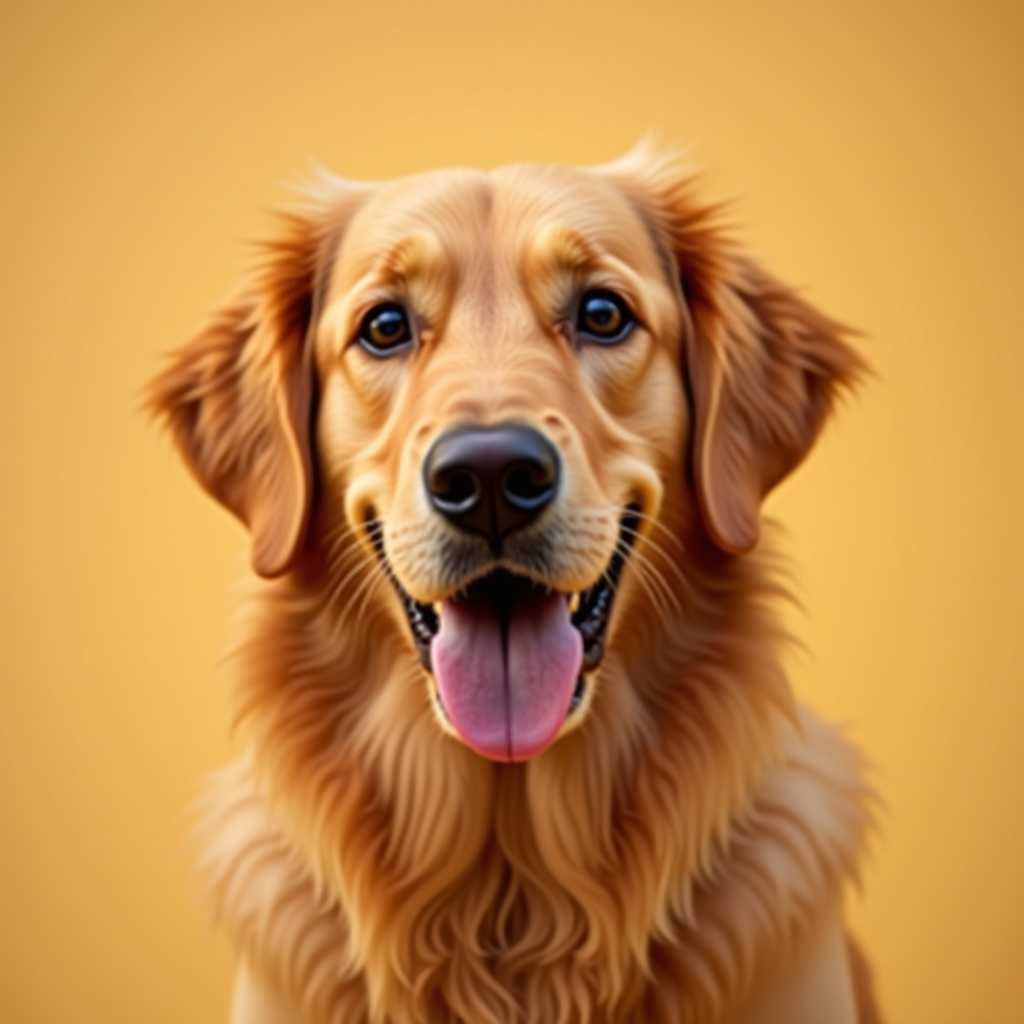
Your photo
Turn a Picture into a
Plastic Canvas Chart
Upload a photo, pick a mesh count, and get a plastic canvas chart with yarn colors matched and yardage worked out.
Free to use · No sign-up
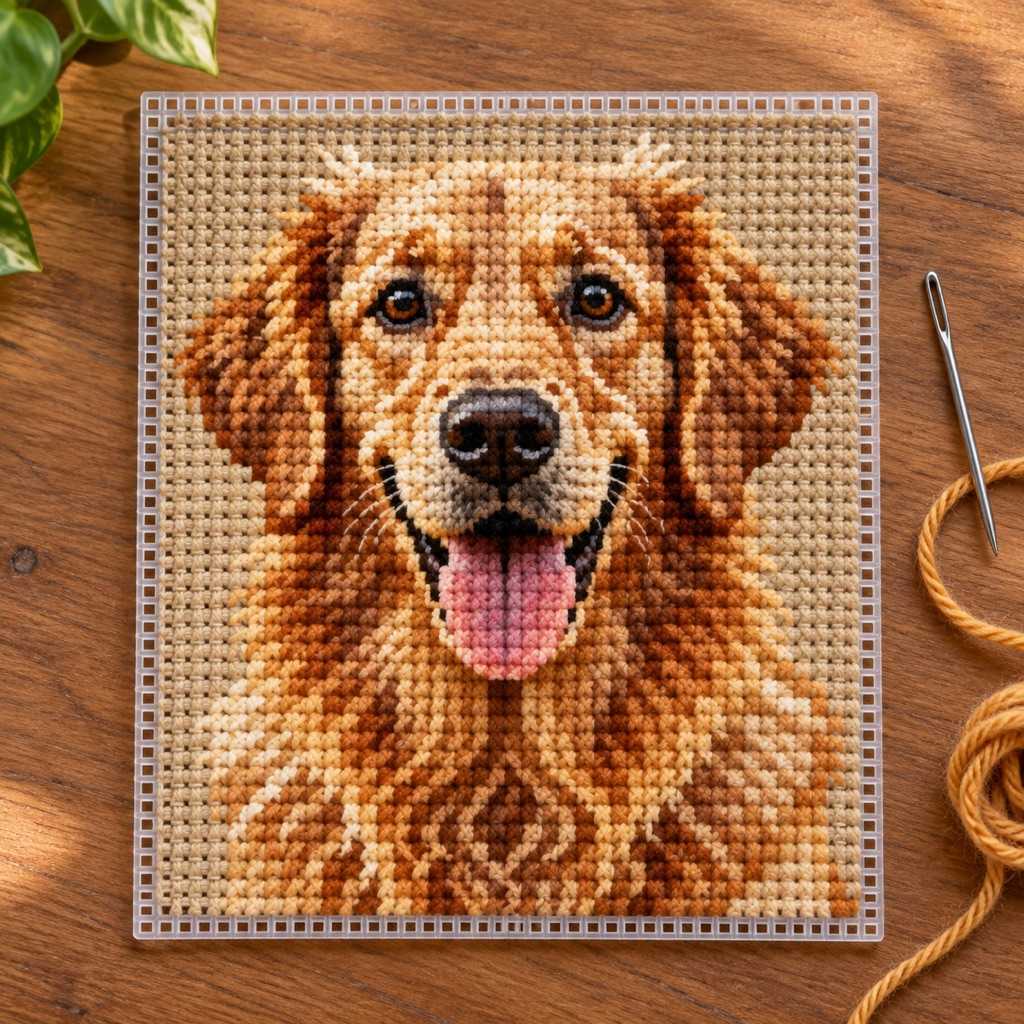
Plastic canvas previews stay bold and low-color — fine detail doesn't survive a coarse mesh.
What You Get from One Photo
This is the chart ArtPatt made from the photo above: 48 × 48 plastic canvas chart in 10 colors.
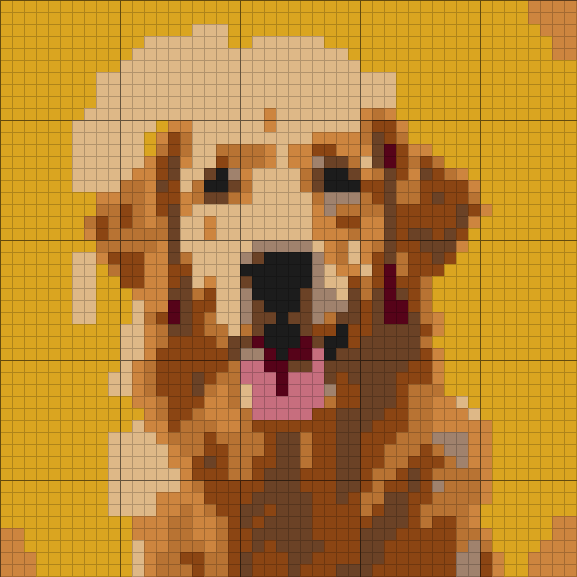
Yarn colors matched
Each color in the picture is matched to a yarn shade and listed in the legend.
A symbol in every cell
The printed chart has numbered rows and columns, so you can count your place on the mesh.
Yarn counted per color
Stitch counts are turned into how much yarn each color needs.
Color legend from this chart
- Goldenrod1 ball
- Tan1 ball
- Saddle Brown1 ball
- Peru1 ball
- Walnut1 ball
- Copper1 ball
+ 4 more colors in the full legend
From Plastic Canvas Chart to Finished Piece
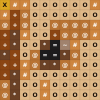
The same few squares, as they sit on the chart and as they look once worked.
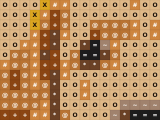
On the chart
- One square, one color, one symbol
- Rows and columns are numbered in the PDF
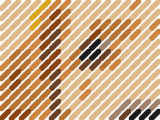
Stitched in yarn on plastic mesh
- Each square of the chart is one stitch over one mesh bar
- Worsted yarn covers 7-count canvas
- Cut the sheet to the chart's size before you start
Built for a Rigid Mesh, Not Fabric
Plastic canvas isn't cross-stitch on a different fabric — it's yarn on a mesh that holds its own shape. That changes what a generator has to get right.
Mesh Count Changes Everything
5-count is coarse and fast — good for a quick coaster or a kid's first project. 7-count is the standard for tissue box covers, coasters, and most published kits. 10-count packs more detail into the same sheet, the usual choice for ornaments and magnets. 14-count is rare outside fine detail work — at that density, worsted yarn starts to crowd the mesh. Pick the count for the project, not just the detail level.
One Stitch, One Square
Plastic canvas is worked in continental (tent) stitch: one diagonal pass over one mesh intersection, per square. There's no stitch-ratio correction to make — unlike crochet or knitting, the mesh itself is square, so a square grid maps straight onto it.
Yarn, Not Floss
Cross-stitch and blackwork match DMC embroidery floss. Plastic canvas is worked in worsted-weight yarn — thicker, sold by the ball, matched to yarn shades rather than thread numbers. The color legend, quantities, and shopping list all read in yarn, not thread codes.
It Holds Its Own Shape
Every other craft here is soft — fabric, cord, cotton lace. Plastic canvas is rigid: sheets can be cut, scored, and joined into boxes, coasters that sit flat, and ornaments that keep their form with no backing or stiffener needed. That's also why fine detail doesn't work — the mesh itself is coarser than any fabric weave.
What Plastic Canvas Is Actually For
Plastic canvas sheets come in four mesh counts — 5, 7, 10, and 14 holes per inch — and the count you pick decides the project as much as the design does. 7-count is the workhorse: tissue box covers, coasters, bookmarks, and the vast majority of published kits are built around it. 10-count fits noticeably more detail into the same sheet, which is why ornaments and fridge magnets often use it. 5-count is coarse and forgiving, good for a first project or anything meant to be quick. 14-count is uncommon — at that density, worsted yarn starts to crowd the holes, so it's reserved for small, fine pieces.
The classic subjects are the ones that survive a coarse mesh: geometric borders, holiday motifs, animals rendered as bold silhouettes, initials and short words, and repeating tile patterns. What doesn't survive: photographic portraits, gradients, and anything relying on subtle shading — the same limitation tapestry crochet runs into, for the same reason. Bold, high-contrast, few-color source images convert; busy ones turn to speckle.
The stitch itself is simple. Continental (also called tent stitch) is one diagonal pass across a single mesh intersection — no ratio correction needed, since the mesh holes are already square. Once the design is filled, the raw edge is finished with an overcast stitch: one stitch per hole along straight edges, two or three at outside corners, wrapping yarn around the perimeter bars. That finishing pass is why plastic canvas projects have a clean, bound edge with no hemming, framing, or backing required.
Plastic Canvas vs Cross-Stitch and Needlepoint
Plastic canvas vs cross-stitch: both are counted, gridded crafts, but cross-stitch is worked in embroidery floss on soft, woven Aida cloth — it drapes, needs hooping while you work, and needs framing or hemming to display. Plastic canvas is worked in yarn on a rigid plastic mesh that holds its shape on its own. If you want a picture that hangs like fabric, that's cross-stitch. If you want something that sits on a shelf or wraps into a 3D shape, that's plastic canvas.
Plastic canvas vs needlepoint: needlepoint uses the same continental/tent stitch, but on a woven canvas (mono or interlock) rather than rigid plastic sheets — needlepoint drapes and needs blocking or framing, plastic canvas doesn't. The stitch mechanics carry over almost exactly; the material is the whole difference.
Plastic canvas vs latch hook: both start from a stiff gridded canvas and both are worked in yarn, but latch hook knots short pre-cut pieces onto a much coarser rug mesh (3.3–5 holes per inch) to build a plush cut pile, while plastic canvas lays yarn flat in tent stitch across a finer 5–14 mesh. One gives you something soft and rug-like, the other something smooth and rigid enough to hold a shape.
Plastic Canvas FAQ
Yes. 1 upload, generation, and full browser preview and all of its edits are free, with no account required. A $2.99 single-pattern unlock gives you the PNG and printable PDF. Pro ($6.99/month or $39.99/year) unlocks unlimited projects, every export, and every other craft generator.
Yes — it runs online in the browser, free, with nothing to install and no account to open. Upload a picture, pick the mesh count, and the chart appears in the same tab; you only pay if you want the printable PDF or HD PNG of the finished chart.
7-count is the standard choice — it's what most tissue box covers, coasters, and published kits are built around, and it's forgiving for worsted-weight yarn. 10-count fits more detail into the same sheet size, the usual pick for ornaments and magnets. 5-count is coarse and quick, good for a first project. 14-count is rare — at that density yarn starts to crowd the mesh, so it's reserved for small, fine pieces.
Regular worsted-weight yarn — it's the standard recommendation because it's inexpensive, comes in the widest color range, and is sized right for continental stitch on 7- and 10-count mesh. ArtPatt's color legend and yardage estimate are built around worsted weight; a finer or bulkier yarn will need more or fewer strands to cover the mesh evenly.
From a bold, simple photo, yes — from a detailed photograph, it will lose the detail. Plastic canvas is worked at 5–14 holes per inch, coarser than any fabric weave, so fine detail and soft gradients don't survive. Geometric shapes, silhouettes, short text, and high-contrast subjects convert cleanly; busy or photographic images turn to speckle at any mesh count. The preview will show you honestly which one you have before you cut a sheet.
With an overcast stitch, worked last, after the design is fully stitched. Work one stitch in each hole along straight edges, and two or three stitches in outside corners for full coverage. Overcast stitches all lean the same direction, wrapping yarn around the plastic bars at the perimeter — that's what gives a finished piece its clean, bound edge with no hemming or framing.
The stitch is the same — continental, also called tent stitch, worked diagonally over one intersection — but the material isn't. Needlepoint is worked on a woven canvas that drapes and usually needs blocking or framing. Plastic canvas is a rigid plastic mesh that holds its own shape, which is why it's used for boxes, coasters, and ornaments rather than pieces meant to hang like fabric.
Because it's working correctly — plastic canvas mesh (5–14 holes per inch) is coarser than any fabric weave used elsewhere on this site, so a chart at the same grid size shows visibly less detail than the same photo would on 14-count cross-stitch fabric. If you want more detail, move up to 10-count rather than adding colors — extra colors on a coarse mesh mostly add speckle, not clarity.
More Counted-Chart Tools
Cross-Stitch Pattern Generator
The nearest sibling craft — same counted-chart engine, DMC floss on Aida instead of yarn on rigid mesh.
Needlepoint Pattern Generator
The same continental/tent stitch on woven mono canvas instead of rigid plastic — charted in DMC at 10-18 mesh.
Cross-Stitch Size Calculator
The same fabric-count-to-finished-size math this generator uses for mesh sizing.
Crochet Yarn Calculator
Estimate yardage for any yarn-based project before you start.
Yarn Weight Converter
Substitute a different yarn weight and see what changes.
Latch Hook Pattern Generator
The other stiff-canvas yarn craft — knotted pre-cut pieces on a much coarser rug mesh.
Diamond Painting Generator
Another rigid, kit-friendly craft — drills on adhesive canvas instead of yarn on mesh.
Free to Try — Finished Chart from $2.99
Create and refine 1 plastic canvas chart free, with no account required. Unlock when you want the chart to print and stitch from.
Free
Make one pattern free every week.
- 1 free chart project with unlimited edits
- 5/7/10/14 mesh count
- Yarn color matching
- Full pattern preview in the browser
- No account required
Tax is added at checkout where it applies.