Curtain Fabric & Drapery Yardage Calculator
Work out exact drapery fabric yardage and meters for pairs or single panels. Includes 1.5×–3× fullness multipliers, whole fabric widths per panel, top header and double bottom hem allowances, vertical pattern repeat matching, and separate lining estimates.
Curtain Fabric Calculator
Calculate exact drapery yardage and meters for a pair or single curtain panel, including fullness multipliers, whole fabric widths per panel, top header and double bottom hem allowances, vertical pattern repeat matching, and optional lining.
Include lining fabric
Same number of widths, without pattern-repeat matching loss.
Formula: Widths/Panel = ceil((Rod × Fullness ÷ Panels + 2 × Side Hem) ÷ Usable WOF); Cut Length = ceil_repeat(Drop + Top + Bottom)
Results
Main Curtain Fabric Needed
11 yds (10.0 m)
Rounded up to ¼ yd / 0.1 m across 4 fabric widths (2 per panel).
- Cut Length per Width
- 98"
- Finished drop + 6" top + 8" bottom hem.
- Fabric Widths / Panels
- 4 widths (2 × 2 panels)
- Covers 144" gathered width (2× fullness) plus side hems on 54" fabric.
- Optional Lining Estimate
- Not included
- Toggle Include lining fabric to calculate matching blackout or cotton sateen lining.
When joining multiple fabric widths into a panel, 1 inch (2.5 cm) is subtracted from bolt width for vertical seams. Lining uses the same number of widths without pattern-repeat matching waste.
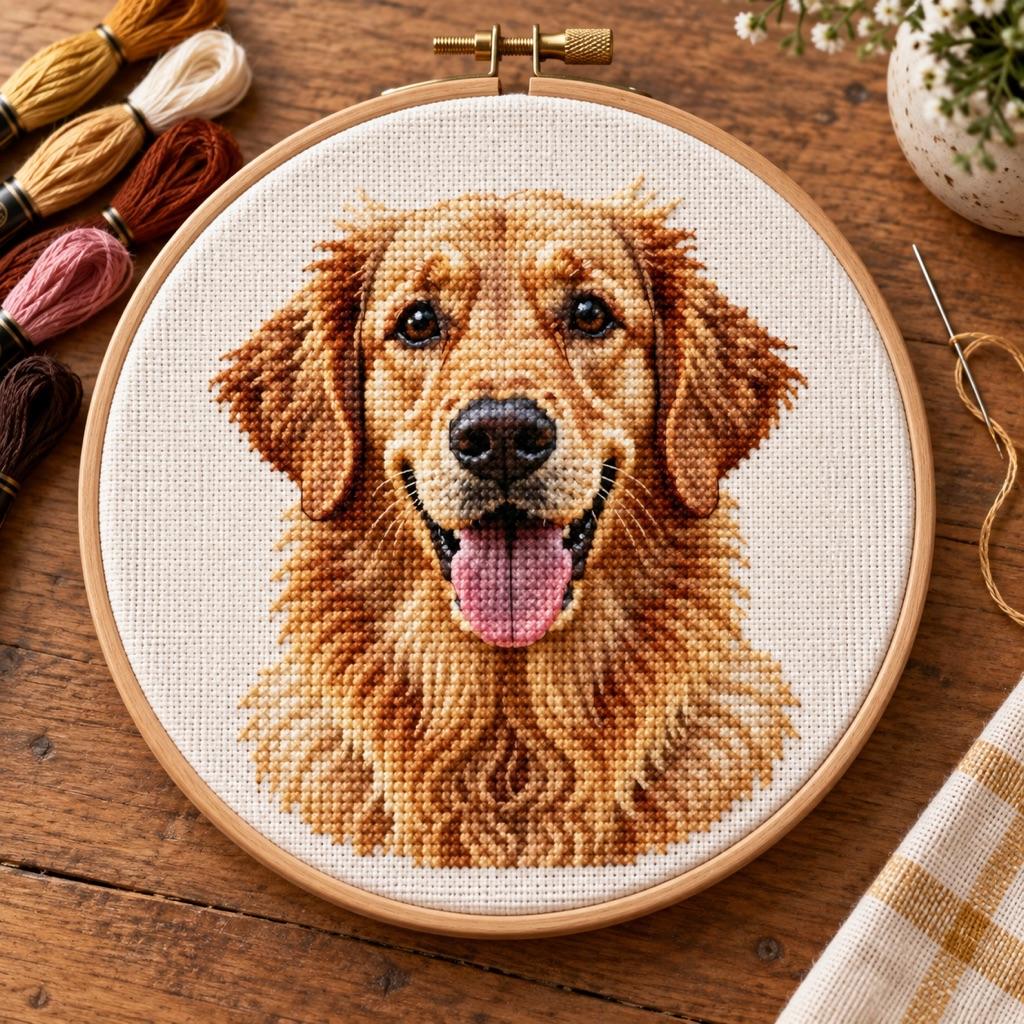
Turn a photo into a real pattern
Upload a photo or drawing to generate a stitchable embroidery pattern for custom curtain tie-backs, cushions, and home decor.
Open Embroidery GeneratorCurtain Fabric Yardage Chart (36" to 144" Rod Width, 2× Fullness, 54" Fabric)
Estimated main fabric needed for a pair of lined or unlined curtains on 54" (137 cm) solid drapery fabric with standard 6" top header, 8" double bottom hem, and 3" side hems.
| Rod Width | Widths (Pair) | 84" Floor Drop | 96" High Ceiling | 108" Tall Drop |
|---|---|---|---|---|
| 36" (91 cm) | 2 widths (1/panel) | 5 ½ yds5.0 m | 6 ¼ yds5.6 m | 7 yds6.2 m |
| 48" (122 cm) | 2 widths (1/panel) | 5 ½ yds5.0 m | 6 ¼ yds5.6 m | 7 yds6.2 m |
| 60" (152 cm) | 4 widths (2/panel) | 11 yds10.0 m | 12 ¼ yds11.2 m | 13 ¾ yds12.4 m |
| 72" (183 cm) | 4 widths (2/panel) | 11 yds10.0 m | 12 ¼ yds11.2 m | 13 ¾ yds12.4 m |
| 84" (213 cm) | 4 widths (2/panel) | 11 yds10.0 m | 12 ¼ yds11.2 m | 13 ¾ yds12.4 m |
| 96" (244 cm) | 4 widths (2/panel) | 11 yds10.0 m | 12 ¼ yds11.2 m | 13 ¾ yds12.4 m |
| 108" (274 cm) | 6 widths (3/panel) | 16 ½ yds15.0 m | 18 ½ yds16.8 m | 20 ½ yds18.6 m |
| 120" (305 cm) | 6 widths (3/panel) | 16 ½ yds15.0 m | 18 ½ yds16.8 m | 20 ½ yds18.6 m |
| 144" (366 cm) | 6 widths (3/panel) | 16 ½ yds15.0 m | 18 ½ yds16.8 m | 20 ½ yds18.6 m |
Curtain Fullness & Heading Style Guide
Recommended fullness multipliers, top header allowances, and bottom hem folds for the five most common drapery heading styles.
| Heading Style | Fullness | Top Allowance | Bottom Hem | Best For |
|---|---|---|---|---|
| Grommet / Eyelet | 1.5× – 2.0× | 5" – 6" (13 – 15 cm) | 8" double 4" (20 cm) | Modern living rooms and bedrooms with crisp, even S-shaped waves that slide easily on a rod. |
| Rod Pocket | 2.0× – 2.5× | 5" – 7" (13 – 18 cm) | 8" double 4" (20 cm) | Stationary decorative panels and casual lightweight cotton or linen curtains with a gathered header. |
| Pinch Pleat (Double / Triple) | 2.0× – 2.5× | 6" – 8" (15 – 20 cm) | 8" double 4" (20 cm) | Formal tailored drapery hung on rings or traverse tracks with structured permanent pleats. |
| Ripple Fold / Wave | 1.8× – 2.2× | 4" – 5" (10 – 13 cm) | 6" – 8" (15 – 20 cm) | Contemporary ceiling-mounted tracks with uniform soft ripples from top to floor. |
| Sheer / Voile Curtains | 2.5× – 3.0× | 5" – 6" (13 – 15 cm) | 6" – 8" (15 – 20 cm) | Translucent voile, organza, or sheer linen layered behind blackout panels for soft daytime privacy. |
How to calculate fabric yardage for custom curtains
- 1
Measure rod width and desired finished curtain drop
Measure the full width of your curtain rod or track (typically 8–12 inches wider than the window frame) and the finished drop from the rod ring or top of the rod down to the sill, apron, or floor.
- 2
Choose fullness multiplier and panel count
Multiply rod width by 1.5× for modern flat waves, 2.0× for standard tailored drapery, or 2.5×–3.0× for rich pleats and translucent sheers. Split into a pair of 2 panels or 1 single panel.
- 3
Add top header, bottom hem, and vertical pattern repeat
Add 6 inches for the top header and 8 inches for a double 4-inch bottom hem. For patterned drapery fabrics, enter the vertical pattern repeat so each cut length rounds up to a full repeat multiple.
- 4
Multiply widths by cut length and add optional lining
Multiply the total number of fabric widths by the effective cut length to get total yards or meters. Toggle lining on to calculate blackout or cotton sateen lining without pattern-repeat waste.
How Curtain Fullness, Widths, and Pattern Repeat Affect Yardage
Well-proportioned curtains rely on fullness — the ratio between the total flat width of the drapery panels and the width of the curtain rod. At 1× fullness, a curtain hangs completely flat like a sheet; at 2× fullness, the fabric forms soft, generous vertical folds even when closed across the window. For example, a 72-inch curtain rod at 2× fullness requires 144 inches of finished width (72 inches per panel in a pair).
Adding 3-inch side hems to each outer edge brings each panel to 78" flat, which requires 2 widths of 54" drapery fabric per panel (4 widths total). With a 6" top header and 8" double-folded bottom hem on an 84" drop, each cut length is 98", totaling 11 yds (10.0 m) of main fabric and the same for solid lining.
When sewing large-scale floral, damask, or geometric prints, always enter the vertical pattern repeat printed on the fabric bolt tag. Rounding each panel's cut length up to the next full multiple of the pattern repeat guarantees that motifs align horizontally across every seam and across both sides of the window — while your solid lining still uses only the base cut length without any repeat waste.
More Sewing & Home-Decor Fabric Calculators
Planning pillow covers, table runners, or multi-piece home-decor cuts alongside your curtains? Use our fabric yardage calculator for bolt-width strip math, our bias tape calculator for piped edges and tie-backs, our fat quarter size chart, and our circle skirt calculator.
Designing a custom embroidered border or monogram for curtain tie-backs or valances? Review ArtPatt's pattern tools on our pricing page.
Curtain Fabric Calculator FAQ
At standard 2× fullness on 54-inch solid drapery fabric, a 72-inch rod needs 4 fabric widths (2 per panel) cut at 98 inches each (84 in drop + 6 in header + 8 in bottom hem), totaling 392 inches or 11 yards (10.0 meters).
Use 2.0× fullness for most cotton, linen, and velvet drapery panels. Choose 1.5× for a minimal modern grommet look or heavy upholstery-weight fabrics, and 2.5× to 3.0× for sheer voile panels or formal pinch-pleat drapes.
Professional drapery uses a double-folded 4-inch bottom hem (4 inches folded up twice = 8 inches total). The double fold encloses the raw edge completely and adds natural bottom weight so curtains hang straight.
To make motifs line up horizontally across joined seams and matching left/right panels, every cut length must be rounded up to a full multiple of the vertical pattern repeat. For instance, a 98-inch cut with a 25.25-inch repeat rounds up to 101 inches (4 repeats) per width.
No. Lining fabric (cotton sateen, dim-out, or blackout lining) is solid and has no motif to align, so it uses the same number of widths as your main fabric multiplied only by the base cut length.
Always measure the curtain rod or track width, not the window glass. Rods are typically mounted 4 to 6 inches past each side of the window frame so open curtains stack cleanly off the glass.
For a pair of two matching panels, each panel should contain the same number of fabric widths so both sides of the window hang with identical fullness and symmetry.
Wide-width (108–118 inch) drapery and sheer fabrics are often railroaded or cut as single seamless widths per panel, eliminating vertical joining seams on wide windows and dramatically reducing total yardage.
For a crisp floor kiss, measure exact rod-to-floor distance. For a tailored break, add 1 to 2 inches to your finished length; for a romantic floor puddle, add 4 to 8 inches.
Pre-wash machine-washable cotton or linen fabrics on the same cycle you plan to use later, because natural fibers can shrink 3–5% in length. Dry-clean-only decorator fabrics and blackout linings should not be pre-washed.
Related Tools and Pages
Fabric Yardage Calculator
Bolt width (WOF) strip layout, 2× seam allowance, and ⅛ yd shop-cut rounding.
Circle Skirt Calculator
Full, 3/4, Half, and Quarter circle skirt waist radius, hem circumference, and yardage.
Bias Tape Calculator
Continuous bias square size for curtain piping, tie-backs, and curved binding.
Fat Quarter Size Chart
US (18" × 22") and Metric/UK (50 × 55 cm) fat quarter dimensions and cutting calculator.
Embroidery Pattern Generator
Turn a photo or drawing into an embroidery pattern for a quilt label or a memory block.