Free Printable Knitting Graph Paper with Correct Gauge Ratio
Enter your stitch gauge and row gauge to generate a grid where each cell matches your actual stitch proportions. Standard graph paper has square cells — knitting stitches are wider than they are tall. This grid fixes that.
Knitting Grid Generator
Enter your gauge and grid size. Cells are proportioned to your actual stitch ratio — not square like standard graph paper.
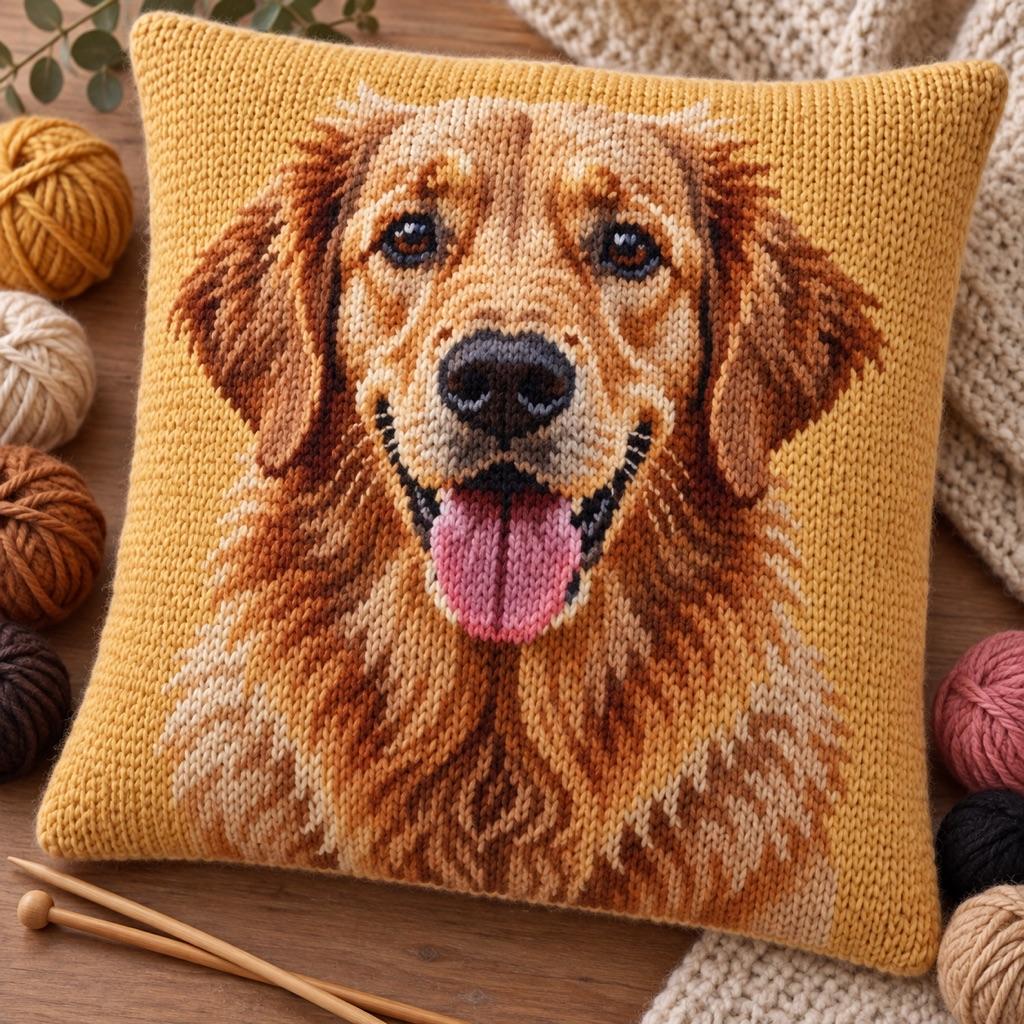
Turn a photo into a real pattern
Once you have a grid, generate a full knitting chart from your own photo.
Open Knitting GeneratorWhy Knitting Graph Paper Cannot Use Square Cells
Standard graph paper has cells where every side is equal. That works for cross-stitch, where the fabric count creates a true square grid. Knitting stitches are different: they are almost always wider than they are tall, with a typical ratio around 4:3 or 5:3 depending on yarn and needle size.
If you chart a design on square graph paper and knit it at a normal gauge, the finished motif will appear shorter and wider than you drew it. A circle becomes a flattened oval. A square becomes a squat rectangle. Characters and faces distort. This is why knitting-specific graph paper uses asymmetric, or non-square, cells sized to your gauge ratio.
This generator calculates the correct cell proportions from your actual swatch gauge and draws the grid accordingly. A design charted on this paper will knit out at the correct visual proportions when worked at that gauge.
How to Use This Knitting Grid
Measure your swatch gauge: count stitches and rows over 4 inches from a blocked or settled swatch. Enter those numbers here along with how many stitches wide and rows tall you want the grid. The generator calculates the cell aspect ratio and draws every cell at those proportions.
Use the Print or Save PDF button to send it to your printer or save a browser PDF. The SVG download is useful if you want to import the grid into design software or scale it to a specific paper size.
Major grid lines appear every 5 stitches and every 5 rows to make counting easier. This matches the counting aid lines used in most published knitting charts.
Knitting Grid Paper FAQ
Use the gauge from your actual swatch, not the yarn label. Block or wash the swatch first if your yarn changes size with wet finishing. Measure stitches and rows over 4 inches and enter those numbers.
Knitting stitch structure creates a naturally rectangular cell. Typical proportions range from about 3:4 to 2:3 (height to width). The exact ratio depends on your yarn, needle size, and personal tension.
Asymmetric graph paper has cells that are not square. Knitting graph paper is one type — cells are wider than tall to match the stitch aspect ratio. Crochet graph paper is another, with slightly different proportions.
Yes. Any charted motif intended for knitting benefits from correct cell proportions. This is especially important for portrait knitting, stranded colorwork, intarsia, and any design where exact visual proportions matter.
The golden ratio is approximately 1.618:1. Some knitters use it as a design proportion guide for motif placement, but knitting cells themselves are not golden ratio — they match the actual stitch gauge ratio, which varies by project.
Click the Print / Save PDF button, then in your browser or system print dialog choose Save as PDF instead of a physical printer. This works in all major browsers on Mac and Windows.
Related Tools and Pages
Knitting Gauge Calculator
Convert stitch and row counts into finished dimensions at any gauge.
Cast On Calculator
Calculate how many stitches to cast on for a target finished width.
Knitting Pattern Generator
Generate a full knitting chart from a photo with corrected gauge proportions.
Intarsia Knitting Pattern Generator
Large color block knitting charts for bobbin-based colorwork.