Knitting Yarn Yardage & Skein Calculator
Work out how many yards, meters, and skeins of yarn your knitting project needs by dimensions or stitch count — across CYC 0–6 yarn weights and 7 stitch patterns.
Knitting Yarn Calculator
Estimate knitting yarn yardage, meters, and skeins to buy by project dimensions or total stitch count across CYC 0–6 yarn weights and 7 stitch patterns.
Typical Worsted / Aran stockinette gauge (US 7–9 (4.5–5.5 mm)). Type your swatch to override.
Formula: stitches = round(width × stitch gauge) × round(height × row gauge); yarn = stitches × yarn per stitch × (1 + buffer)
Results
Total Yarn (with 10% buffer)
1,637 yd
1,497 m. Exact before buffer: 1,488 yd.
- Skeins to Buy
- 9 skeins
- Rounded up from 8.32 skeins of 197 yd.
- Exact Yarn (0% buffer)
- 1,488 yd
- 1,361 m
- Estimated Stitches
- 81,000
- 225 sts across × 360 rows.
Calibrated to Craft Yarn Council stockinette midpoints and scaled by stitch density and pattern texture. Cables and ribbing draw fabric inward and use 15–30% more yarn than stockinette; open lace uses about 15% less. Always buy all skeins for your main color from the same dye lot.
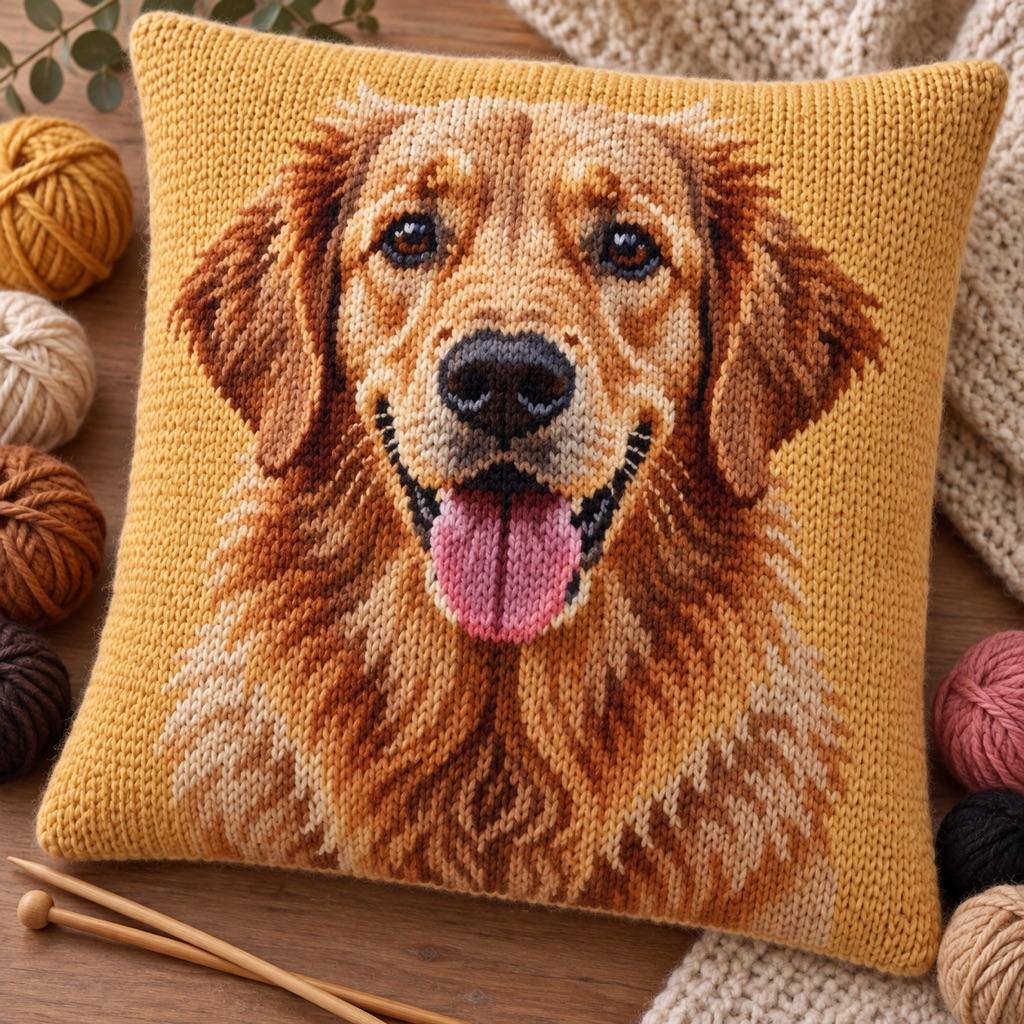
Turn a photo into a real pattern
Once your yarn budget looks right, turn any photo or graphic into a stitch-accurate knitting chart in ArtPatt.
Open Knitting GeneratorKnitting Yarn Yardage Chart by Project & Yarn Weight
Estimated yarn needed in stockinette stitch at CYC midpoint gauge, including a 10% safety buffer. Every value is computed directly from the calculator model above.
| Project | Fingering / Sock (#1) | DK (#3) | Worsted / Aran (#4) | Bulky (#5) |
|---|---|---|---|---|
| Scarf8 × 65 in | 446 yd408 m · 2 skeins | 345 yd315 m · 2 skeins | 284 yd260 m · 2 skeins | 223 yd204 m · 2 skeins |
| Adult Beanie21 in around × 12 in | 216 yd197 m · 1 skein | 168 yd154 m · 1 skein | 138 yd126 m · 1 skein | 109 yd99 m · 1 skein |
| Baby Blanket36 × 52 in | 1,603 yd1,466 m · 4 skeins | 1,241 yd1,135 m · 5 skeins | 1,022 yd934 m · 6 skeins | 802 yd733 m · 7 skeins |
| Throw Blanket50 × 60 in | 2,569 yd2,349 m · 6 skeins | 1,989 yd1,819 m · 8 skeins | 1,637 yd1,497 m · 9 skeins | 1,285 yd1,175 m · 10 skeins |
| Pullover Sweater (M)Body + sleeves | 2,336 yd2,136 m · 6 skeins | 1,811 yd1,656 m · 8 skeins | 1,489 yd1,361 m · 8 skeins | 1,170 yd1,070 m · 9 skeins |
| Pair of Adult Socks2 mid-calf socks | 361 yd330 m · 1 skein | 278 yd254 m · 2 skeins | 229 yd210 m · 2 skeins | 180 yd165 m · 2 skeins |
Assumes standard 100 g skeins: Fingering 400 m (437 yd), DK 230 m (252 yd), Worsted 180 m (197 yd), Bulky 120 m (131 yd). Garter, ribbing, and cables need 15–30% more yarn.
How Knitting Stitch Patterns Affect Yarn Usage
Comparison against plain stockinette (= 100%) on a 50 × 60 in worsted-weight throw blanket (with 10% buffer).
| Stitch Pattern | vs. Stockinette | 50 × 60" Worsted Throw | Practical Note |
|---|---|---|---|
| Stockinette Stitch | Baseline (0%) | 1,637 yd (1,497 m) | Baseline flat knit fabric; smooth right side, curls at edges. |
| Garter Stitch | +15% | 1,883 yd (1,721 m) | Squishy horizontal ridges compress row height, adding ~35% more rows and ~15% more yarn per area. |
| 1×1 Ribbing | +15% | 1,883 yd (1,721 m) | Pulls in widthwise and uses extra yarn transitioning between knit and purl stitches. |
| 2×2 Ribbing | +18% | 1,932 yd (1,766 m) | Deep elastic columns draw in strongly; allow ~18% more yarn than stockinette. |
| Seed / Moss Stitch | +12% | 1,833 yd (1,676 m) | Alternating knit/purl texture lies flat with slightly denser fabric than stockinette. |
| Cables / Aran | +30% | 2,128 yd (1,946 m) | Crossed stitches pull fabric inward significantly, needing 25–35% more yarn for the same finished width. |
| Openwork / Lace | -15% | 1,392 yd (1,272 m) | Yarn-overs and aggressive blocking open up the fabric, using ~15% less yarn per area. |
How to calculate yarn yardage for a knitting project
- 1
Choose By Dimensions or By Stitch Count
Use By Dimensions for blankets, scarves, hats, or sweaters when you know finished width and length, or switch to By Stitch Count when you have a total stitch count from a knitting chart.
- 2
Pick a project preset or enter your measurements
Start from a standard preset (Scarf, Beanie, Baby Blanket, Throw, Sweater M, or Adult Socks) or type your exact width and length in inches or centimeters.
- 3
Select CYC yarn weight (0–6) and stitch pattern
Choose your yarn weight from Lace (#0) to Super Bulky (#6) and your stitch pattern. Garter, ribbing, and cables use 15–30% more yarn than plain stockinette; open lace uses about 15% less.
- 4
Enter your measured gauge swatch (optional)
The calculator pre-fills standard Craft Yarn Council midpoints per 4 in (or 10 cm). Overriding them with your washed gauge swatch tightens the stitch and yardage estimate.
- 5
Set your skein length and safety buffer, then copy your shopping list
Enter the exact yards or meters printed on your yarn band and keep a 10% buffer for swatching, joins, and weaving in ends. Buy all skeins in one order from the same dye lot.
Why Knitting Yarn Estimates Depend on Weight, Gauge & Stitch Texture
Two knitters working the same 50 × 60 in blanket can end up hundreds of yards apart because yarn consumption responds to three variables at once: yarn thickness (CYC weight), stitch density (your gauge), and stitch structure.
Thinner yarns like fingering or DK pack far more stitches into every square inch than worsted or bulky yarn, so they always require more total yards to cover the same area — even though each individual stitch is shorter. On a worsted throw, plain stockinette takes about 1,637 yd (1,497 m), garter stitch rises to about 1,883 yd (+15%), and dense cables climb to about 2,128 yd (+30%).
By Dimensions mode is ideal when you are designing from scratch or adapting a blanket size. By Stitch Count mode is built for colorwork charts, Fair Isle, and intarsia patterns where you already know the exact stitch count from your grid.
Planning Skeins, Swatches & Dye Lots Without Running Short
Always enter the exact yardage or meterage printed on your yarn band rather than guessing from ball weight alone — two 100 g worsted skeins can range from 160 yd (heavy cotton) to 220 yd (lofty wool).
Keep at least a 10% safety buffer for swatching, seaming, and weaving in ends, and order every skein for a garment or blanket from the same dye lot. If you are swapping yarns for an existing pattern, double-check skein counts with our yarn substitution calculator, or check what your current stash can make in What Can I Knit With This Yarn?.
Knitting Yarn Calculator FAQ
Yes. For the same finished dimensions and yarn weight, knitted stockinette typically uses about 25%–33% less yarn than single crochet because crochet stitches wrap more yarn into each loop and create a thicker fabric. Double crochet closes part of that gap, while textured stitches like cables bring knitting closer to crochet usage.
A plain women's Medium stockinette pullover takes about 1,489 yd (1,361 m, or 8 standard 100 g skeins) in worsted weight, and about 1,811 yd (1,656 m) in DK weight, including a 10% buffer. Add 20–30% for all-over cables, oversized ease, or extra torso length.
A standard 50 × 60 in worsted-weight throw takes about 1,637 yd (1,497 m, 9 skeins of 197 yd) in stockinette, about 1,883 yd in garter stitch, and around 2,128 yd in heavy cables (all with a 10% buffer).
An 8 × 65 in worsted stockinette scarf takes about 284 yd (260 m, 2 skeins), while an adult beanie takes about 138 yd (126 m, 1 skein). Add an extra 50–80 yd if you plan a folded rib brim, cables, or a large pom-pom.
A standard pair of mid-calf adult socks in fingering/sock weight (#1) takes about 361 yd (330 m) — comfortably fitting inside one standard 100 g / 400 m (437 yd) sock skein. Taller boot socks or larger shoe sizes may need 420–460 yd.
Add at least 10% extra for plain single-color projects to cover your gauge swatch, joins, and tail ends. Bump the buffer to 15%–20% for stranded colorwork (floats on the back consume extra yarn), heavy cables, or projects where you cannot easily reorder a matching dye lot.
Multiply meters by 1.0936 to get yards, or divide yards by 1.0936 (multiply by 0.9144) to get meters. For example, a 180 m skein of worsted yarn equals 197 yd, and a 400 m skein of fingering yarn equals 437 yd. The calculator above displays both units automatically.
Crossing stitches over one another pulls the fabric sharply inward horizontally. To reach the same finished width as stockinette, you have to cast on significantly more stitches — and those extra stitches plus the diagonal crossover strands increase total yardage by roughly 25%–35%.
Yes, weighing a swatch is one of the most accurate checks for unusual textures. Knit and block a 4 × 4 in (16 sq in) swatch, weigh it in grams on a digital scale, divide grams by 16 to get grams per square inch, multiply by your project's total square inches, and add 10% before dividing by your skein's gram weight.
Typical 100 g skein lengths are roughly: Lace (#0) ~875 yd (800 m), Fingering (#1) ~437 yd (400 m), Sport (#2) ~328 yd (300 m), DK (#3) ~252 yd (230 m), Worsted (#4) ~197 yd (180 m), Bulky (#5) ~131 yd (120 m), and Super Bulky (#6) ~77 yd (70 m). Always check your yarn band because dense fibers like cotton and linen yield fewer yards per 100 g than wool.
Related Tools and Pages
Blanket Size Chart
13 standard blanket sizes in inches and cm with cast-on stitch counts and yarn planner.
Crochet Yarn Calculator
Estimate yarn yardage and skeins for crochet blankets, garments, and graphghans.
Yarn Substitution Calculator
Find how many skeins of a substitute yarn you need to match a pattern's yardage.
Knitting Gauge Calculator
Convert stitch and row counts into exact finished dimensions from your swatch.
Cast-On Calculator
Calculate exact cast-on stitches with stitch repeats and long-tail yarn length.
What Can I Knit With This Yarn?
Enter your stash yardage or grams and see every knitting project that fits.
Knitting Pattern Generator
Turn any photo into a colorwork knitting chart with real stockinette stitch proportions.