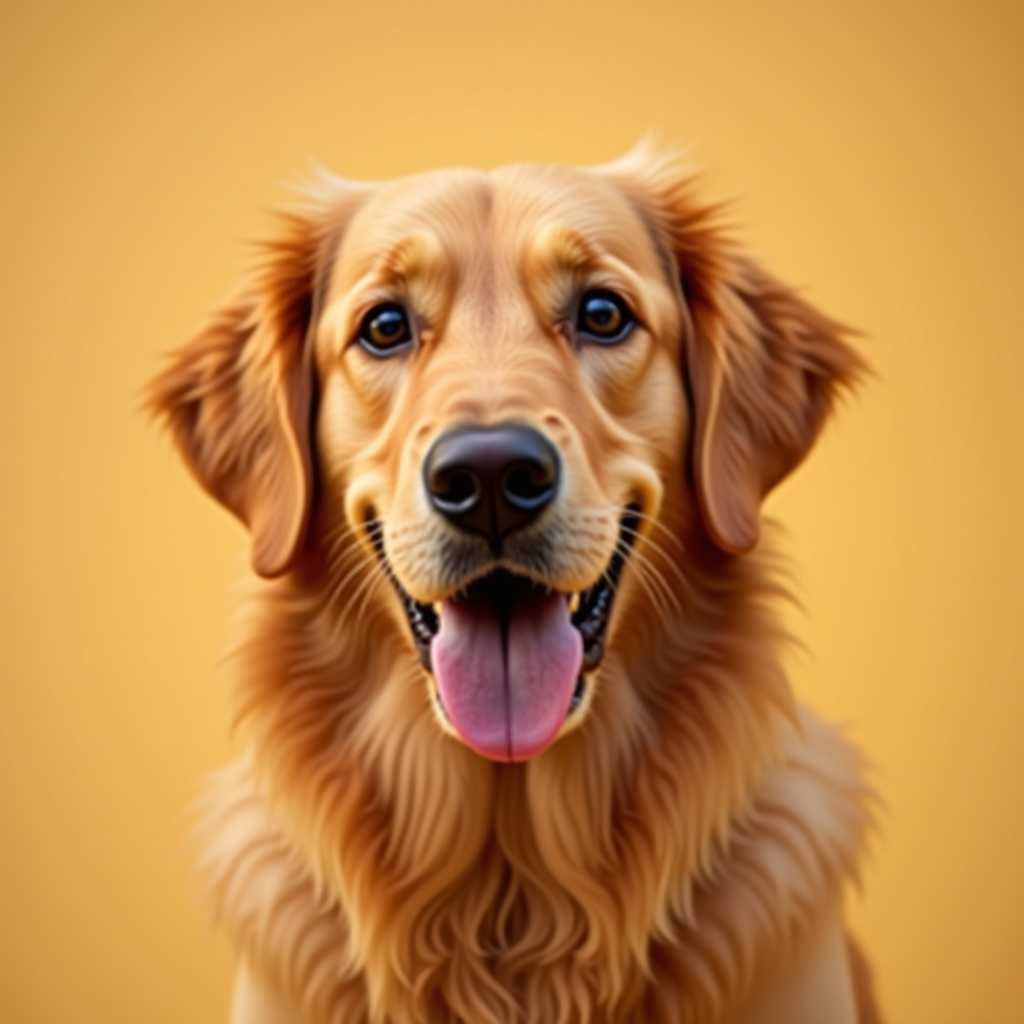
Your photo
Turn a Photo into a
Latch Hook Rug Chart
Upload a photo, pick a canvas mesh, and get a knot-by-knot chart with yarn colors matched and pieces counted.
Free to use · No sign-up
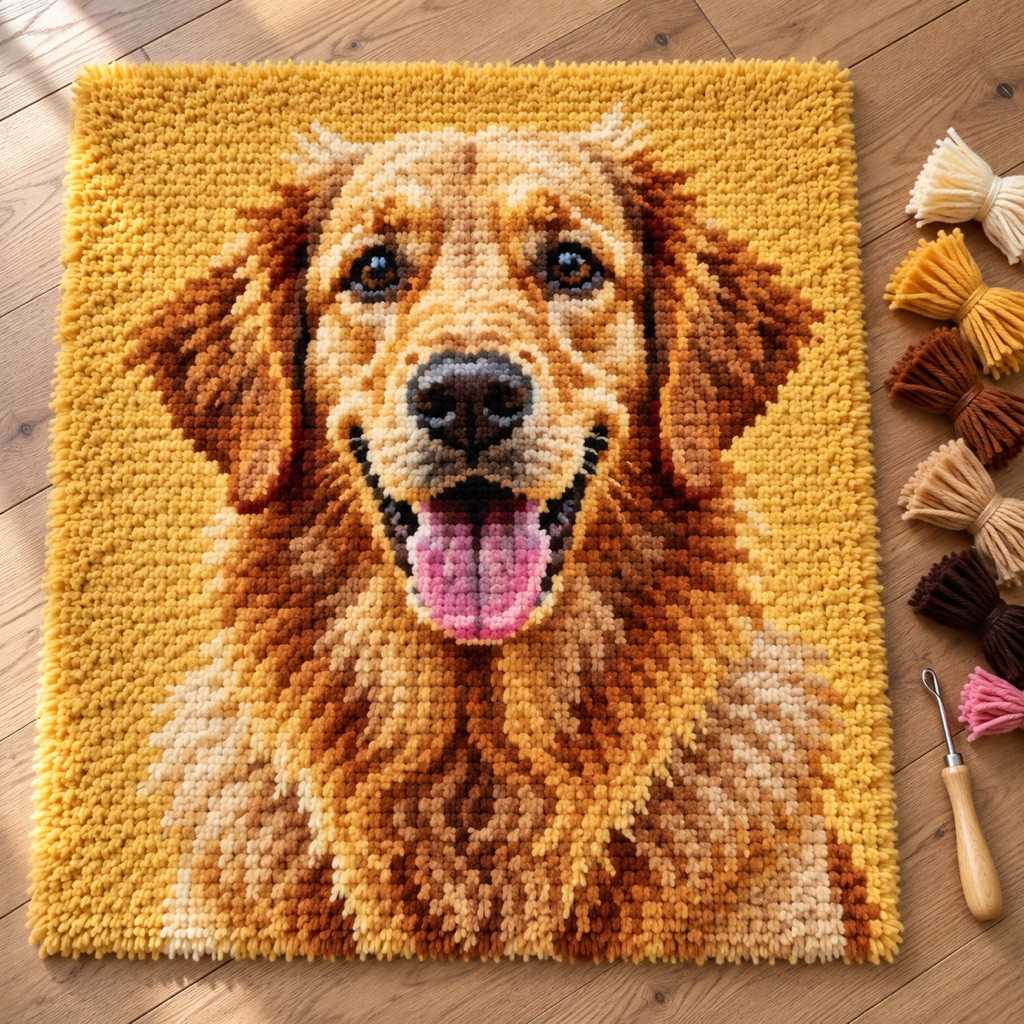
Latch hook previews stay bold and low-color — a quarter-inch knot can't hold fine detail.
What You Get from One Photo
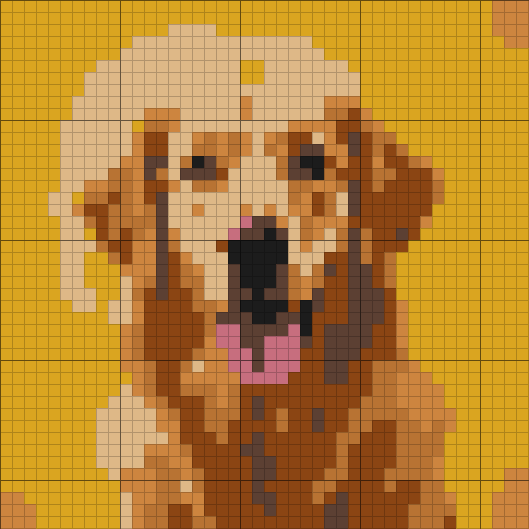
This is the chart ArtPatt made from the photo above: 44 × 44 latch hook chart in 8 colors.
Yarn colors matched
Each color in the picture is matched to a yarn shade and listed in the legend.
One knot per square
The chart is the knot map: every square is one piece of yarn.
Packs counted per color
Knots are counted per color and turned into packs of pre-cut yarn.
Color legend from this chart
- Goldenrod3 packs
- Tan2 packs
- Saddle Brown2 packs
- Copper1 pack
- Peru1 pack
- Dark Brown1 pack
+ 2 more colors in the full legend
From Latch Hook Chart to Finished Piece
The same few squares, as they sit on the chart and as they look once worked.
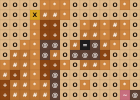
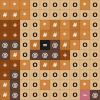
On the chart
- One square, one color, one symbol
- Rows and columns are numbered in the PDF
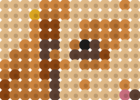
Knotted into rug canvas
- Each square of the chart is one knot of pre-cut yarn
- Bold, low-detail pictures read best at rug scale
- Work row by row from the bottom up
Built for Knots on Rug Canvas
Latch hook isn't stitching — it's knotting cut yarn onto a stiff open grid. That changes what a pattern has to tell you.
Mesh Decides the Finished Size
Latch hook canvas is sold at 3.3, 3.75, and 5 holes per inch. 3.75 is the standard: nearly every kit and every published chart assumes it. 3.3 is the coarser European size — chunkier pile, fewer knots, bigger finished piece for the same chart. 5 is the finest available, used for pillow fronts and smaller wall hangings. Pick the mesh and the chart size together: at 3.75, 60 squares across is about 16 inches.
Pieces, Not Yardage
Every other yarn craft here is measured in metres and balls. Latch hook is bought by the piece: yarn comes pre-cut to about 2.5 inches, sold in packs of roughly 320, and one piece makes exactly one knot. So the shopping list counts knots per color and converts them to packs — the number you actually order — instead of quoting a length you'd have to divide yourself.
One Cell, One Knot
The canvas grid is square and rigid, so the chart maps onto it one-to-one with no gauge or stitch-ratio correction. Cell (1,1) is the bottom-left knot. That is also why the chart is the whole pattern — there are no rows of instructions to follow, just a grid, a color legend, and a count.
Custom Kits Cost $60–150. This Doesn't.
A custom latch hook kit made from your own photo is one of the more expensive things in this hobby, and most sellers won't touch anything but a simple portrait. The chart is the part you were paying for. Generate it here from your own image, print it, and buy plain canvas and pre-cut yarn — which is where the money should have gone in the first place.
What Makes a Good Latch Hook Pattern
Latch hook works at 3.3 to 5 holes per inch. That is coarser than plastic canvas, several times coarser than cross-stitch fabric, and it is the single fact that decides whether a photo will convert. Each knot covers roughly a quarter of an inch of finished rug, so a face that reads clearly on screen may only have a dozen knots to work with. Bold silhouettes, geometric designs, holiday motifs, chunky lettering, and high-contrast animal portraits all survive that reduction. Group photos, busy backgrounds, and anything relying on soft shading do not.
Typical project sizes are small by grid count and large by finished measurement. A 40×40 chart makes a cushion front. 60×80 is the classic rug shape and finishes around 16×21 inches on standard 3.75 canvas. Around 100×130 is a large floor rug and a serious commitment — that is 13,000 knots, each one tied by hand. Because knot counts climb fast, it is worth checking the piece count on the preview before deciding on a size.
The palette matters more here than in almost any other craft. Latch hook pile is fuzzy and slightly uneven, so adjacent colors blur into each other rather than staying crisp. Six to ten colors gives a clean, readable design; twenty gives speckle. If a photo needs many colors to look right, it is usually the wrong photo for a rug — pick a bolder one rather than fighting the medium.
Latch Hook vs Punch Needle, Plastic Canvas, and Rug Hooking
Latch hook vs punch needle: both make a pile surface, but latch hook knots short pre-cut pieces one at a time onto an open canvas, while punch needle pushes a continuous strand of yarn through a woven backing to leave loops. Latch hook is coarser, slower per unit area, and needs no frame or hoop; punch needle holds much finer detail and is worked from the back.
Latch hook vs plastic canvas: both start from a stiff gridded backing and both are worked in yarn, which is why the charts look similar. The difference is the surface — plastic canvas lays yarn flat in tent stitch for a smooth, rigid piece you can build into boxes and coasters, while latch hook leaves a plush pile you can sink your fingers into. Plastic canvas mesh is also finer, at 5 to 14 holes per inch against latch hook's 3.3 to 5.
Latch hook vs traditional rug hooking: rug hooking pulls loops of wool strips or yarn up through burlap or linen with a hooking tool, leaving an uncut loop pile and needing a frame. Latch hook uses pre-cut pieces and a latched hook, needs no frame, and produces a shaggy cut pile. Latch hook is by far the easier of the two to start — the tool does the knot for you.
Finished latch hook pieces are mostly rugs, but the same chart works for wall hangings, cushion and pillow fronts, and seat pads. Bind or hem the canvas edge once the design is filled, and back a floor rug with rug canvas or non-slip padding.
Latch Hook Pattern FAQ
Yes. Free tier: 1 fully editable pattern project with no account required, a full browser preview, yarn color matching, and per-color pre-cut piece counts. A $2.99 single-pattern unlock gives you the HD PNG and the printable PDF chart for that pattern. Pro ($6.99/month or $39.99/year): unlimited projects, every export, and every other craft generator.
Yes — that is exactly what it produces. A latch hook pattern is a grid where one square equals one knot, so the chart is the entire pattern. ArtPatt turns your photo into that grid: numbered rows and columns, a yarn color legend, a symbol version for printing in black and white, and the knot count per color. There are no written instructions to follow, because latch hook doesn't have any — you work the grid.
3.75 holes per inch is the standard rug canvas and what almost every kit and published chart assumes — start there unless you have a reason not to. 3.3 is the coarser European size: fewer knots for the same design, chunkier pile, and a bigger finished piece. 5 is the finest canvas sold for latch hook, used for pillow fronts and smaller wall pieces where you want a little more detail.
Count knots, not metres. One grid cell is one knot is one pre-cut piece of yarn, usually about 2.5 inches long and sold in packs of roughly 320 pieces. A 60×80 rug is 4,800 knots — closer to 20 packs than 15, because every color rounds up to a whole pack and you want a few spares. ArtPatt counts knots per color, adds the buffer, and gives you the pack number per color, so you can order everything up front instead of dividing it yourself.
From a bold, simple photo, yes. From a detailed one, it will lose the detail. At 3.3–5 holes per inch each knot covers about a quarter inch of the finished rug, so fine features and soft gradients cannot be rendered at all. Silhouettes, geometric designs, lettering, and high-contrast subjects convert cleanly. The preview shows you honestly what you have before you buy canvas and yarn.
Fold one pre-cut piece of yarn over the shaft of the latch hook, push the hook under a horizontal bar of the canvas mesh, lay both loose ends into the open latch, then pull the hook back through — the latch closes over the ends and cinches a lark's head knot around the bar. Work left to right along a row, then move up a row. Start at the bottom edge so finished pile falls away from you as you go.
Plan on roughly 250–350 knots an hour at a relaxed pace once you have the rhythm. A 40×40 cushion front (1,600 knots) is an evening or two; a 60×80 rug (4,800 knots) is a project of several sittings; a 100×130 floor rug is 13,000 knots and a season. The generator shows an estimate for your exact chart, which is worth reading before you commit to a size.
More Yarn Grid Tools
Plastic Canvas Pattern Generator
The closest sibling — yarn on a stiff gridded sheet, but laid flat in tent stitch instead of knotted into a pile.
Punch Needle Pattern Maker
The other pile craft: continuous yarn punched into a woven backing, and far more forgiving of detail.
Crochet Yarn Calculator
Estimate yardage for any yarn project where you buy by the ball rather than the piece.
Pixel Art Pattern Generator
The same one-cell-one-unit grid thinking, without a craft attached.
Pet Portrait Pattern Generator
Pet photos are the most requested custom rug subject — start here to see how a portrait reduces.
Free to Try — Finished Chart from $2.99
Create and refine 1 latch hook chart free, with no account required. Unlock when you want the chart to print and stitch from.
Free
Make one pattern free every week.
- 1 free chart project with unlimited edits
- 3.3 / 3.75 / 5 canvas mesh
- Yarn color matching
- Full pattern preview in the browser
- No account required
Tax is added at checkout where it applies.