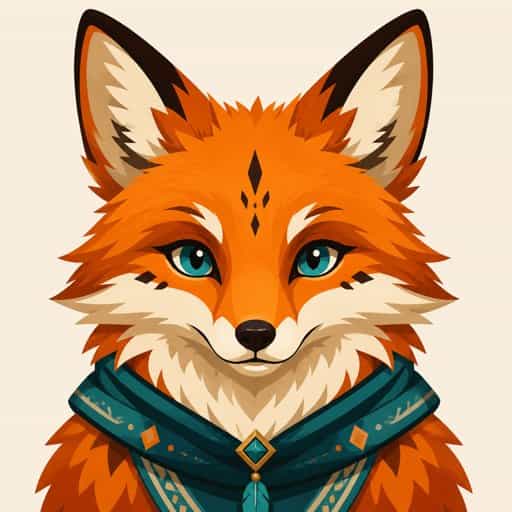
Your photo
PNG to PES
Embroidery File Converter
Upload a PNG or JPG and get a PES file your Brother machine reads — digitized into fills, satin and trims, with every stitch shown before you download.
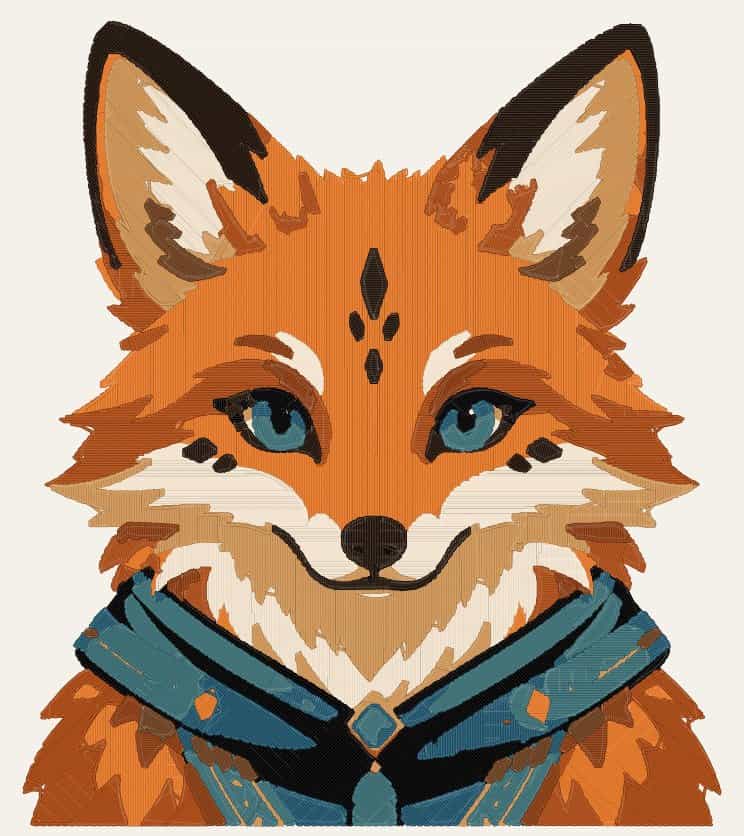
This illustration in a 5×7 hoop: 20,000 stitches, tatami fills with satin details.
Digitized, Not Just Converted
Renaming a PNG does not make an embroidery file. The picture has to become stitches.
Fills and satin, chosen per shape
Wide areas get a tatami fill at an angle over an underlay that holds the fabric flat. Narrow shapes — outlines, letters, whiskers — get satin stitches across the column, the way a digitizer would sew them.
Sized to your hoop
Pick 4×4, 5×7, 6×10 or 8×8 and the design is fitted inside it, with the stitched area measured in millimetres and density kept at 0.4 mm row spacing whatever the size.
Trims, jumps and lock stitches
Colors are sewn from the background to the details, each object nearest-first, with lock stitches at every start and end and a trim wherever the thread would otherwise drag across the design.
See every stitch first
Before you download, the preview draws each stitch in its thread color, with the stitch count, number of colors and trims, and the sewing time.
Logos and Lettering Stay Crisp
Flat art is the easiest thing to digitize well. Solid shapes become clean fills, text becomes satin columns, and the white around a logo — and inside an O or an a — is left to the fabric instead of being stitched in white thread. Transparent PNGs work the same way.
Convert PNG to PES
How to Convert a PNG to PES
A PNG is a grid of pixels; a PES file is a list of needle positions. Converting one to the other means deciding, for every shape, which stitches fill it, at what angle and density, in what order, and where the thread is cut. That is digitizing, and it is what happens when you upload a picture here.
The colors in your picture become thread colors. Each area of one color becomes an object: wide areas are filled with rows of tatami stitches over an underlay, narrow ones get satin stitches across. Objects are sewn from the background to the details, with lock stitches and trims between them, and the whole design is sized to the hoop you pick.
The PES file stores the thread colors as well, so a Brother, Baby Lock or Bernette machine shows the right color for each stop.
Convert PNG to PESWhich Format Does My Machine Use?
PES for Brother, Baby Lock and Bernette, DST for Tajima and nearly every commercial machine, JEF for Janome, Elna and Kenmore, EXP for Melco and Bernina.
All four formats store the same stitches, so pick the one your machine reads. If you are not sure, check the file list on its USB stick or in the manual — or download DST, which almost every machine and embroidery program can open.
PNG to PES FAQ
More Embroidery Tools
Embroidery Pattern Generator
Photo to a hand embroidery chart with DMC thread matching.
Embroidery Hoop Size Calculator
Find the hoop that fits your design.
Cross-Stitch Pattern Generator
Turn a photo into a counted cross-stitch chart.
Quilt Calculator
Plan the quilt your embroidered block or label goes on.
Free Stitch Preview — File from $2.99
Digitize and preview for free. Pay once to download the file, or go Pro for unlimited files and patterns.
Free
Make one pattern free every week.
- Upload any picture
- Choose colors and hoop
- Stitch preview with counts
- No account required
Tax is added at checkout where it applies.