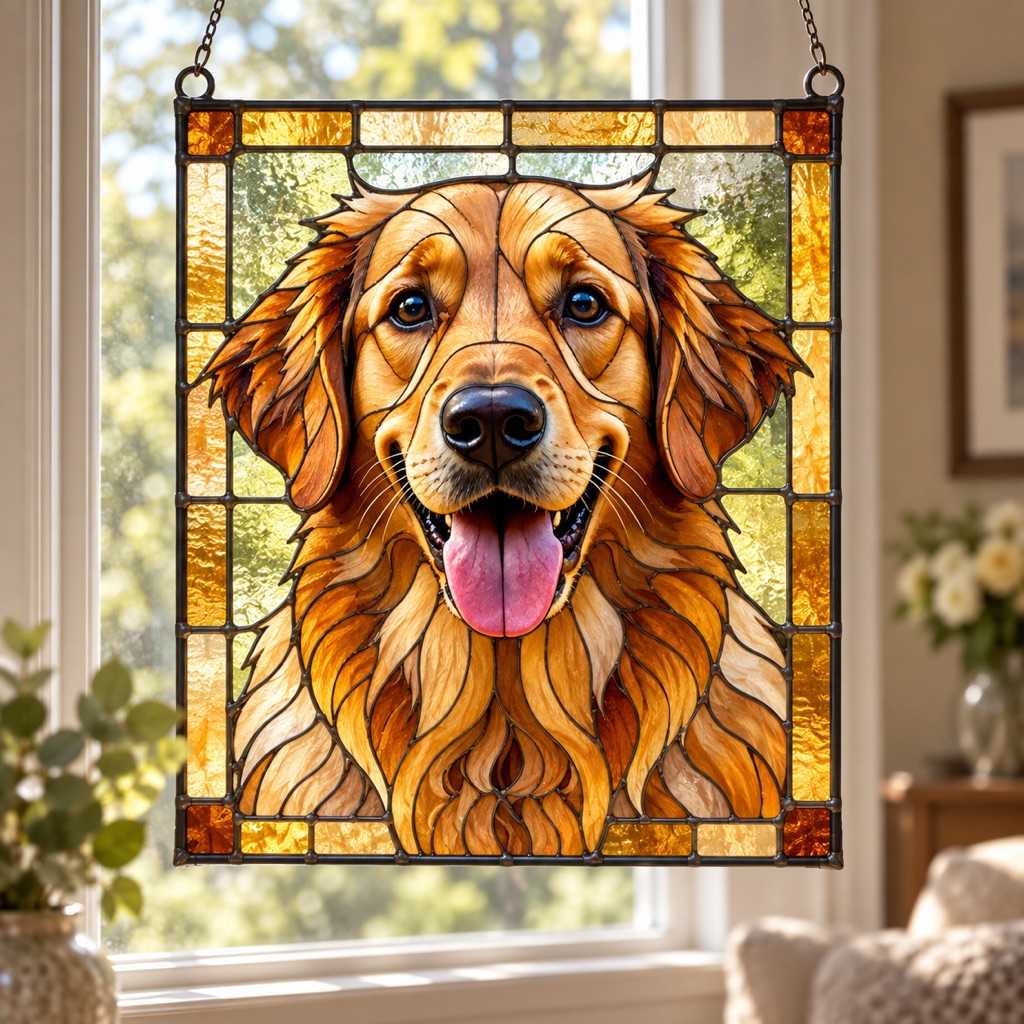

Your photo
How to Design Your Own
Stained Glass Pattern
Every line is a cut. Learn how to design one, and let the generator draw it from your photo.
Free to use · No sign-up
Every line on a stained glass pattern is a cut — which is why the shapes have to be simpler than the photo.
How it works
Start from a subject with big shapes
Glass cannot do gradients or fine detail — every tone in the finished panel is a separate piece cut from a separate sheet. Choose subjects that were already built from shapes: a flower, a bird, a landscape with a horizon, a geometric border, a pet in profile. A busy photograph has to be simplified so heavily that little of it survives, so simplify before you start rather than after.
Simplify until every piece is cuttable
This is the step beginners skip. A piece has to be scored in one pass and broken off cleanly, which means no piece narrower than about 10mm, no long splinters, and no deep inward curves that a running pliers cannot follow. Merge anything smaller into the piece next to it — the generator does this automatically, with the minimum piece size as a slider you can raise for a first panel.
Draw the lead lines at their real width
The lines on a pattern are not decoration: they are the came or foil that will sit between the glass. Draw them at the heart of the joint — the material the pattern shears take out, not the visible face — which is about 0.8mm for copper foil and 1.6 to 2mm for lead came, so the finished panel is the size you planned. Thicker lines also hide small cutting inaccuracies, which is why a first panel is easier in came than in fine foil.
Number the pieces and pick the glass
Every piece gets the number of its color, and the key lists each color with how many pieces carry it and how much total area it covers — which is what tells you how many square feet of each sheet to buy. Match the swatch by eye at the glass rack; cathedral, opalescent and streaky glass in the same hue behave very differently in a window.
Print two copies at full size
One copy gets cut up into paper templates to draw round on the glass; the other stays whole as the layout you assemble the panel over. Print at 100% — never 'fit to page', which quietly rescales the whole panel — or export the SVG and have it printed at exactly the size of the finished piece.
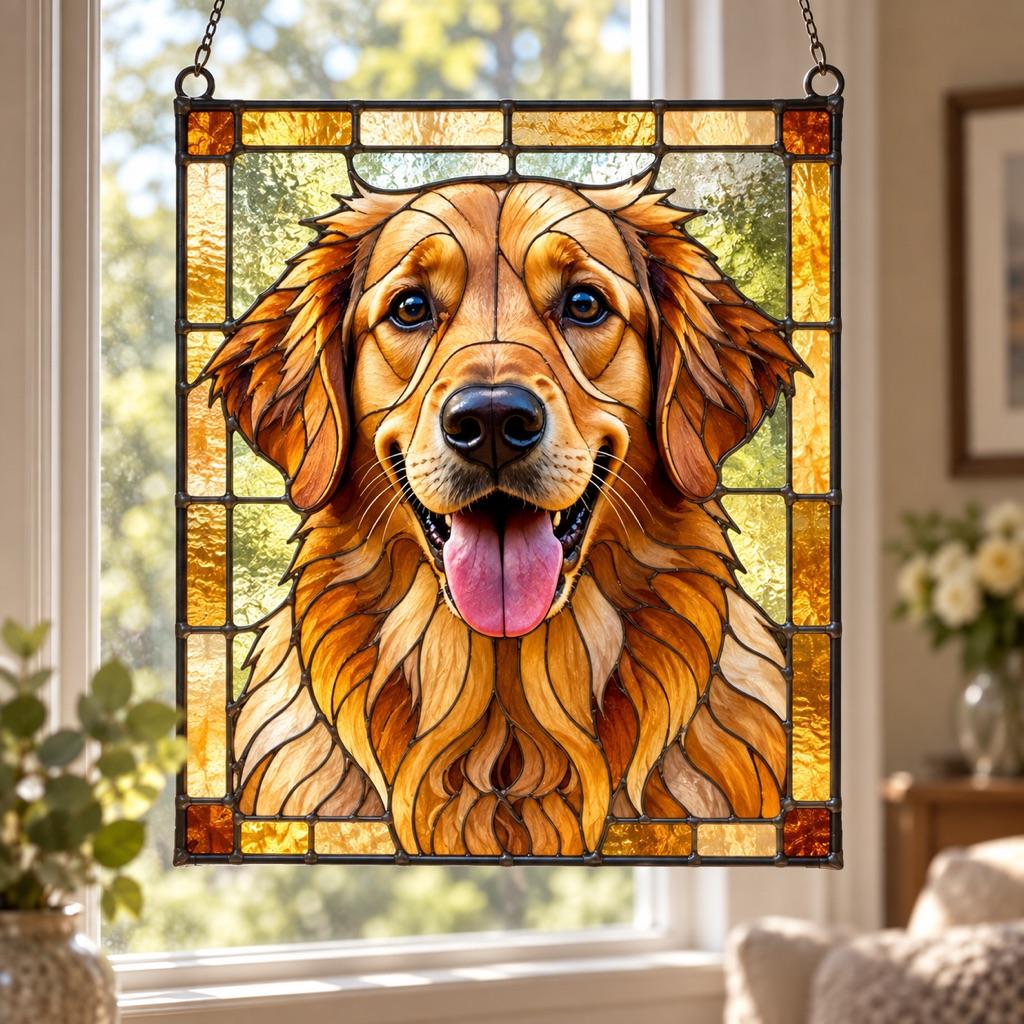
Let the generator draw it
Upload a photo and get a numbered, cuttable pattern with the lead lines already at the right width.
Open the generatorWhat the Generator Does That Tracing Does Not
Turning a photo into a pattern by hand is mostly deciding what to throw away. These are the decisions it makes for you, with the reasoning behind each one.
Every Piece Stays Cuttable
Pieces are measured across at the size you will print, and anything narrower than the threshold is merged into the neighbouring color closest to it — 13mm for copper foil, where below about half an inch a piece chips on the grinder instead of grinding to the line, and 20mm for lead came, which needs enough of the piece left showing once the channel covers both edges. Measuring width rather than area is what stops a long splinter passing on the strength of its length.
Lead Lines at Real Width
The line weight is a millimetre measurement, not a screen thickness, and it is the joint's heart — what the pattern shears remove — so a pattern drawn for 1.8mm came prints at 1.8mm and the panel comes out the size you planned. Picking your method sets it: 0.8mm for copper foil, 1.8mm for lead came, with a slider either side.
Joints That Actually Meet
The pattern is traced as one connected map, so the line between two pieces is a single shared line — the two templates you cut out fit against each other exactly. Patterns traced piece by piece leave hairline gaps and overlaps that only show up when the glass will not sit together.
True-Size Vector Output
The SVG carries the panel's real dimensions in millimetres, so a print shop can output it at the exact size of your window or lightbox and the templates are correct without any scaling arithmetic.
What Makes a Pattern Cuttable
Cutting glass is not cutting: you score a line on the surface with a wheel and then break the sheet along that score. Everything that makes a pattern easy or impossible follows from that. A score has to run in one continuous pass, so gentle curves are fine and sharp inward corners are not. A break needs something to grip on either side of the line, so a sliver under about 10mm across tends to crumble rather than snap. And a deep concave curve has to be nibbled out with grozing pliers a bite at a time, so a pattern full of them is a pattern full of evenings.
The practical result is that a good pattern has fewer, larger, rounder pieces than the photograph suggests. Beginners consistently draw too many. A first panel of twenty to forty pieces is a real project; a hundred-piece panel from the same photo is the same picture with four times the cutting and four times as many chances for a piece to break wrong. The minimum-piece control on this generator exists for exactly that trade: raise it and the pattern simplifies, piece count drops, and the panel stays recognisable for a lot longer than you would expect.
Color is a smaller decision than it looks. Eight colors is the default here because eight sheets of glass is already a real shopping trip, and because glass does its own tonal work — a single streaky sheet reads as several tones once light passes through it. Choosing fewer, better sheets usually beats chasing the photograph's palette; the key page gives you the total area per color so you know how much of each to buy before you go.
Copper Foil or Lead Came?
Both methods read the same numbered pattern — the line between two pieces is the joint — but the choice changes the drawing itself: the width of that line, and how small a piece is allowed to be. Copper foil, the Tiffany method, wraps each cut piece in adhesive copper tape and solders the seams together. The joint is thin — the pattern prints its heart at 0.8mm — so it suits small pieces, tight curves, lampshades and anything three-dimensional. It is also more forgiving of a piece cut slightly small, because the foil and solder take up the slack.
Lead came holds the pieces in H-shaped channel that is then cemented and soldered at the junctions. The joint is wider — the pattern prints its heart at 1.8mm — and the came carries the panel's weight, so it suits larger flat panels, windows, and anything that has to survive being installed. It is faster on a big panel with long straight cuts, and much slower on tight curves. For a first panel, wider came in a simple design is the gentler start, and it hides a millimetre of cutting error that foil would show.
Whichever you choose, print two copies of the pattern: one to cut into templates and one to build over. Number the pieces on both before you cut anything, because the moment a pattern is cut up, an unnumbered pile of paper shapes is a puzzle you have to solve twice.
Stained Glass Pattern FAQ
Start with a subject built from big shapes, simplify it until no piece is narrower than about 10mm or shaped like a splinter, draw the lines at the real width of the foil or came you will use, number each piece with its glass color, and print at 100% — one copy to cut into templates and one to assemble over. The generator on this page does the middle three steps from a photo, with the minimum piece size and the line width as controls so you can decide how ambitious the panel is.
Yes. 1 upload, generation, and full browser preview and all of its edits are free, with no account required. A $2.99 single-pattern unlock gives you the PNG and printable PDF. Pro ($6.99/month or $39.99/year) unlocks unlimited patterns, every export, and every other craft generator.
As a rule of thumb, nothing narrower than about half an inch across. Below that there is not enough glass either side of the score line to grip while you break it, and the piece chips on the grinder instead of grinding to the line. This generator enforces 13mm across for copper foil and 20mm for lead came, and merges anything narrower into the neighbouring color. Raise the area slider for a first panel; lower it only if you are confident with grozing pliers and a good grinder.
Any photo will produce a pattern, but photos with big, clean shapes produce a good one. Glass has no gradients: every tone is a separate cut piece, so a portrait with soft shading becomes dozens of awkward slivers while a flower, a bird, a landscape with a strong horizon or a geometric design becomes a panel you would actually want to build. Drop the color count and raise the minimum piece size and you can see the pattern simplify live before you commit.
Match them to the joint's heart — the material the pattern shears remove — not to the face you see on the finished panel. That is about 0.8mm for copper foil and 1.6 to 2mm for lead came. Drawing them at the real width matters because the joints add up: a panel with fifty joints drawn a millimetre too thin comes out noticeably smaller than planned. Picking your method here sets the line to the right one, with a slider either side of it.
Copper foil for small pieces, tight curves, lampshades and three-dimensional work — the thin joint follows detail and the solder forgives a slightly small cut. Lead came for larger flat panels and windows, where the came carries the weight and long straight runs go quickly. Both read the same numbered pattern; picking one here sets the line width and the smallest piece the generator will let through.
Yes. The PDF tiles a large pattern across multiple sheets with an 8mm overlap to tape along, and prints at true scale — do not use 'fit to page', which silently rescales the panel. For a window-sized piece, export the SVG instead: it carries the real dimensions in millimetres, so a print shop can output it at exactly the finished size.
Related Tools and Guides
Paint by Numbers Generator
The same region engine with thin outlines — a painting instead of a panel.
Cross-Stitch Pattern Generator
The counted-chart side of the site: the same photo as a stitch grid.
Mosaic Crochet Pattern Generator
Another two-tone, strongly graphic craft where simplifying the photo is the whole job.
DMC Color Chart
A full color reference — useful for matching a palette by eye before you shop.
ArtPatt Pattern Engine
How the segmentation, color matching, and vector export actually work.
All ArtPatt Tools
Every generator, calculator, and reference chart in one place.
Free to Try — Finished Pattern from $2.99
Create and refine 1 stained glass pattern free, with no account required. Unlock when you want the chart to print and stitch from.
Free
Make one pattern free every week.
- 1 free pattern project with unlimited edits
- Up to 10 glass colors
- Adjustable lead-line width and minimum piece size
- Full pattern preview in the browser
- No account required
Tax is added at checkout where it applies.