Knitting Sock Size Chart & Cast-On Calculator
Calculate exact sock cast-on stitches, 10% negative ease, heel and instep splits, wedge toe start length, and yarn yardage for cuff-down or toe-up socks from Baby to Men's US 14.
Knitting Sock Size & Cast-On Calculator
Compute exact sock cast-on stitches, 10% negative ease, heel and instep splits, toe start length, and yarn yardage for a pair of hand-knit socks in any yarn weight.
Formula: Cast-On = round_to_multiple(Foot Circ × (1 − Ease%) × (Gauge ÷ 4), Multiple); Foot Before Toe = Foot Length − Toe Length
Results
Cast-On Stitches
60 stitches
Rounded to a multiple of 4 for 10% negative ease (7.65" target circ).
- Heel & Instep Split
- 30 heel / 30 instep
- Classic heel flap: knit 30 rows over 30 stitches.
- Start Toe Decreases At
- 7½"
- Total foot 9½" minus 2" wedge toe (22 rounds; graft 18 sts).
- Estimated Yarn (Pair)
- 350 yds (330 m)
- Approx. 1 × 100g skein or 2 × 50g balls for a matching pair.
Standard hand-knit socks use 10% negative ease so they stay snug without sagging. Rounding to a multiple of 4 makes 2×2 ribbing, heel division, and four-stitch wedge toe decreases symmetrical.
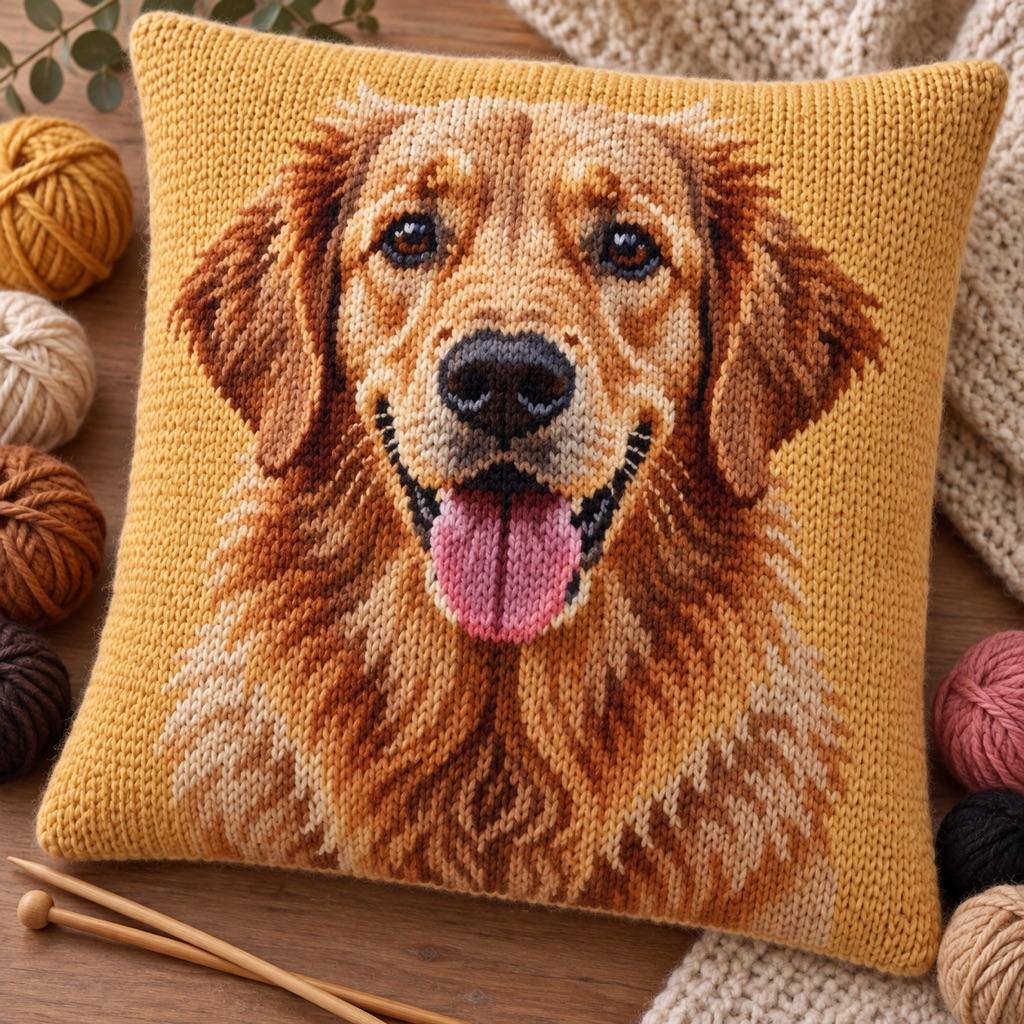
Turn a photo into a real pattern
Turn a drawing or motif into a colorwork knitting chart for custom sock cuffs, heels, and patterned legs.
Open Knitting Pattern GeneratorComplete Knitting Sock Size Chart (Baby, Child, Women & Men US/UK/EU)
Standard foot measurements, finished sock circumference with 10% negative ease, and the exact length from the back of the heel to begin wedge toe decreases (based on fingering-weight gauge of 32 sts × 44 rows per 4").
| Size (US / UK / EU) | Foot Length | Foot Circ. | Sock Circ. (-10%) | Start Toe At |
|---|---|---|---|---|
| Baby 0–6mUK 0–1.5 · EU 15–17 | 3¾"9.5 cm | 4½"11.4 cm | 4.05"10.3 cm | 2.66"6.8 cm |
| Baby 6–12mUK 1.5–3 · EU 18–19 | 4½"11.4 cm | 5"12.7 cm | 4.5"11.4 cm | 3.23"8.2 cm |
| Toddler 1–3yUK 4–7 · EU 20–24 | 5½"14 cm | 5½"14 cm | 4.95"12.6 cm | 4.23"10.7 cm |
| Child S (4–6y)UK 8–11 · EU 25–30 | 6¾"17.1 cm | 6¼"15.9 cm | 5.63"14.3 cm | 5.3"13.5 cm |
| Child L (7–10y)UK 12–2.5 · EU 31–34 | 7¾"19.7 cm | 7"17.8 cm | 6.3"16 cm | 6.11"15.5 cm |
| Women US 5–6UK 3–4 · EU 35–36 | 8¾"22.2 cm | 7¾"19.7 cm | 6.98"17.7 cm | 6.93"17.6 cm |
| Women US 7–8UK 5–6 · EU 37–39 | 9½"24.1 cm | 8½"21.6 cm | 7.65"19.4 cm | 7.5"19.1 cm |
| Women US 9–10UK 7–8 · EU 40–41 | 10"25.4 cm | 9"22.9 cm | 8.1"20.6 cm | 8"20.3 cm |
| Women US 11–12UK 9–10 · EU 42–43 | 10¾"27.3 cm | 9½"24.1 cm | 8.55"21.7 cm | 8.57"21.8 cm |
| Men US 7–8UK 6–7 · EU 40–41 | 9¾"24.8 cm | 9"22.9 cm | 8.1"20.6 cm | 7.75"19.7 cm |
| Men US 9–10UK 8–9 · EU 42–43 | 10½"26.7 cm | 9½"24.1 cm | 8.55"21.7 cm | 8.32"21.1 cm |
| Men US 11–12UK 10–11 · EU 44–45 | 11¼"28.6 cm | 10"25.4 cm | 9"22.9 cm | 8.89"22.6 cm |
| Men US 13–14UK 12–13 · EU 46–48 | 12"30.5 cm | 10½"26.7 cm | 9.45"24 cm | 9.45"24 cm |
Sock Cast-On Stitches Chart by Foot Circumference & Yarn Weight
Cast-on stitch counts calculated with 10% negative ease and rounded to the nearest multiple of 4 (minimum 24 stitches) across four standard sock yarn weights.
| Foot Circ. | Fingering (32 sts/4") | Sport (26 sts/4") | DK (22 sts/4") | Worsted (18 sts/4") |
|---|---|---|---|---|
| 5" (12.7 cm) | 36 sts | 28 sts | 24 sts | 24 sts |
| 6" (15.2 cm) | 44 sts | 36 sts | 28 sts | 24 sts |
| 7" (17.8 cm) | 52 sts | 40 sts | 36 sts | 28 sts |
| 7½" (19.1 cm) | 56 sts | 44 sts | 36 sts | 32 sts |
| 8" (20.3 cm) | 56 sts | 48 sts | 40 sts | 32 sts |
| 8½" (21.6 cm) | 60 sts | 48 sts | 44 sts | 36 sts |
| 9" (22.9 cm) | 64 sts | 52 sts | 44 sts | 36 sts |
| 9½" (24.1 cm) | 68 sts | 56 sts | 48 sts | 40 sts |
| 10" (25.4 cm) | 72 sts | 60 sts | 48 sts | 40 sts |
| 10½" (26.7 cm) | 76 sts | 60 sts | 52 sts | 44 sts |
| 11" (27.9 cm) | 80 sts | 64 sts | 56 sts | 44 sts |
How to calculate sock cast-on stitches and foot length for knitting
- 1
Measure foot circumference and total foot length
Measure around the widest part of the ball of the foot for circumference, and measure standing from the back of the heel to the tip of the longest toe for foot length — or pick a US/UK/EU shoe size preset.
- 2
Subtract 10% negative ease for a snug fit
Multiply foot circumference by 0.90 (10% negative ease) so the knitted fabric stretches slightly over the foot and stays up without bunching inside shoes. Use 5–8% ease for less-stretchy stranded colorwork.
- 3
Multiply by stitch gauge and round to a multiple of 4
Multiply the target sock circumference by your stitches per inch (stitch gauge ÷ 4) and round to the nearest multiple of 4 so 2×2 ribbing, a 50/50 heel-and-instep split, and wedge toe decreases work out evenly.
- 4
Subtract toe length to find when to start toe decreases
Calculate your wedge toe length from your row gauge (typically 1.5–2.25 inches for adult fingering socks) and subtract it from total foot length so the finished sock matches your exact shoe length.
Why Negative Ease, Stitch Multiples, and Row Gauge Matter in Sock Knitting
Hand-knit socks stay in place because they are knitted slightly smaller than your actual foot — a concept called negative ease. For a typical Women's US 7–8 foot with an 8.5" circumference, subtracting 10% negative ease gives a 7.65" (19.4 cm) target sock circumference. At a firm sock gauge of 32 stitches per 4 inches (8 sts/in), that works out to 60 stitches, rounded cleanly to a multiple of 4.
Splitting those 60 stitches in half gives 30 stitches for the heel flap and 30 stitches held for the instep. Working 30 rows on the classic heel flap creates a balanced square heel with 15 slipped-stitch selvedge loops along each side to pick up for the gusset.
Getting the foot length right depends on your row gauge as much as your stitch gauge. At 44 rounds per 4 inches, a standard wedge toe takes 22 rounds (2" / 5.1 cm), meaning you begin toe decreases at 7.5" (19.1 cm) measured from the back of the heel so the grafted tip lands cleanly at 9.5".
More Knitting Calculators & Reference Charts
Fine-tuning your sock yarn, needle size, or stitch pattern? Pair this sock chart with our cast-on calculator for custom stitch multiples, our knitting gauge calculator, our knitting yarn calculator, and our knitting needle size chart for converting US, UK, and metric sock needle sizes.
Designing a Fair Isle cuff motif or colorwork sock chart? Check out ArtPatt's knitting chart tools on our pricing page.
Knitting Sock Size Chart FAQ
Most adult women's socks (7.75–8.5 inch foot circumference) use 56, 60, or 64 stitches at a standard fingering-weight gauge of 32 stitches per 4 inches (8 sts/in). Most adult men's socks (9–10.5 inch foot circumference) use 64, 68, 72, or 76 stitches.
Knitted stockinette stretches horizontally when worn. Making the sock roughly 10% narrower than the ball of the foot ensures the fabric hugs your arch and ankle snugly instead of bagging out or slipping down inside your shoe.
Yes. Stranded colorwork carries floats across the back of the fabric, which reduces horizontal stretch. Drop negative ease to 5%–8% (or go up 4 to 8 stitches) so the cuff and instep slide comfortably over your heel.
A multiple of 4 lets you knit symmetrical 2×2 ribbing at the cuff, divide stitches evenly into two equal halves for the heel and instep, and decrease 4 stitches per decrease round cleanly on a standard wedge toe.
Subtract your wedge toe length from your total foot length. For adult socks in fingering yarn (44 rounds per 4 inches), a standard wedge toe measures about 1.75 to 2.25 inches, so you start decreasing when the foot measures roughly 2 inches short of total foot length.
A classic square heel flap is worked over half of your total stitches for the same number of rows as heel stitches (for example, 30 rows over 30 heel stitches on a 60-stitch sock). For a high instep, add 4–6 extra rows.
A standard pair of adult crew-length fingering-weight socks takes about 320 to 420 yards (290–385 meters), which fits comfortably inside a single 100g skein (or two 50g balls). Very large men's sizes (US 12–14) or tall knee socks may require a second skein.
Most knitters use US 1 (2.25 mm) or US 1.5 (2.5 mm) needles to achieve a dense, durable gauge of 30–34 stitches per 4 inches (7.5–8.5 sts/in). A tight fabric resists wear at the heel and ball of the foot.
No. Both cuff-down and toe-up socks use the exact same total stitch count around the foot based on foot circumference, negative ease, and stitch gauge — only the order of construction (cuff first vs. toe first) changes.
Use their regular US, UK, or EU shoe size in the preset chart above. For adult gifts, standard ribbing (2×2 or 3×1) down the leg and instep adds extra stretch so the sock fits a slightly wider range of foot widths comfortably.
Related Tools and Pages
Cast-On Calculator
Calculate exact cast-on stitches from any target width, gauge, and stitch multiple.
Knitting Gauge Calculator
Convert stitch and row counts into finished dimensions using your real blocked gauge.
Knitting Yarn Calculator
Estimate yarn yardage, meters, and skeins across CYC 0–6 yarn weights.
Knitting Needle Size Chart
Convert knitting needle sizes between US, UK, and metric mm standards.
Fair Isle Knitting Patterns
12 free Fair Isle colorwork charts for cuffs, hats, and borders with rounds written out.